







Natalie Bell, MIT List Center’s Chief Curator: Following Artists, Not Trends
Recently, Natalie Bell, who joined the List Center in 2020, has been named the institution’s Chief Curator. During her tenure, Bell has organized numerous critically acclaimed exhibitions. As she steps into this new chapter, Call For Curators invited her to reflect on her curatorial journey, vision for the List Center, and aspirations for the year ahead.
CFC: Can you tell us about your journey, how you got started in curatorial work and what drives your passion today?
NB: I found my way into curatorial work because I loved writing about art, and learned quickly that art writing is rarely a sustainable career on its own. Curating offered a way to stay close to art and artists that felt more expansive, more grounded, and frankly, more fun. And I’m still here because artists are the best. They’re the weirdos, the visionaries—the ones who teach us how to see sideways and think diagonally. They break rules, build worlds, and scramble all the tidy categories we like to cling to.
CFC: In your opinion, what is the role of a contemporary art museum in engaging with its community and broader public?
NB: This is the million-dollar question—and one we’re all still trying to answer, or to unlearn and reframe. The trouble, of course, is that the museum is burdened with a lot of baggage: colonial, capitalist, and institutional habits that condition formal modes of engagement, even when we aim to do otherwise.
Museums that focus on contemporary art have a lot to learn from artist-run spaces, kunstvereine, and community art centers—places where responsiveness, experimentation, and porousness aren’t just ideals but conditions of survival. Those models remind us that engagement isn’t about outreach or branding—it’s about being in relation: with artists, with publics, with the needs of the present. A museum can be many things, but if it’s not a place where people feel curious, challenged, welcome, and implicated, then it’s just a mausoleum (or a starchitect gallery showroom) with a gift shop and cafe.
CFC: Looking ahead, what does success look like for you in your new role as Chief Curator at the MIT List Visual Arts Center
NB: Idealistic as it is, I think success is being in relation—with artists, publics, and colleagues—and collectively imagining our future amid shifting regimes of technology, politics, and culture. It also means working against cynicism and indifference, and against any climate that shrinks the space of what can be said. At a place like MIT, where research thrives on friction, experimentation, and cross-pollination, the same must hold true for cultural work. Difference—in values, in methods, in how people see and engage with the world—isn’t a hurdle; it’s the very condition for imagining something more capacious.
In my role, I want to keep learning and un-learning, evolving, and growing—and I want the List Center to do the same. Success isn’t just about what you create; it’s about who wants to build it with you. If students, researchers, faculty, local artists, and any of our other varied constituents feel compelled to be part of this evolution—not just as spectators, but as co-thinkers—then we’re doing something right.
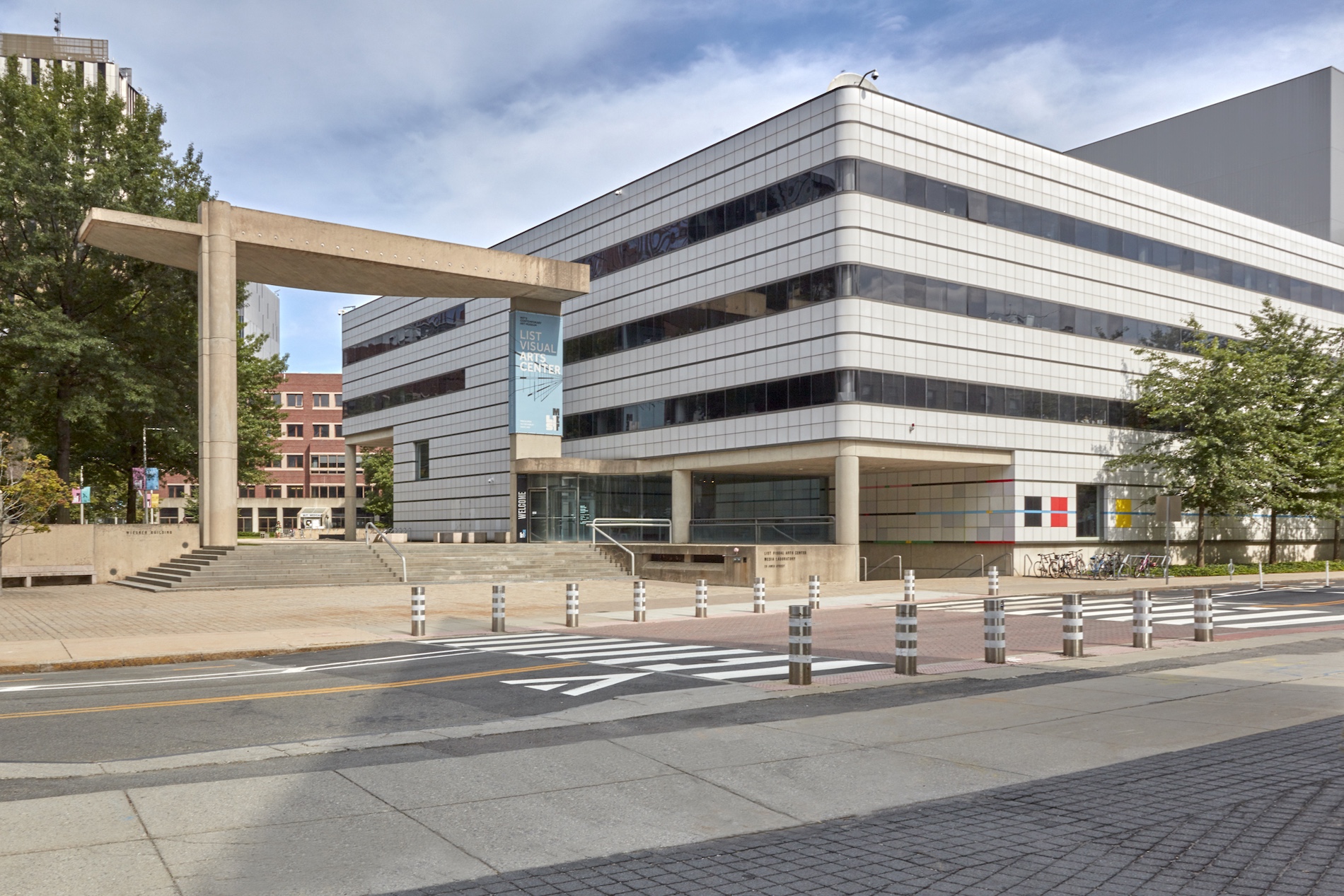 I.M. Pei, Wiesner Building, 1985 and Richard Fleischner, Upper Courtyard (detail), 1985, Pavers, landscape, furniture and sculpture. Commissioned with MIT Percent-for-Art Funds. Photo: Charles Mayer
CFC: How do you balance long-term institutional vision with the need to remain responsive to urgent cultural or political moments?
NB: We recently completed our strategic plan, so it starts there—with having our mission, vision, and values not just articulated, but strong and flexible enough to be responsive. But I also question what it means to be responsive in this way. We don’t live in discrete, isolated moments—we live in overlapping, durational crises that cascade across social, technological, geographic, and political realms. We often treat responsiveness as a proxy for relevance, but responsiveness can too easily amount to proffering artists as stand-ins for the kinds of moral clarity or leadership that is lacking in other parts of public life.
The balance lies in maintaining clarity of purpose, staying in the present, and following artists—not borrowing them as spokespersons for crises, but following their lead as thinkers and makers who approach the world deeply, slowly, and obliquely. If we’re doing that well, then we’re not just chasing relevance, we’re shaping it.
CFC: How does working within an institution like MIT, with its strong emphasis on innovation and research, shape your approach to curating contemporary art at the List Center?
NB: We often say we operate like any other laboratory on campus—a space (in our case, for artists) to test ideas and take risks. That said, our program isn’t focused on art and technology or art and science, and we resist simply translating contemporary art into the language of innovation.
Instead, we try to create a space for other forms of knowledge, emotion, and imagination to circulate in dialogue with the creativity that exists across all of MIT. Art can even offer a vital point of friction (especially within a culture of engineering): it resists optimization, embraces ambiguity, and insists on affect, contradiction, and embodied experience. I like to find points of connection to MIT’s context—with an artist like Leslie Thornton, who studied here in the 70s and has been thinking about AI for decades; or American Artist, whose recent work reimagines an early rocket test via Octavia Butler’s writing—in a way that hopefully adds depth and texture to MIT’s culture of research and inquiry.
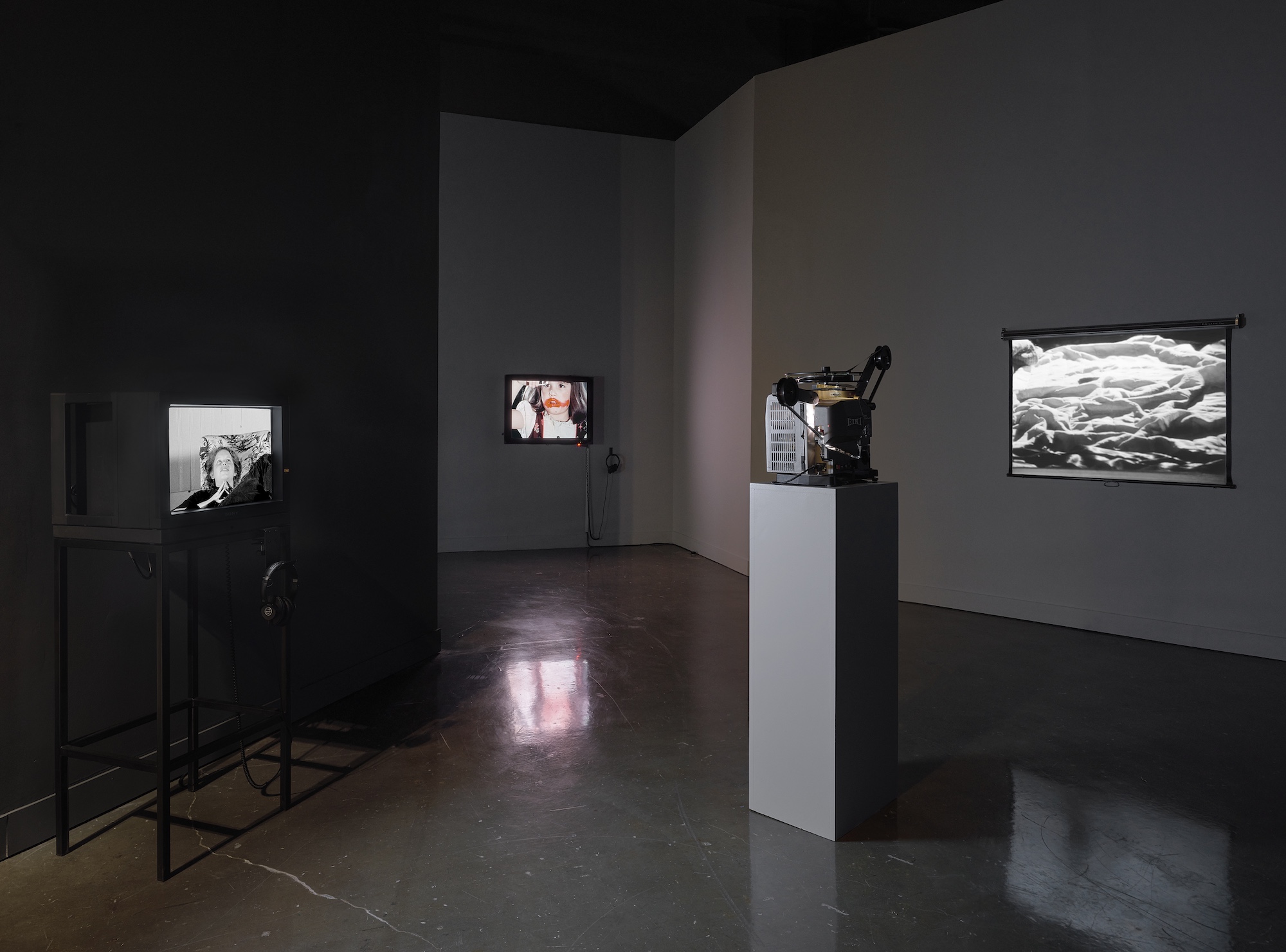
Left to right: All Right You Guys (1976), Jennifer Where Are You? (1981), and X-TRACTS (1975). Exhibition view: Leslie Thornton: Begin Again, Again at MIT List Center, 2021. Photo Credit: Julia Featheringill
CFC: What advice would you give to someone wanting to pursue a career as a curator today?
NB: The curatorial path is narrow, and institutional roles are few. But the larger ecosystem of visual arts and creative work is wide. So it’s worth asking: Is this the form that best matches what you want to do?
Curating can seem glamorous from the outside, but in reality, it’s often administrative and managerial work—with precious windows for research, writing, travel, conversations, and studio visits. If you’re drawn to long-term thinking and deep collaboration with artists, you might find that gallerists or studio managers are the ones doing that more consistently. But that’s not to say they don’t have their share of admin too!
In any case, my advice is: don’t attach too much prestige to the title “curator.” Instead, figure out what kind of work you actually want to do, and where that work can happen. Try different things out. If curating is truly it—and if you can’t imagine doing anything else—then trust that. You’ll need that sense of purpose to navigate a landscape that’s often shaped as much by its invisible structures as by its visible commitments.
CFC: What’s something about the List Center that first-time visitors might overlook but shouldn’t?
NB: We steward a Public Art Collection that is effectively a world-class sculpture park spanning MIT’s campus. From Scott Burton and Kenneth Noland in our own building, to Richard Fleischner and Henry Moore and Louise Nevelson just steps from our door, to major works by Alexander Calder, Olafur Eliasson, Dan Graham, Michael Heizer, Sol LeWitt, Sarah Sze, and Beverly Pepper scattered across campus, our Public Art Collection is a treasure hiding in plain sight.
Even though the collection is dispersed, placement is intentional, reflecting dialogues between buildings and artworks, or between artists and departments. Much of it exists thanks to MIT’s Percent-for-Art Program, which since 1968 has dedicated funding for permanent art commissions with each major campus construction project. This also means the collection is never static; new commissions continually shift how the campus feels and how works speak to one another. In the past five years, I’ve had the opportunity to collaborate with several departments, architects, and artists to realize several permanent commissions: Spencer Finch in the Schwarzman College of Computing, Julian Charrière in the Tina and Hamid Moghadam Building, home to Earth, Atmospheric and Planetary Sciences, and Sanford Biggers, for the new Music Building, home to Music & Theater Arts.
In fact, one of these works is literally a treasure hiding in plain sight: Julian’s Pure Waste is a synthetic diamond—made via atmospheric carbon capture—entombed in the building’s concrete floor. It’s an elegant undoing of carbon’s usual course from ground to atmosphere and a brilliant public art piece: conceptually tight, elementally simple, and rich in poetics. And I love that a work no one can see still belongs to our Public Art Collection—it’s a reminder that here, public art is measured not by spectacle or surface beauty, but by the depth and quality of the ideas it bears.
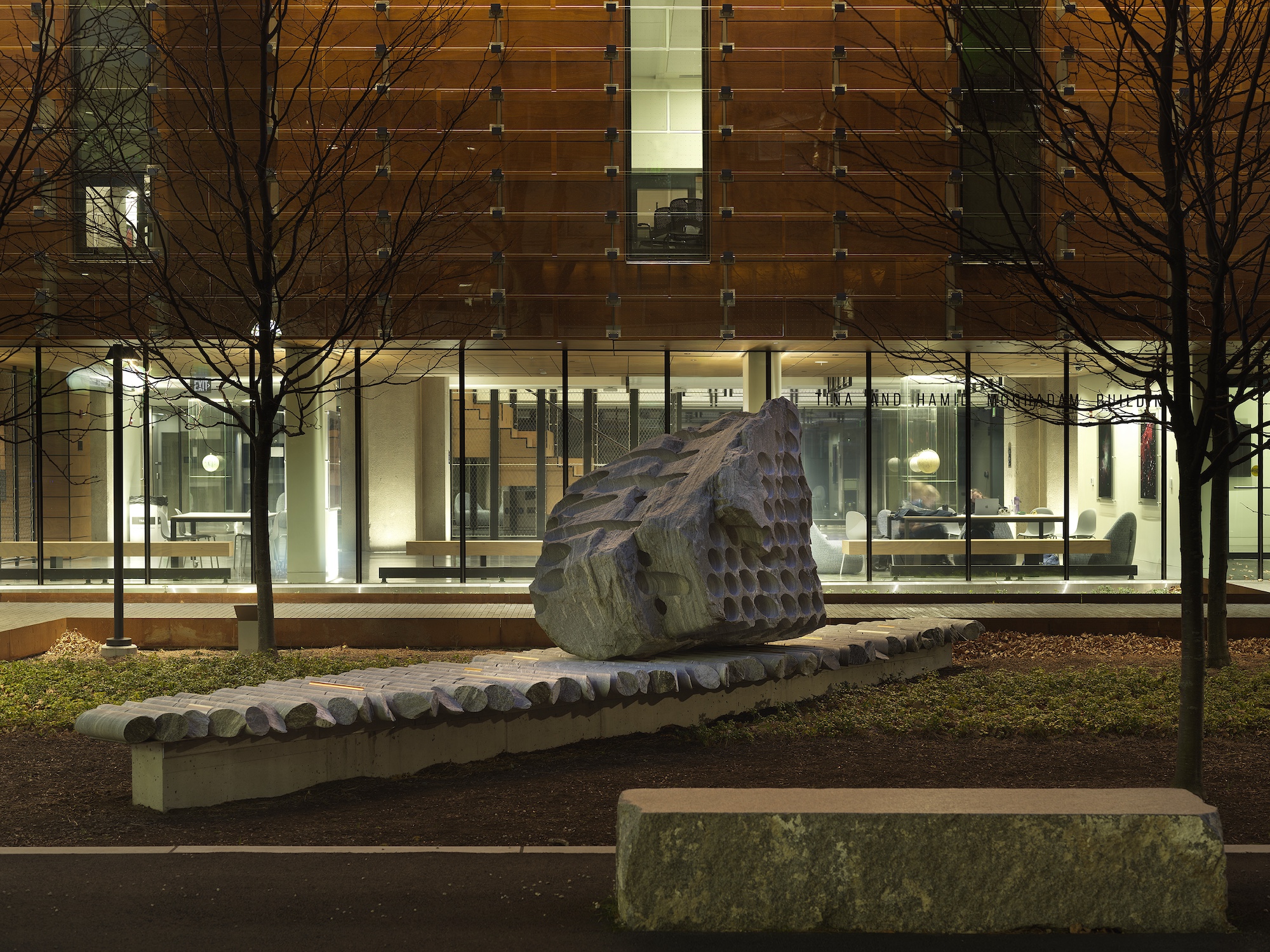 Julian Charrière, Not All Who Wander Are Lost, 2019/2023. Glacial erratic boulder, drill cores, aluminum, brass, copper, stainless steel. Commissioned with MIT Percent-for-Art funds and a generous gift from Robert Sanders (‘64) & Sara-Ann Sanders. Courtesy MIT List Visual Arts Center, Cambridge, Massachusetts. Photo: Dario Lasagni
Biography
Natalie Bell is Chief Curator at the MIT List Visual Arts Center, where she champions experimental, critically engaged artists through exhibitions that are intellectually grounded, responsive to the present, and often accompanied by rigorously developed publications. At the List, she leads an exhibition program shaped by MIT’s spirit of research and innovation, regularly fostering dialogue across disciplines. In addition, she serves as a curatorial steward for major permanent commissions in MIT’s Public Art Collection, most recently with Sanford Biggers, Julian Charrière, and Spencer Finch. Through partnerships with institutions across North America and Europe, she has helped expand the List Center’s presence and fostered co-commissions, exhibitions, and publications that deepen its international connections—among them Accelerator (Stockholm), Buffalo AKG Art Museum, Contemporary Arts Center (Cincinnati), ICA San Diego, Kunsthalle Basel, Kunstverein Nürnberg, MUDAM (Luxembourg), Oakville Galleries (Toronto), Reykjavik Art Museum and the National Gallery of Iceland, and Southern Alberta Art Gallery Maansiksikaitsitapiitsinikssin. Her recent List Center publications include Steina (MIT Press, 2024), Symbionts: Contemporary Artists and the Biosphere (MIT Press, 2022), Matthew Angelo Harrison (MIT Press, 2022), and Leslie Thornton (Sternberg Press, 2022).
From 2013–19, Bell was Associate Curator at the New Museum, New York, where she organized the first US museum exhibitions of a wide range of international artists, including Jonathas de Andrade, Anna Boghiguian, Mariana Castillo Deball, Aslı Çavuşoğlu, Lubaina Himid, Marguerite Humeau, Hiwa K, Naufus Ramírez-Figueroa, Andra Ursuta, and Lynette Yiadom-Boakye, among others. During her time at the New Museum, she co-curated several major group exhibitions, both in New York and internationally. These include Here and Elsewhere (2014), The Keeper (2016), and Trigger: Gender as a Tool and a Weapon (2017)––recognized by ARTNews as one of the decade’s defining exhibitions––as well as projects that extended the museum’s reach, such as Strange Days (2018) at the Store X in London, The Same River Twice at the Benaki Museum in Athens, and The Warmth of Other Suns at the Phillips Collection in Washington, DC. Earlier in her career, she was part of the curatorial team for the 55th Venice Biennale in 2013, curated by Massimiliano Gioni.
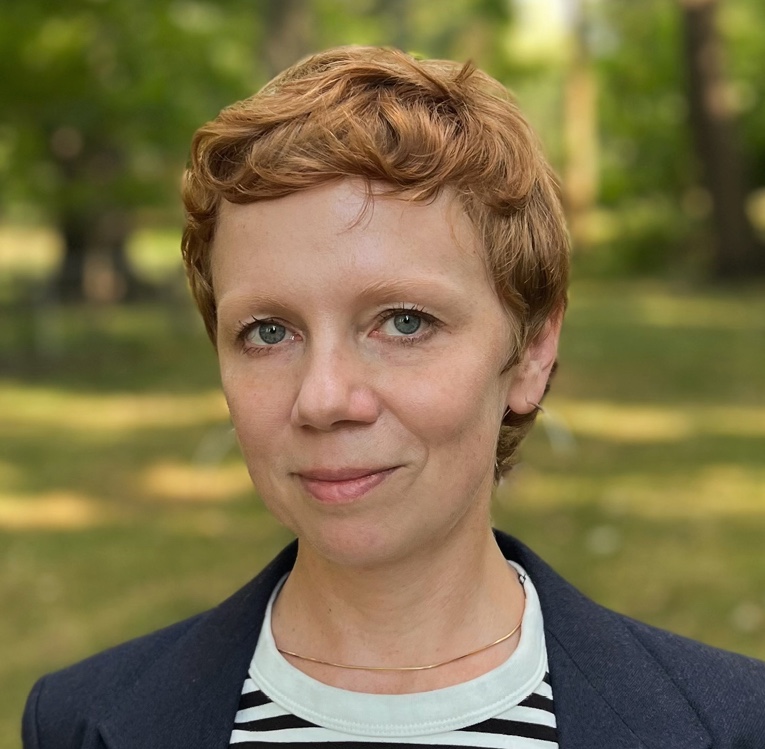
Profile photo: Chief Curator Natalie Bell, Image courtesy of MIT List Visual Arts Center.