




Open Call: Curatorial Research Residency at Villa Arson
Please note: This open call has been translated from French.
Application deadline: 15 September 2026
Location: Villa Arson, Nice, France
Residency period: November 2026–June 2027
Expected presence: Approximately one week per month
Residency stipend: €13,500 including tax
Travel and project expenses: Up to €1,500 including tax
Additional support: Production grant, furnished accommodation and access to institutional resources
Eligibility: Curators, researchers and cultural professionals; international applications are encouraged
The Residency
Villa Arson is launching a curatorial research and experimentation residency dedicated to collaborative practices and new forms of mediation in contemporary art.
Conceived as a space for situated research, the residency invites a curator, exhibition-maker or researcher to develop a project combining research, experimentation, knowledge-sharing and cooperation throughout one academic year.
This inaugural edition will help define the methods, formats and future direction of the new research programme. The resident will work closely with students, faculty, institutional teams and regional partners.
Collaborative Practices and New Forms of Mediation
The residency will explore new forms of mediation, understood broadly as the methods, structures and situations through which new relationships can be created between artworks, artists, institutions, places, forms of knowledge and audiences.
Proposed projects may address:
- Contemporary curatorial practices
- Collaborative and participatory approaches
- Cultural rights
- New forms of mediation and knowledge-sharing
- Artistic projects developed beyond institutional spaces
- Relationships between art, research and society
- Emerging forms of cooperation between institutions, artists and local communities
Particular attention may be given to research engaging with care, attention, hospitality, solidarity or well-being as cultural, social and political dimensions of contemporary artistic practice.
Curating as a Research Practice
The residency approaches curating as a form of research in its own right.
Beyond the production of exhibitions, curating is understood as a practice that generates knowledge, creates collective situations and builds relationships between artists, audiences, institutions and places.
The opportunity is intended for professionals whose practices bring together research, experimentation, education and collaboration.
The residency is not expected to result in an exhibition within the Contemporary Art Centre’s programme. Instead, it prioritises research, experimentation and the development of projects in other formats.
Research Environment
The residency will take place within Villa Arson’s established research environment.
Residents may draw on Surface Démange, a research initiative developed by Villa Arson and supported by a dedicated editorial platform. The project examines relationships between contemporary creation, artistic practices, critical thought and social questions.
The resident will also benefit from the research environment of Université Côte d’Azur, particularly work conducted through the International Associated Laboratory for Art, Society and Well-Being, jointly operated with Université Laval.
These initiatives may serve as points of reference and connection for the selected project.
A Site for Experimentation
Through the work of its Public Engagement Department, Villa Arson has developed a network of partners encompassing:
- Cultural institutions
- Educational establishments
- Local authorities
- Community organisations
- Social and medical-social organisations
- Health professionals
- Artists and researchers
- Local residents
The surrounding region will provide a site for situated research developed in response to specific contexts and in collaboration with established partners.
Working beyond the institution’s physical spaces will be approached as both a research method and a form of action.
Working with Students
The resident will develop their project with a group of students from Villa Arson’s National School of Art throughout the academic year.
This collective research may take the form of:
- Seminars
- Workshops
- Field research
- Research-creation projects
- Experiments
- Public events
- Collaborative initiatives
Priority will be given to proposals that establish strong connections between research, knowledge-sharing, experimentation and knowledge production.
Available Resources
The resident will have access to Villa Arson’s facilities and institutional resources, including:
- The National School of Art
- The Contemporary Art Centre
- The study and research library
- The international residency programme
- The Public Engagement Department
- Technical workshops
- Workspaces
- Partnerships with Université Côte d’Azur
- Research collaborations associated with the International Associated Laboratory for Art, Society and Well-Being
The Contemporary Art Centre will provide professional, documentary and research resources, although the residency is not intended to produce an exhibition within its programme.
Eligibility
The residency is open to:
- Exhibition curators
- Independent or emerging curators
- Researchers working in contemporary art
- Cultural professionals developing a research-based curatorial practice
International applications are strongly encouraged.
However, the residency requires regular attendance at Villa Arson throughout the academic year. This sustained involvement is essential to the project and will enable the resident to participate in institutional life, collaborate with students and local partners, and develop research grounded in the region.
Applicants should consider this requirement carefully, as travel costs will only be covered within the residency’s allocated budget.
Selection Criteria
Particular attention will be given to proposals demonstrating:
- Critical reflection on contemporary curatorial practices
- An interest in collaborative and situated methods
- The capacity to work with a wide range of partners
- A strong relationship between research, knowledge-sharing and experimentation
Research Outcome
The residency will result in a research output developed by the resident in dialogue with Villa Arson.
The outcome may take one or combine several of the following forms:
- A publication
- An editorial project
- A study day or symposium
- A public programme
- A mediation initiative
- A digital platform
- An off-site project
- Another format appropriate to the research process
At the end of the residency, the resident will submit a qualitative and quantitative report documenting the activities undertaken, collaborations developed, outputs produced and future possibilities generated by the research.
Residency Conditions
The residency will run from November 2026 until the end of June 2027.
The selected resident will receive:
- A furnished apartment at Villa Arson during residency periods
- A residency fee of €13,500 including tax
- Funding corresponding to 45 residency days: eight weeks of attendance and one additional week dedicated to the final research outcome
- Up to €1,500 including tax for travel and project-related expenses, reimbursed upon presentation of receipts
- A production grant
- Access to Villa Arson’s educational, research and technical resources
The amount of the production grant is not specified.
The resident is expected to spend approximately one week per month at Villa Arson, across several periods distributed throughout the academic year.
Timeline
Publication of the call: July 2026
Application deadline: 15 September 2026
Selection of applications: Late September 2026
Interviews: First half of October 2026
Results announced: Mid-October 2026
Residency begins: November 2026
About Villa Arson
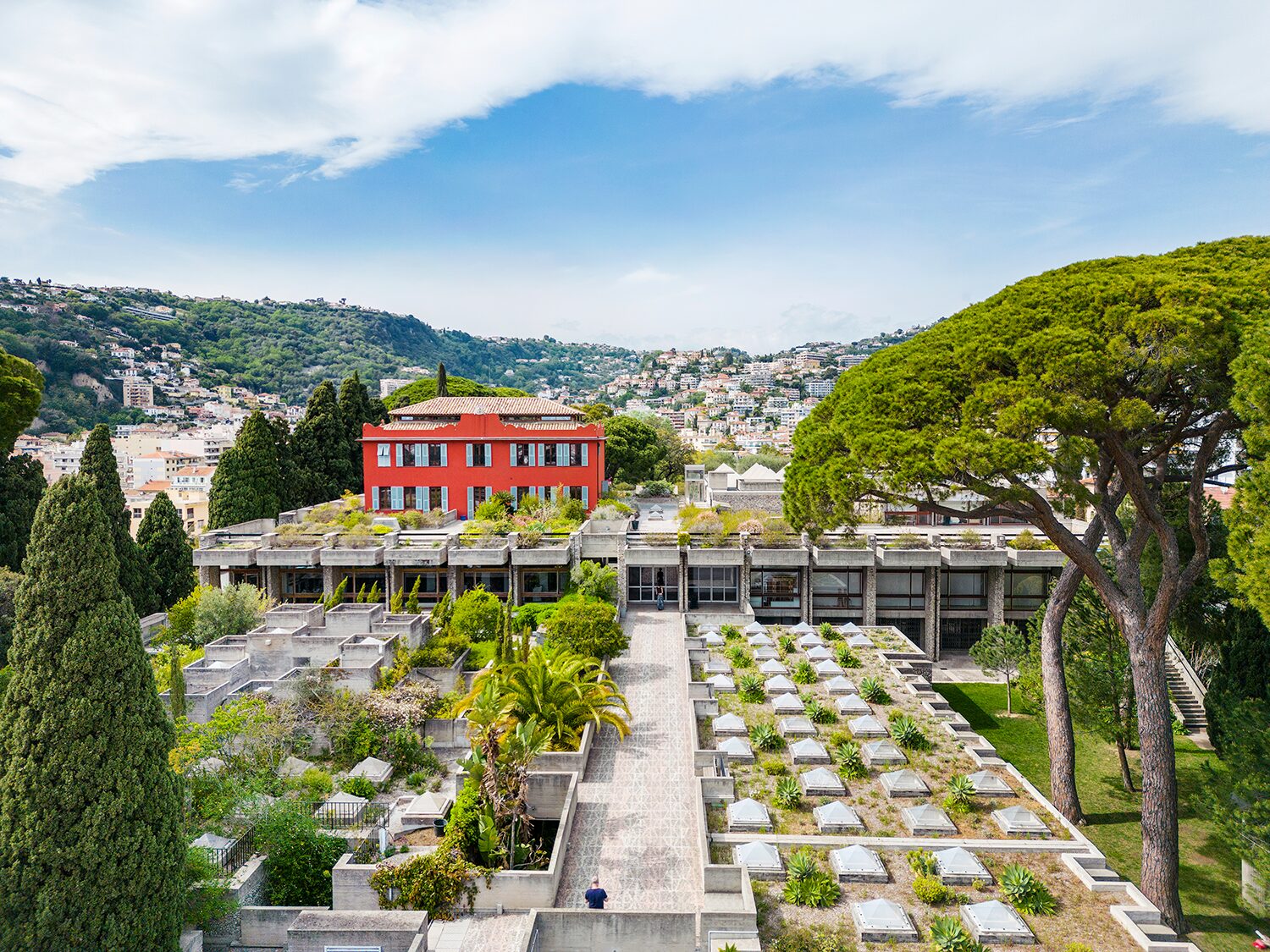
Villa Arson is a national public institution operated by the French Ministry of Culture.
It brings together a national school of art, a contemporary art centre, a study and research library and an international residency programme on a single site.
This structure, unique in France, makes Villa Arson a laboratory for artistic creation, higher education, research and public presentation. The residency will draw on this institutional environment to test new forms of curatorial practice, mediation and knowledge production.
Note: This open call has been translated from French and edited for formatting purposes. To read the original listing and apply, please visit the link below.