







Amal Khalaf & Evelyn Simons on Busan Biennale 2026: Curating Dissident Chorus Across Sound, Space and Collective Practice
#Artistic Director #Biennale #curator #interviewRecently, Amal Khalaf and Evelyn Simons have been appointed as co-artistic directors of the Busan Biennale 2026, following an open call and multi-stage international selection process. Their proposal, Dissident Chorus, stood out for its collaborative approach and its commitment to engaging the social, spatial and sensorial dimensions of the city.
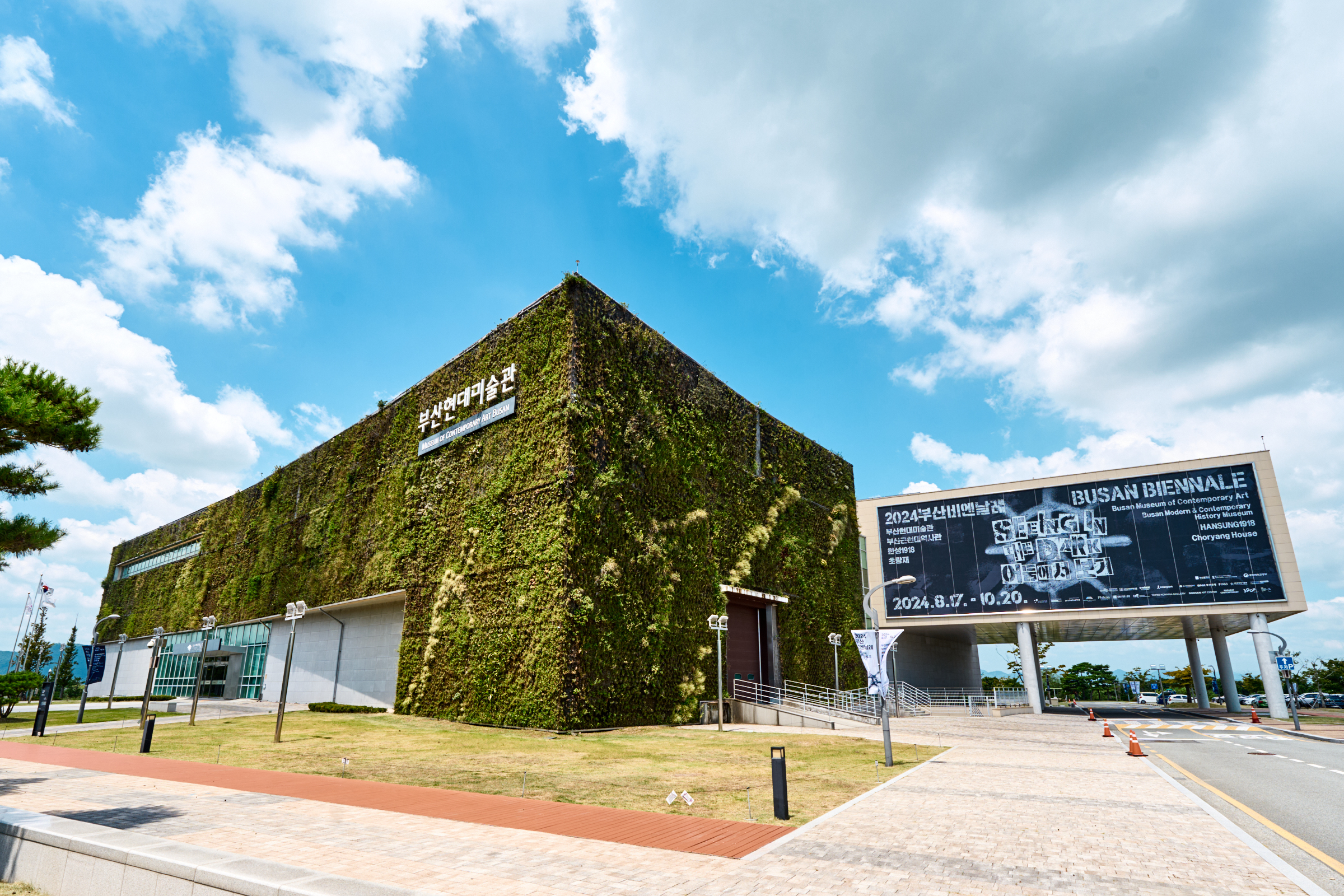
As they prepare for the upcoming edition, which will unfold across both the Busan Museum of Contemporary Art and a network of urban sites throughout Busan, Call For Curators invited Khalaf and Simons to reflect on their curatorial trajectories, their shared methodology, and their vision for a biennial that foregrounds resistance, care and collective experience through multi-arts practices.
Bringing together site-specific installations, performance, sound and moving image, their approach positions the biennial as both an exhibition and an evolving civic framework, one that responds to Busan’s maritime identity while opening space for new forms of solidarity, imagination and embodied knowledge.
CFC: Can you tell us about your journey, how you got started in curatorial work and what drives your passion today?
Amal Khalaf: I began as a documentary researcher and artist and moved into curatorial work because I wanted to create contexts where people could learn, grieve, imagine, and act together. For the first 12 years of my work, this work looked like exhibitions, curricula and moving image commissions that were developed through community workshops, collective projects and long‑term residencies, initially at the Serpentine, beginning with the Centre for Possible Studies in 2009 and continued through roles as Director of Cubitt, and more recently at the Sharjah Biennial and Ghost 2568 in Bangkok. Those experiences taught me a practical lesson: time, care, and properly resourced listening reshape what exhibitions and cultural projects can do.
What drives me now is the conviction that curating can be a way to redistribute authority and resources, revisiting and inventing pedagogies of with‑ness, and sustaining practices that privilege duration, ritual and collective agency in moments of overlapping crises. At a moment of political violence, ecological collapse and mass displacement, curating must be more than exhibition making in a traditional museological sense: how do we design rituals, methods and formats that function as resistance and wayfinding? Which practices help communities remember, restitute and relearn?
This is embodied work that can support us in reimagining how a biennial, or an arts institution or an artist‑led initiative can be a site where political agency is reclaimed and learned. I often think about how this can look like, from privileging non‑extractive projects and circular economies within artistic practice – models that return resources to communities. It looks like collaborations that reinvest funds into local infrastructures, cultural education, care work and sustainable practices. These choices are guided by a central question: what pedagogies and supports do we need to sustain collective learning and transformative practice in times of crisis? Living through climate emergency, widespread state violence and protracted conflict, I want to imagine contexts and formats where people can practise political agency together: long‑running workshops that return again and again to a question; rituals that mark transitions and repair; processes that value listening and embodied practice to unlearn dominant narratives, creating space to commune across difference.
Evelyn Simons: After finishing my MA in Art History, I had no clear idea how to move forward. At the time, the academic training didn’t prepare us for careers in an (already very closed off) art world, and I spent several years combining side hustles with unpaid work in the arts. In 2014, I applied to yet another open call for curatorial proposals by Fondazione Prada and Qatar Museums. To my surprise, I was selected as one of three laureates and received a grant and mentorship to develop a large-scale exhibition, which I eventually realised in 2017. In the meantime, I decided to seriously pursue curating and invested my savings in a postgraduate degree in Curatorial Studies in Belgium. I then started working for a private foundation in Brussels. However, it was the grant exhibition that really shaped how I still like to work today: often outside traditional institutional frameworks, bringing together emerging and established artists and commissioning mostly new, site-responsive works. The exhibition took place across derelict shopfronts, garages and a bar in Exarcheia, Athens. Since then, I’ve been interested in creating conditions where artists have the space to develop their own worlds, while also coming together in that period of making to learn and exchange from each other and from the context they’re in. In that sense, I’m mostly excited by curating when I can let go of control where possible, allowing for undercurrents in thematics to surface, for echoes to reverberate, and for creating a framework where an artist can experiment with a new format or context.
After a few years of combining work at the foundation with freelance curating, I started my chapter at Horst Arts & Music: a three-day electronic music festival combined with a visual arts and performance programme in public space. Working in a small team, I had full freedom to develop the visual arts programme – and we steadily grew each year. This is where my research became more focused on civil disobedience, and on the overlaps between rave culture, protest, and multidisciplinary practices connecting art and music. Because everything was very hands-on and DIY, the work had to constantly adapt to real conditions: a former military site being transformed into a public space and a festival welcoming 12,000 visitors a day. This reinforced my interest in work that develops in dialogue with reality rather than within the vacuum of the white cube.
I’d say I continue to be driven by the belief that it remains crucial to create and present art that helps us reflect on society and keeps us connected to our humanity – especially with all these forces currently working to take that away from us. I’m particularly interested in doing this in public spaces, within cities, or in contexts like festivals, reaching audiences with very different relationships to art. That’s also what we try to do at Brussels Art Week, which I founded two years ago with Laure Decock: building a citywide celebration of contemporary art and doing it in an accessible and multidisciplinary way – aiming to lower barriers for audiences to feel welcomed to experience contemporary art. Overall, I see my role as creating connections between artists, contexts, and the people who inhabit them.
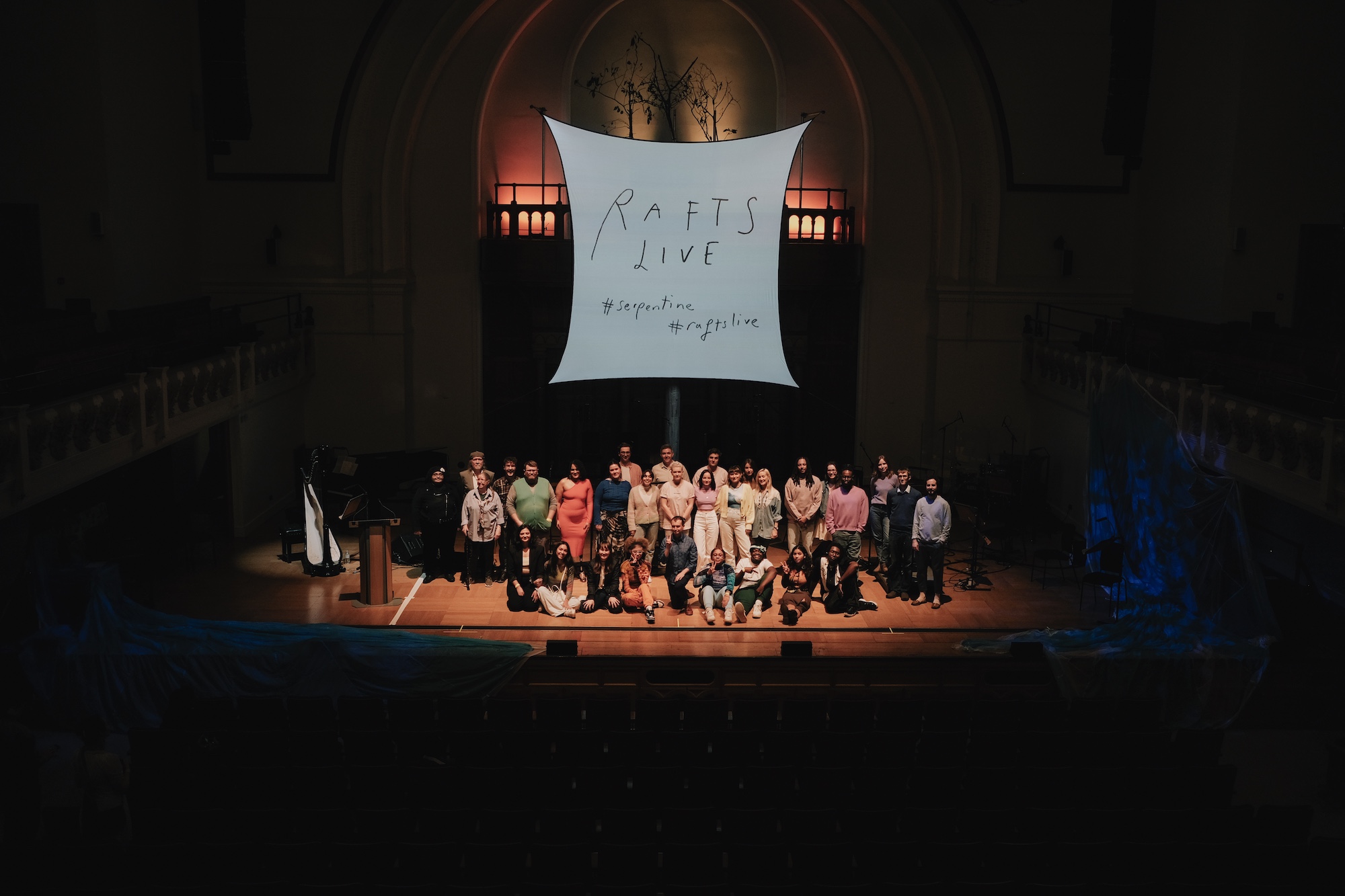
Rory Pilgrim, RAFTS Live, November 2022. (Photo: Matt Ritson)
CFC: Both of you have strong international careers. What drew you to apply for the Busan Biennale specifically?
AK: The biennale has an incredible reputation in presenting political exhibitions and has a foundation as a youth biennial. I was drawn to the possibility of putting together a biennial that respects and nurtures emerging practices. Busan, as a port city, lives the questions Evelyn and I are asking as part of our framing for this edition, where the port, labour movements, migration histories and attunement to the sea are daily experiences. Through the artists we are working with, we are listening to practices that already exist here and making connections to elsewhere.
ES: Busan Biennale, thanks to its longstanding history stemming from the youth biennale, and its adaptability to ever-changing contexts (hence the various changes it went through), as well as the team’s expertise with working outside of art contexts (including Sea Art Festival), takes up a unique position and is aligned with my interests. The presence of the sea as a generative life force on the one hand, and the towering mountains grounding us on the other hand, proves to be an inspiring landscape to work in. For me personally, it feels important to work outside Europe, to move beyond the perspective I was formed in and stay attentive to other artistic ecosystems and ways of relating to context.
CFC: Could you expand on the curatorial theme Dissident Chorus; what inspired it, and how do you imagine it unfolding across Busan?
AK: We started from a discussion on the failure of language today, amplified by algorithmic attention spans. I was thinking a lot about the words of the writer Omar El Akkad, the way that language has been coopted by media and governments, that sanitizes violence, anesthetises atrocity, converts devastation into acceptable terms. “Collateral damage.” “Security.” “Stability.” We were thinking about when words are hollowed out or weaponised, bodies don’t go silent, they hum, chant, dance, hold space – we wanted to create a space to platform artists that work with these ideas and centre embodiment in their diverse practices. The chorus we are alluding to in the title isn’t tidy harmony; it’s a messy, temporary aligning of bodies through rhythm and vibration. It’s how people keep making politics and how artists’ practices are embodying or describing this.
ES: Even though much of my practice is rooted in language, the written or spoken word can feel so hollow at times – especially now that it is weaponised to spread fake news, to polarise and revert to superficial discourse. Working at an electronic music festival for over 5 years, over the years, I gravitated more and more towards music and rhythm, also in my curatorial practice. There is something in its immediacy which allows it to speak to audiences directly, in a visceral, embodied and intuitive way, which is why I tend to work with artists who are adjacent to the world of music, or incorporate a multi-disciplinary approach to their practice. This is where Amal and I align, as she has done extensive research into sound and music as well (amongst which is her long-term project Radio Ballads). With this biennial, we’re looking into ways of communicating with one another that moves away from the mere verbal, looking at forms of embodied knowledge through sound, chant, hum, rave – through frequencies that are not always easy to grasp or make transparent, but that manage to align people and communities when lived and experienced together, and the persistence with which this will continue to always find a way. Working so close to the sea, the founding myth of Detroit techno duo Drexciya continues to inspire. It tells of an underwater population descended from the unborn children of pregnant enslaved women who died during the Middle Passage of the transatlantic slave trade – children who learned to breathe underwater. We are also guided by Judith Butler’s reminder of the power of bodies in alliance; by making noise but also by listening together through the legacy of Pauline Oliveros and Sarah Ahmed’s statement that “we are louder not only when we are heard together, but when we hear together”.
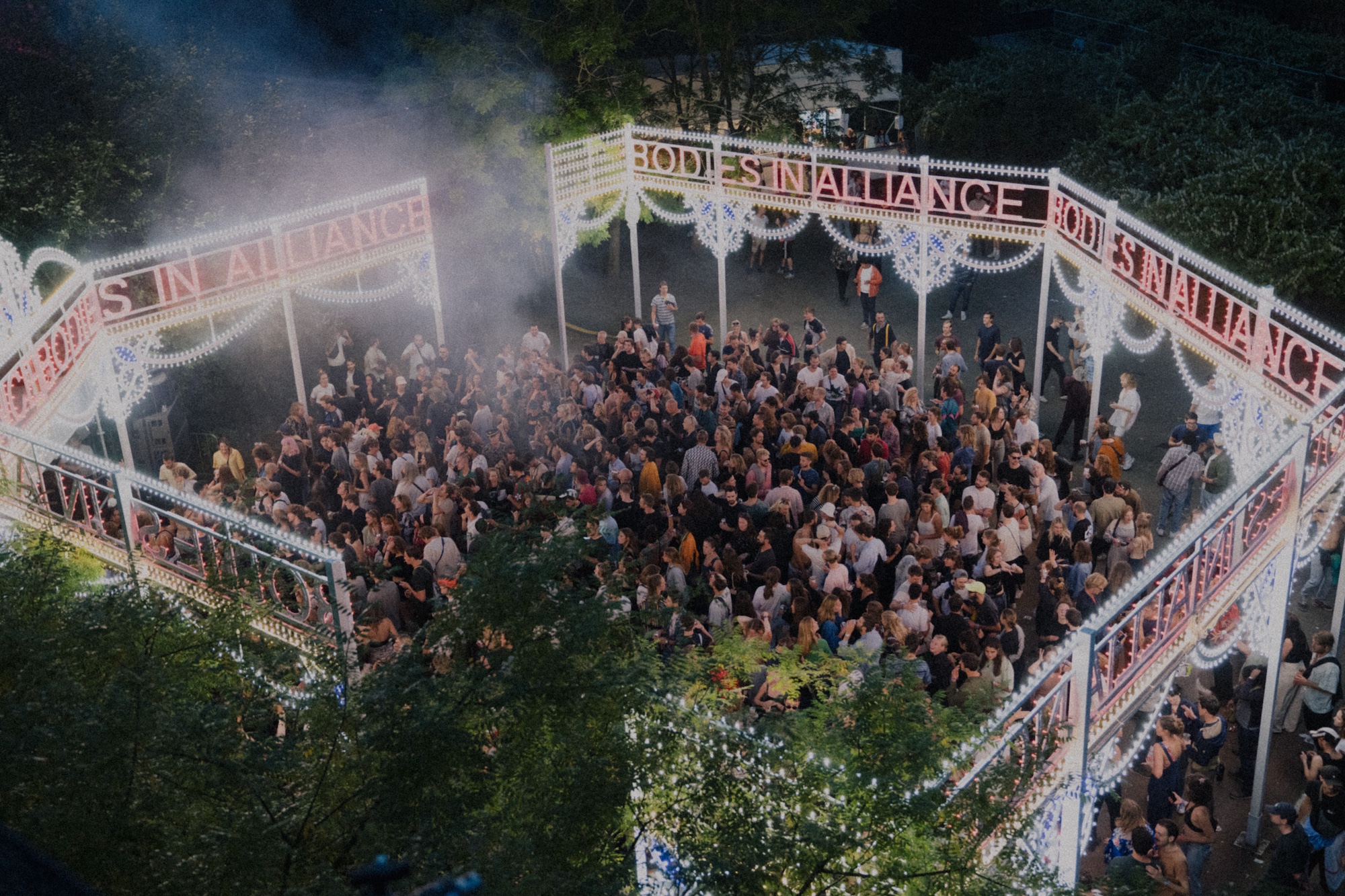
Marinella Senatore at Horst Arts & Music, 2021. (Photo: Illias Teirlinck)
CFC: How do you see biennales and large-scale exhibitions contributing to cultural exchange in today’s world?
AK: Biennales concentrate attention, resources and people, creating moments where practitioners, publics and institutions convene to exchange ideas, make work at scale and form lasting collaborations. They can validate under‑exposed practices and mobilise funding, expertise and production capacity that smaller ecosystems lack. Yet the format often risks spectacle and extraction. To be meaningful and contribute to a cultural exchange, there must be an intention to critically think about resources and governance, prioritise long‑term relationships, and function as pedagogical sites for collective learning and repair. When structured as shared infrastructures, they can become engines of reciprocal cultural exchange on many levels, but locally and through establishing new international networks.
ES: They uphold a certain standard for a local art scene to respond to; contribute to the local cultural ecosystem; facilitate talent development and professional opportunities for local artists and art workers; and – outside of capital cities – are a necessary counterforce for an overly centralised art world where only the usual cities attract the crowds. Whilst the yearly or two-yearly global art calendar is insane to keep up with, and often prioritises viral visibility over locally rooted exchange, community building and generosity, I do feel there is a value in bringing people together for an attempt to build a temporary world together that takes shape as an exhibition. Through the set-up of Dissident Chorus, we’re working hard to build bridges with the (electronic) music scene as well in Busan; and are going beyond the focus on the “opening” by organising additional moments with performances, talks, workshops and DJ-sets in the hope that these various audiences can meet and exchange at multiple moments and new collaboration can come to fruition.
CFC: You’re working together as a co-directorial duo. How do you divide roles and responsibilities, and what excites you most about collaborating?
AK: Evelyn and I gravitate to similar artists, and in turn, each have different practices and approaches. Through this process, I learnt about different practices through our conversations, and through Evelyn, I have been exposed to conversations and artists that she has brought from her context in Brussels and also through her research travels. I usually work with people over long periods of time, and for over a decade have been working with artists who centre embodied knowledge production and expand a conversation on “listening” in their work. Working at this moment of grief in this world, I was keen to bring artists, some who have already passed away, some who have worked for a long time and some younger practices – but all of them demonstrate a courage to witness, to listen, to inhabit sorrow and hope, and to act. When we have been bringing together artists for the biennale, I am excited by this group of artists who are practicing dissent in how they make, not only in what they say and who remember that even in the most fractured of times, there are ways to remain awake and attuned.
ES: Bringing in practices rooted in sincerity; working with artists whose politics and societal criticism align with their ways of producing work. Having an intergenerational conversation is also very important – working with emerging talent as well as established artists, and even artists who are no longer with us, but whose legacy we want to incorporate as it reverberates further on. I was lucky to conduct fascinating prospect trips, and am learning from Amal’s rich and multivocal network and frame of references – it’s been really inspiring to have this curatorial dialogue with her. We each brought in artists we have relationships with or have wanted to work with for a while, as well as new encounters for both of us. We each take the lead on different names, but follow up on all projects and curate the show in tandem. In the end, I think we both mostly allow ourselves to be guided by intuition, curiosity and gut feeling – and then from time to time we look at our scope rationally, trying to finetune the puzzle to make sure there is balance in terms of artistic disciplines; backgrounds of the artists; and topics we want to address.
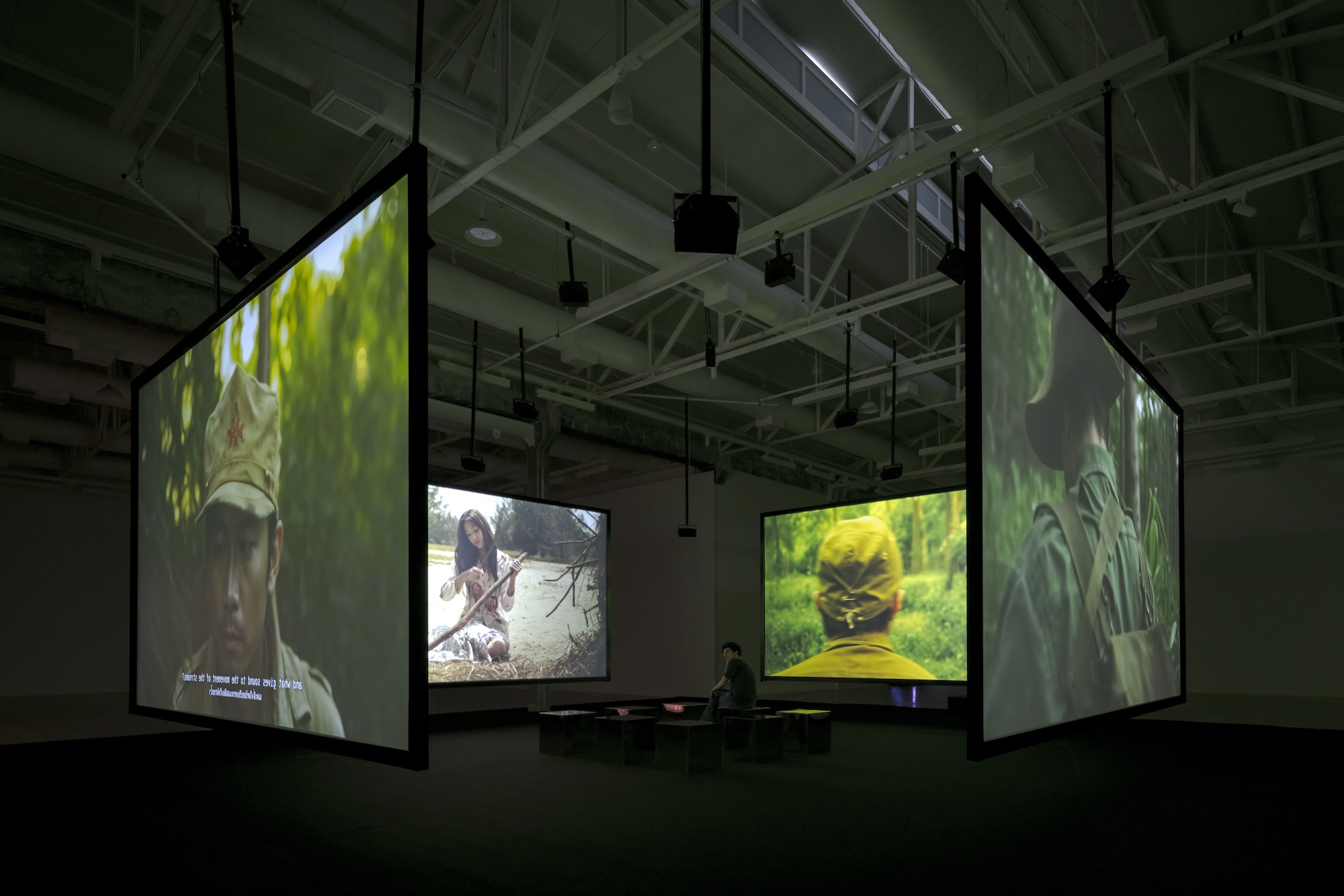 Ho Tzu Nyen, Phantoms of Endless Day (GHOST loops), 2025 (Courtesy The Artists and Ghost Foundation)
CFC: Who or what has influenced your approach to curating the most?
AK: Much of my work begins with listening in the archives and to the artists, communities and my colleagues, to voices carried through time in oral canons, to fragments of family songs, and to the echoes of radical pedagogues. I often lean more into histories of radical pedagogy rather than art history for inspiration, from a deep study into the praxis of Paolo Freire and subsequently Augusto Boal and bell hooks as theoretical and practical guides for holding space for artists and others in commissioning processes. I have also had the huge privilege of working with incredible artists, artist collectives and other curators who have all influenced and shaped my work.
ES: Because I never had a master plan for how I saw myself, nor a premeditated research direction I wanted to focus on, I think I’ve been mostly guided and shaped by the artists I worked with and the contexts I worked in. I think the theorists and practitioners that helped me bridge my own sense of social critique with how to move in an artworld have been most valuable; Edward Said to become aware of how a gaze is constructed; Katy Deepwell’s anthology of writings on feminist art and activisms; Sara Ahmed on how to embrace my anger with how patriarchal structures sabotage lives and careers; Eris Drew on how to assume the ecstasy of a rave as a ritualistic practice; (also) bell hooks on how to sit with my vulnerability – understanding how I love and how I implement that in my working relationships…
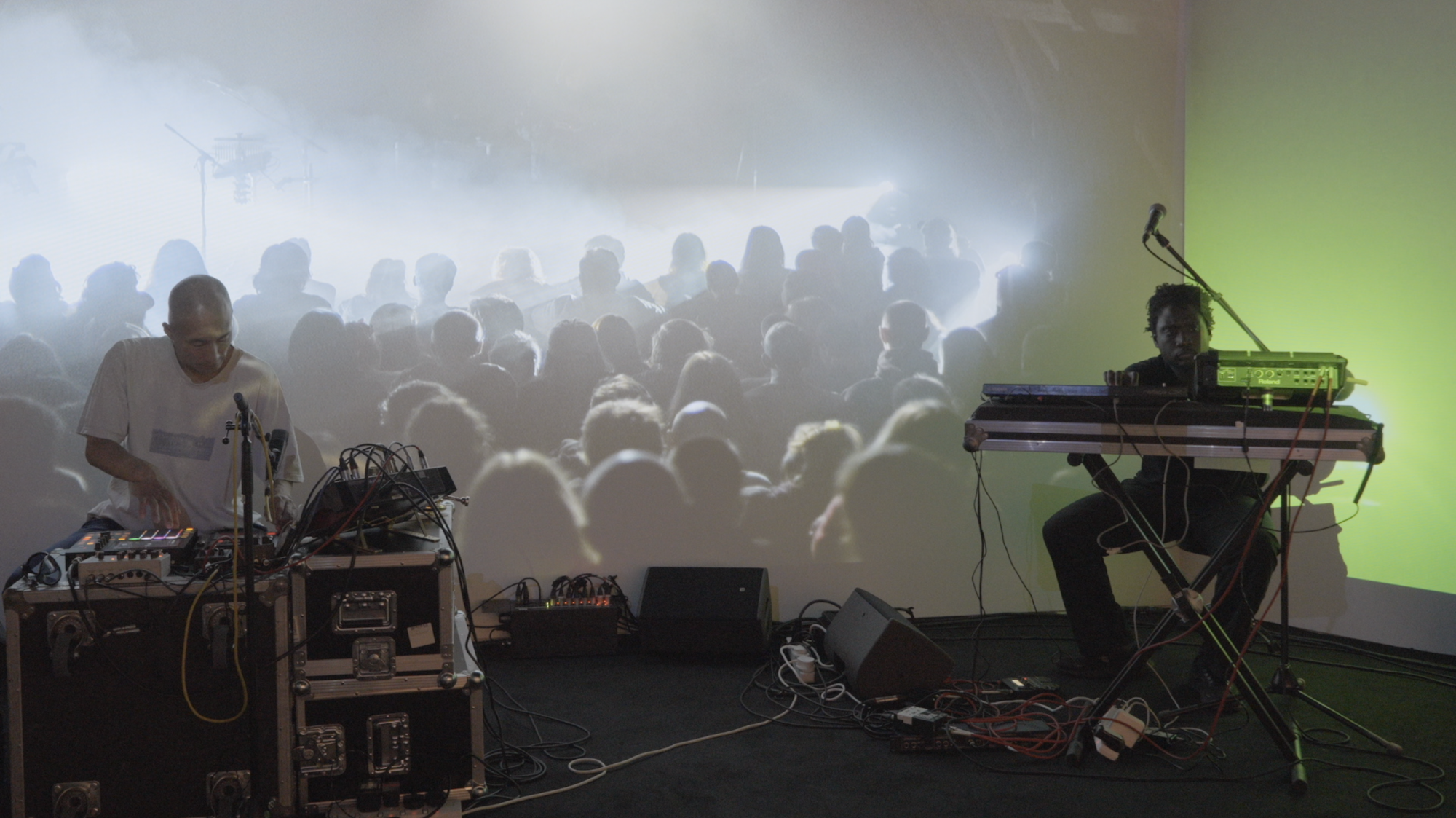 Bo Ningen and Coby Set performing in Rebecca Salvadori’s Messenger, These Branching Moments, FOMU Antwerp, 2025.
CFC: What advice would you give to someone wanting to pursue a career as a curator today?
AK: I would invite them to be curious and not be afraid to stand their ground politically in institutions or other settings. To nurture the cracks in the systems and institutions that are failing us, to plant seeds and nourish the green shoots of transformation in their art making, curatorial practice and instituting work, and to feel deeply.
ES: I’d advise to stay close to yourself in terms of interests; looking at what you’re drawn to also outside of art, and work from there because that’s where you can build your focus, expand your research stemming from actual passion, and find your voice. I’d also advise to value yourself and your community of fellow artists and art workers when dealing with structures of power – be it the commercial market, institutions or governments. In the end, the art stems from people, so it’s crucial to stand your ground and make no compromise when it comes to your ethics and politics.
Amal Khalaf is a British-Bahraini curator and Artistic Director of the Busan Biennale 2026. Based between London and Bangkok, she was Artistic Director of Ghost 2568 (2025) in Bangkok and Co-Curator of Sharjah Biennial 16, To Carry (2025). From 2019 to 2025, she served as Director of Programmes at Cubitt, London, and was Civic Curator at the Serpentine from 2009 to 2023. Khalaf’s curatorial work spans performance, moving image, and socially engaged practices, with projects including Radio Ballads (Serpentine Galleries, 2019–2022). She holds an MA in Contemporary Art Theory from Goldsmiths, University of London.
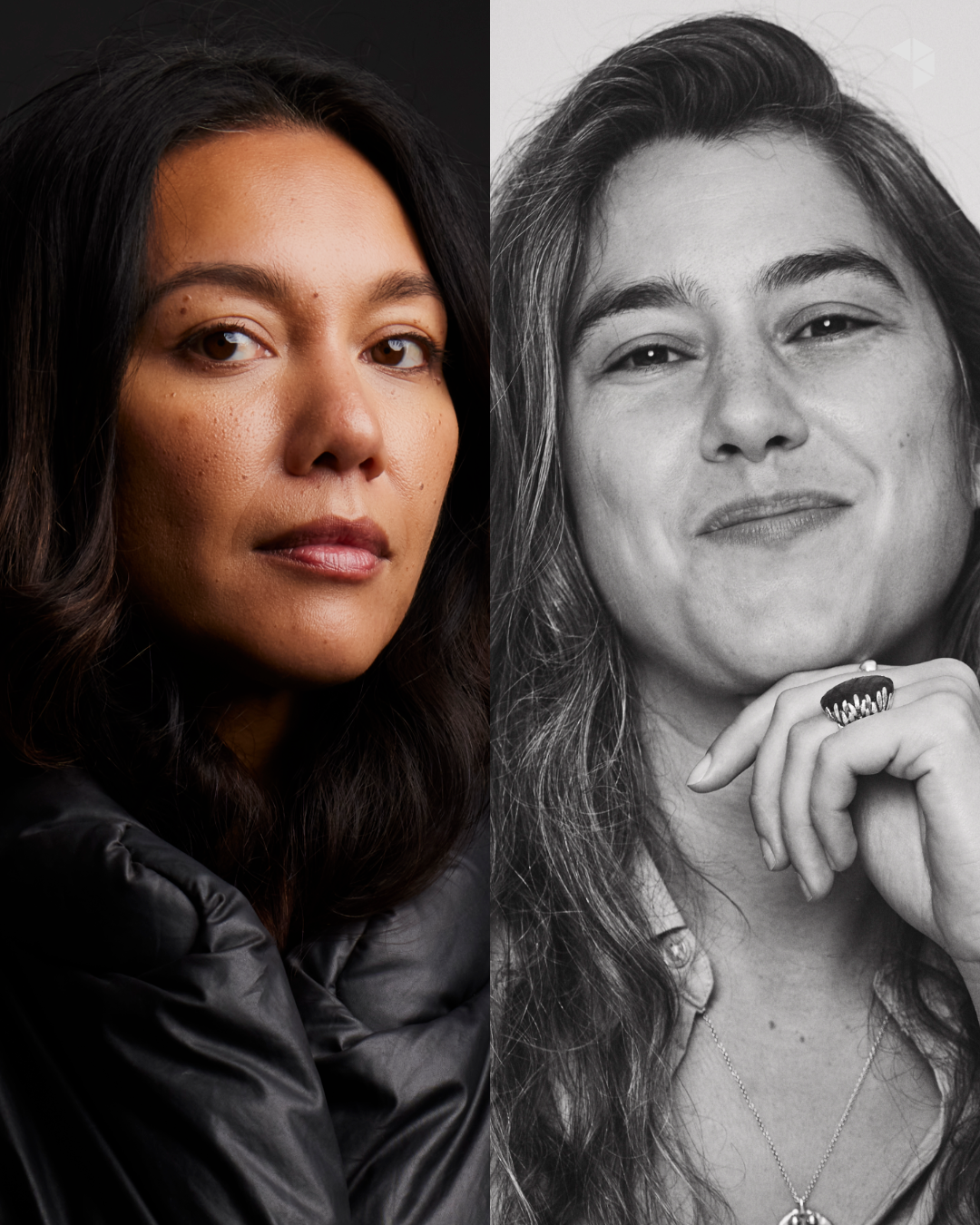
Profile photo: Portraits of AMAL KHALAF (left) and EVELYN SIMONS (right). Photos by Christa Holka (left) and Sander Southuys (right). Courtesy of the Busan Biennale.