







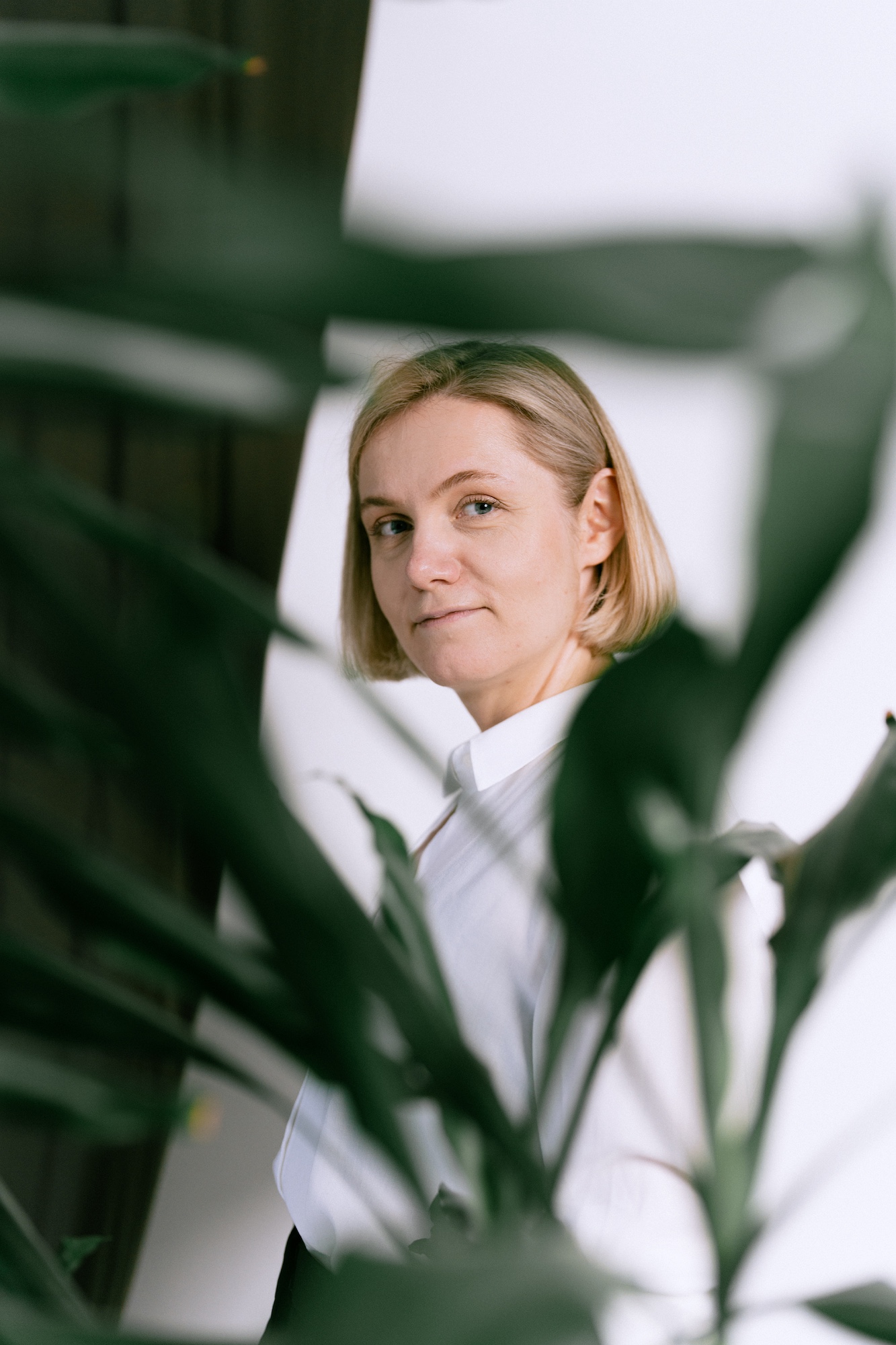
Antonina Stebur, transmediale 2027 Exhibition Curator: Activism, Digital Culture, and Infrastructural Imagination
#Antonina Stebur #Contemporary Art #curator #interview
Recently, Antonina Stebur has been announced as the curator of the transmediale 2027 exhibition, marking the festival’s 40th anniversary. Selected through an open call from a strong international field, Stebur’s proposal stood out for its incisive engagement with infrastructure, failure, and geopolitical entanglement.
As she prepares for this milestone edition, Call For Curators invited Stebur to reflect on her curatorial and research journey, her understanding of art as political and social infrastructure, and her vision for transmediale as “not only a site of representation, but as a framework of imagination” for urgently needed futures.
Call for Curators: Can you tell us about your journey, how you got started in curatorial work, and what drives your passion today?
Antonina Stebur: It is probably one of the most complicated questions for me, because I don’t understand from what point I need to start. Especially because, whenever I start to describe my role and experience, it requires a lot of additional information about the context from which I came. As I’m from Belarus, this presents a complex context, and it’s also important to note that I hold a bachelor’s degree in philosophy. I wrote my thesis about the body from this perspective. I moved from philosophical questions of the body to performativity and its political dimensions. Slowly, I understood that the contemporary art frame and the tools of contemporary art bring more freedom in comparison with academic research. Academic research is constrained in many ways, and I experienced these limits directly.
At the same time, my personal and political context is important because in Belarus, there is no established institution of contemporary art. While some independent spaces exist or better to say, they flicker, contemporary art is largely unsupported by state institutions. This means that when you choose contemporary art, you choose not only another style of life or another territory of freedom and imagination, but also a political position. It means that you become somehow marginalised in the face of official governmental or regime institutions.
For me, this context shaped an understanding of art as an inherently political and social practice. In Belarus, you could not enter contemporary art simply because it was fashionable. This is why many Belarusian artists are deeply politically engaged. . Contemporary art in Belarus is very connected to the activist movement.
Many artists move between artistic practice and work in human rights organisations. This is true not only for people who are in Belarus now, but also for people who left the country. For example, the brilliant Belarusian artist Marina Naprushkina. Her practice is also very politically engaged, and in 2013, in Berlin, she organised an amazing initiative, Neue Nachbarschaft/Moabit. This initiative connected local residents with people with migrant and refugee backgrounds in Moabit, a small district in Berlin. She used a lot of artistic instruments and methodology to organise this process of being together. Marina is a very strong example of what I’m talking about. For me, her work is a clear example of how artistic tools can function as social and political infrastructure.
It is very difficult to separate political identity and curatorial or artistic identity in contemporary art. That’s why I was, and still am, very involved in different political and activist projects. This also shapes my understanding of art. I don’t understand art as a separate sphere. I’m not very interested in discussions about whether art has autonomy or whether art can be political. I comprehend art mostly as a set of instruments. You can use these instruments not only inside artistic institutions, but also for mediation between different communities and society.
Call for Curators: Following up on that, how did your background take you to where you are now, curating the transmediale exhibition? How do you understand politics and activism within contemporary art in relation to transmediale?
How did your background take you to where you are now, curating the 2027 transmediale exhibition? Your proposal for transmediale 2027 foregrounds “ruins of infrastructure as a method.” Can you talk about where this framework originated in your research and why it feels urgent?
Antonina Stebur: I am very connected to media art and the digital sphere, not only through curatorial practice, but also through research. I’m the chief curator of the academic programme Women in Tech at the European Humanities University in Vilnius, this project looks at technology through a gender perspective. As part of this work, I was a co-organiser the conference Feeling Machines at the Centre of Contemporary Art. This international conference explored the socio-political dimensions of emotions and how they are deeply entangled with gender, technology, and capital. Technology often uses affect as a kind of fuel, but at the same time, we discussed how emotional fragility, from a feminist and gender studies perspective, could be not only reactive but also proactive.
In the National Gallery in Vilnius, 2023, together with Aleksei Borisionok, another Belarusian curator, we created an exhibition called If Disrupted, It Becomes Tangible. This exhibition was about infrastructure and the disruption of it. When infrastructure is disrupted, its political configuration becomes visible, and we can see how it influences us. This exhibition became one of the starting points for what I later conceptualised as “ruins of infrastructure as a method” — not ruins as an end state, but as a method. Through the exhibition, we invited voices from the post-socialist and post-Soviet region, including artists from Georgia, Kazakhstan, Belarus, Ukraine, Lithuania, Latvia, Poland, and others. We thought about how past infrastructures influence our present, and how contemporary digital infrastructure organises what could be called informational terror in the context of war.
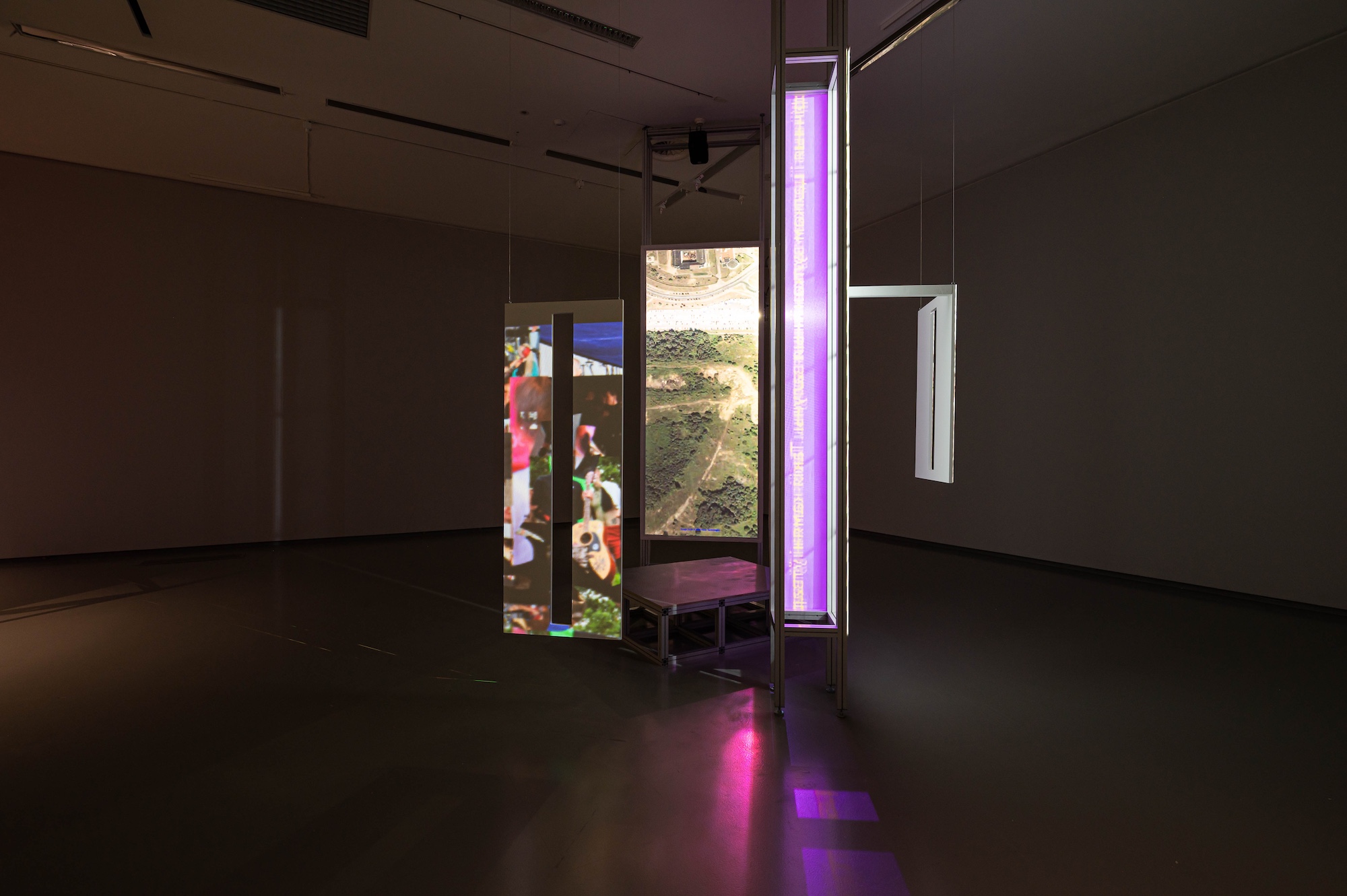 If Disrupted, It Becomes Tangible. Infrastructures and Solidarities beyond the post-Soviet Condition’ at the National Gallery of Art, Vilnius, Lithuania, 2023, view of the artwork Xyana. Excursion Around High Technology Park. 2020–now, multimedia installation. Courtesy of the National Gallery of Art.
Another project is antiwarcoalition.art, which we organise with colleagues from Belarus and Ukraine. It is a platform that gathers artworks from all over the world. Through the platform, exhibitions, discussions, and screenings, we discuss how different regimes of violence are connected to each other, including chains of exploitation. Within antiwarcoalition.art, I am also the Editor-in-Chief of AWC Journal, a research-based publication that brings together artists, theorists, and activists all over the world to critically examine infrastructures of war, extractivism, dependency, and solidarity. The journal extends our curatorial and activist work into a longer, slower format of knowledge production. This understanding of art as an infrastructure of connection and exposure strongly informs how I approach politics and activism within transmediale — not as themes to illustrate, but as conditions that shape formats, alliances, and curatorial responsibility. In 2023, at the Venice Biennale, I mediated a conversation between a Belarusian philosopher, a curator from Iran, and a curator from Ukraine about technology and resistance. This was during the revolution in Iran, and we discussed how resistance in Iran helped stop the delivery of drones from Iran to the Russian army, and how this resistance helped Ukraine to survive. These connections are not abstract; they are materially embedded in technological and political infrastructures. One of my curatorial main goals is to show this entanglement and interdependence, which is also a feminist topic.
Step by step, all of this brought me to transmediale. It wasn’t accidental. I don’t think about digital art as something separate. Technology doesn’t live separately from our material world. It requires rare resources, labour, and infrastructure. Even the internet is material: cables, satellites, and physical systems. I don’t think about technology separately from material conditions such as labour exploitation and natural resources.
Call for Curators: You describe transmediale not only as a site of representation but as a “framework of imagination.” What kinds of future imaginaries do you hope this reframing will enable?
Antonina Stebur: I’m very focused on infrastructure. We talk about the materiality of the internet and of many things that are hidden from us. Even if we don’t see them, they exist. If power dynamics and repression are organised through infrastructures, then alternatives also need to be organised infrastructurally, not just through heroic gestures.
When we talk about dreaming, we are on shaky ground. From our region, we know how abstract imagination can lead to catastrophic outcomes. Concepts like solidarity or friendship can be used to cover exploitation or force. That’s why dreaming needs to be grounded in material conditions and real forms of repression, not abstract ones. We are fragile bodies, not just rational subjects. This grounding can help us avoid using beautiful concepts in catastrophic ways.
For transmediale, I proposed ruins as a method. Ruins help us think about infrastructure and how new infrastructures are built on past ones. For example, internet cables often follow old telegraph cables, reproducing existing power hierarchies. Ruins are also about reactivation. I often mention Chernobyl: it was presented as a peaceful atom, but it was always connected to military infrastructure. After the disaster, it became a ruin, and later it was reactivated as a military site. This shows that ruins are not only romantic or traumatic; we live on ruins, and they shape our present.
When I first saw the open call for transmediale exhibition, I thought about the 40th anniversary. Anniversaries are usually celebrations, but politically, we have nothing to celebrate. At the same time, when we cannot imagine even the next few days on this planet, this is exactly the moment when we need to dream.
I wanted to focus on the archive of transmediale as a ground for dreaming. Technology changes rapidly, and old technologies become obsolete. But in the archive, we can find approaches and methodologies that were never fully realised and can be reactivated today. During the Belarusian protests in 2020, we used old technologies to avoid surveillance because the regime focused on new technologies. Old tools can still be useful for resistance and collectivity.
I don’t believe in linear time. We can reactivate different temporalities. A strong example is an exhibition I curated at the Zachęta National Gallery, What Are Our Collective Dreams?, where we connect Chilean women’s patchwork from the Pinochet era with works by Ukrainian artist Oksana Briukhovetska from 2022. This shows how practices from different geographies and times can be reactivated for solidarity and resistance.
For me, the transmediale archive is not a collection of past artworks, but a reservoir of unfinished approaches and unrealised methods. In a moment when futures feel blocked, reactivating these fragments allows us to imagine futures that are grounded, non-heroic, and infrastructural. This is the kind of imagination I want transmediale to make possible.
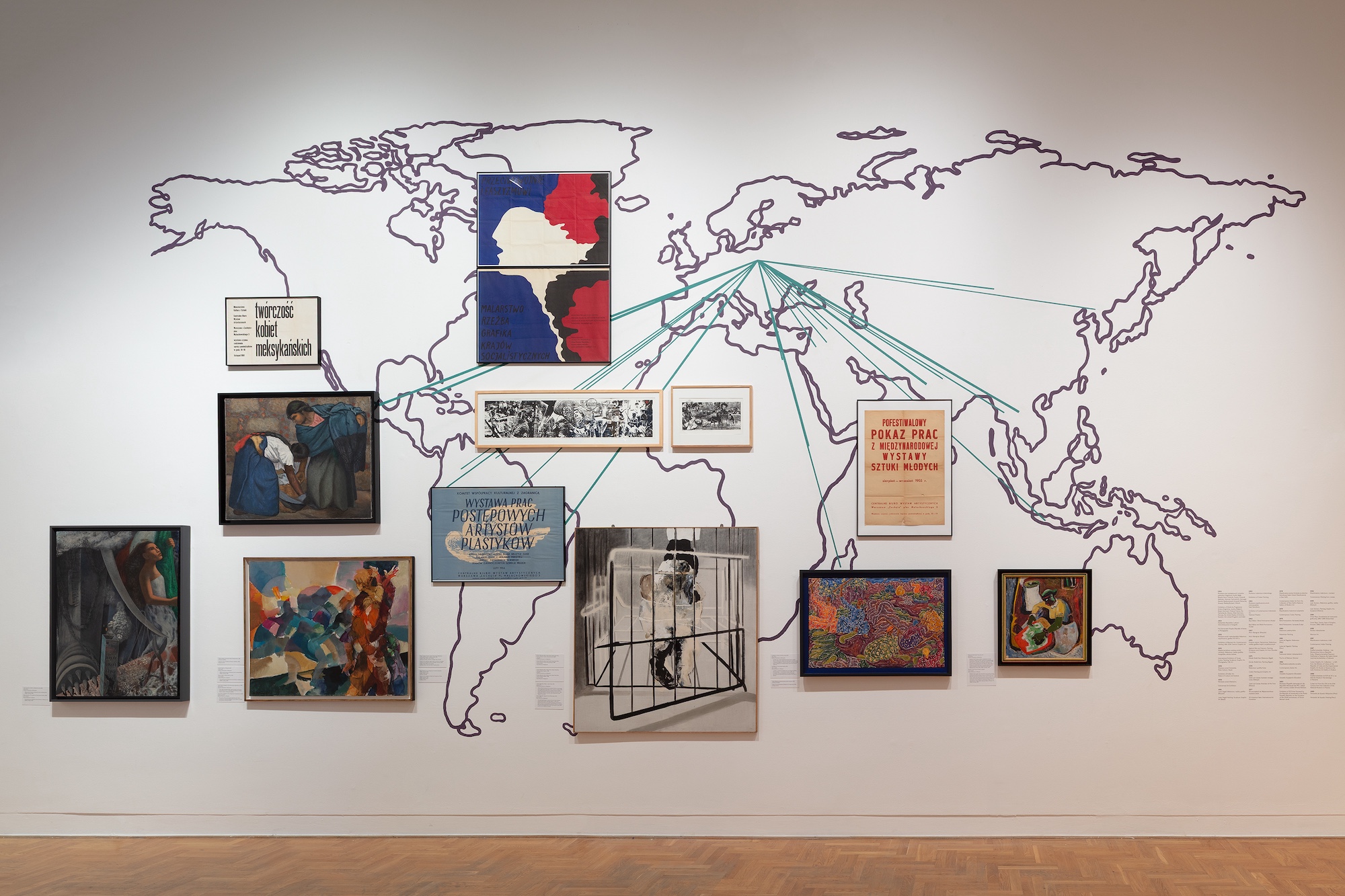 Exhibition What Are Our Collective Dreams? Global Connections — Abandoned Friendships, Zachęta – National Gallery of Art, 17.10.2025 – 08.02.2026, exhibiton view, photo by Daniel Rumiancew / Zachęta archive, CC BY-SA
Call for Curators: Which thinkers, movements, or artistic lineages have most shaped your understanding of political and socially engaged art?
Antonina Stebur: Starting from a feminist perspective, it is important for me to emphasise that I did not emerge as a curator and researcher on my own. Rather than standing “on the shoulders of giants,” I imagine myself in a shared living room, surrounded by many people with whom I am in constant real or imagined dialogue, and whose presence, care, and thinking have shaped me. These influences are sometimes direct and sometimes indirect. If I were to trace their lines, I would conceptualise them in three interconnected constellations.
First, I am deeply influenced by researchers whose intellectual work cannot be separated from their political position and lived engagement.
In this sense, the Ukrainian researcher Svitlana Matviyenko has been formative for me. Her work on cyberwar, environmental terror, and informational violence, and on how these regimes of violence are structurally connected, has strongly shaped my understanding of infrastructures. This understanding developed in dialogue not only with her writing, but also through collaborative exchanges with my curatorial partners in Aleksei Borisionok, Natasha Chychasova and my intellectual friend Olexii Minko.
Another crucial figure for me is the Belarusian philosopher Olga Shparaga, whose work exemplifies socially engaged theory rather than abstract thought detached from reality. Her book on the Belarusian protests foregrounds the women’s face of the revolution and articulates a politics of care, fragility, and the body, all of which strongly influence my curatorial practice.
A small but important detail: during her second detention on October 9, 2020, while imprisoned in Zhodino as a political prisoner, Olga began giving philosophy lectures to her cellmates as an act of sisterhood and mutual support. For many women, these lectures became a grounding routine and a tool for understanding their own experience. For me, Olga remains not only an intellectual reference, but if I may allow a moment of pathos, a moral compass.
Second, I am shaped by artistic and curatorial practices that challenge conventional ideas of art as a finished object displayed in the white cube, and instead understand art as what Jacques Rancière once described as the construction of new forms of life.
One such influence is Taras Gembik, with whom I worked at Zachęta. His community-based parctice as a part of the project BLYZKIST engages with people experiencing homelessness, bringing them into cultural institutions not through charity, but through practices that restore dignity, agency, and visibility. This work demonstrates how art can exist in relation to institutions without being subsumed by them.
I am also influenced by the long-term, step-by-step community work of Marina Naprushkina, as well as by initiatives such as Cooking with Mama, a series of community encounters in Berlin and beyond that weave personal and collective histories through cooking and shared meals. These gatherings engage memory, transgenerational knowledge, decoloniality, and resistance, creating spaces of care and transnational solidarity across Eastern Europe, the Caucasus, and Central and Northern Asia.
Third, my thinking has been shaped by my colleagues, collaborators, and friends, including the curator and theorist Lena Prents, the art group eeefff, and the curator and researcher Bojana Pejić, theorist Almira Ousmanova, and Belarusian writer Tony Lashden. Countless conversations – during walks, travels, meetings, and shared work – have been as formative for me as any book or exhibition.
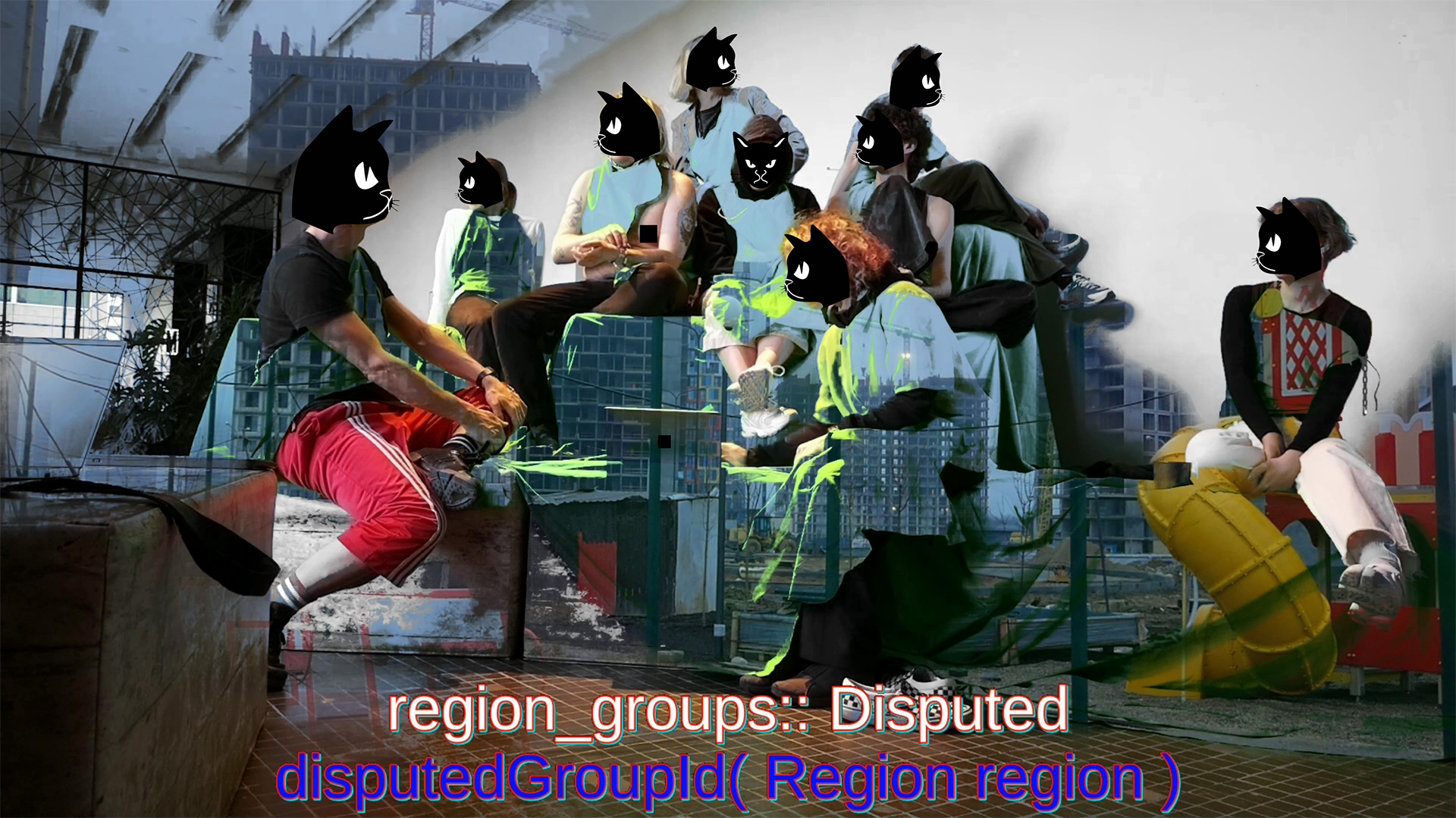 eeefff. Session with decolonial research laboratory Mycelium in SDK Słonecznik, curator Antonina Stebur, 2024, Warsaw, Poland. Courtesy of eeefff.
Call for Curators: Many of your past projects, and the projects you mentioned, involve building collective or collaborative frameworks. How do you imagine collaboration functioning within the constraints of major institutions?
Antonina Stebur: It depends very much on the institution. There is no single formula. For me, collaboration is usually a long-term conversation, often involving research and archive work before the exhibition itself. This helps me work as an insider-outsider, rather than someone who comes in from outside and leaves.
At Zachęta, for example, we worked for a year and a half, with the first year focused purely on archive research with the documentation department. This helped build relationships inside the institution. I’m not afraid of tension between independent curators and institutions. Tension can be productive. Smooth relationships often hide problems, while tension helps reveal pain points that can be worked through.
Direct confrontation has not been my primary mode of working with institutions. Each context is different. For example, working at Zachęta was very different from working at the Yermilov Center in Kharkiv during the war. In Kharkiv, our role was mostly to listen and support people on the ground, rather than to impose curatorial ideas. Sometimes the curator’s role is to create conditions for something to happen, not to be proactive.
I always think of an art institution as a whole infrastructure. This helps me approach collaboration not as exhibition-making, but as a long-term relationship. transmediale is a strong example of this approach: its forty-year history allows us to trace not only the transformations of media art, but also shifting power relations within technology and media. When we think of transmediale as an infrastructure rather than a single event, the festival itself becomes an active agent and a space for transformation in addressing our growing alienation from the techno-sphere. In this sense, my work with the transmediale archive is not only preparation for the 2027 exhibition, but a contribution to the festival’s broader infrastructure for artists, researchers, curators, the team, and its community.
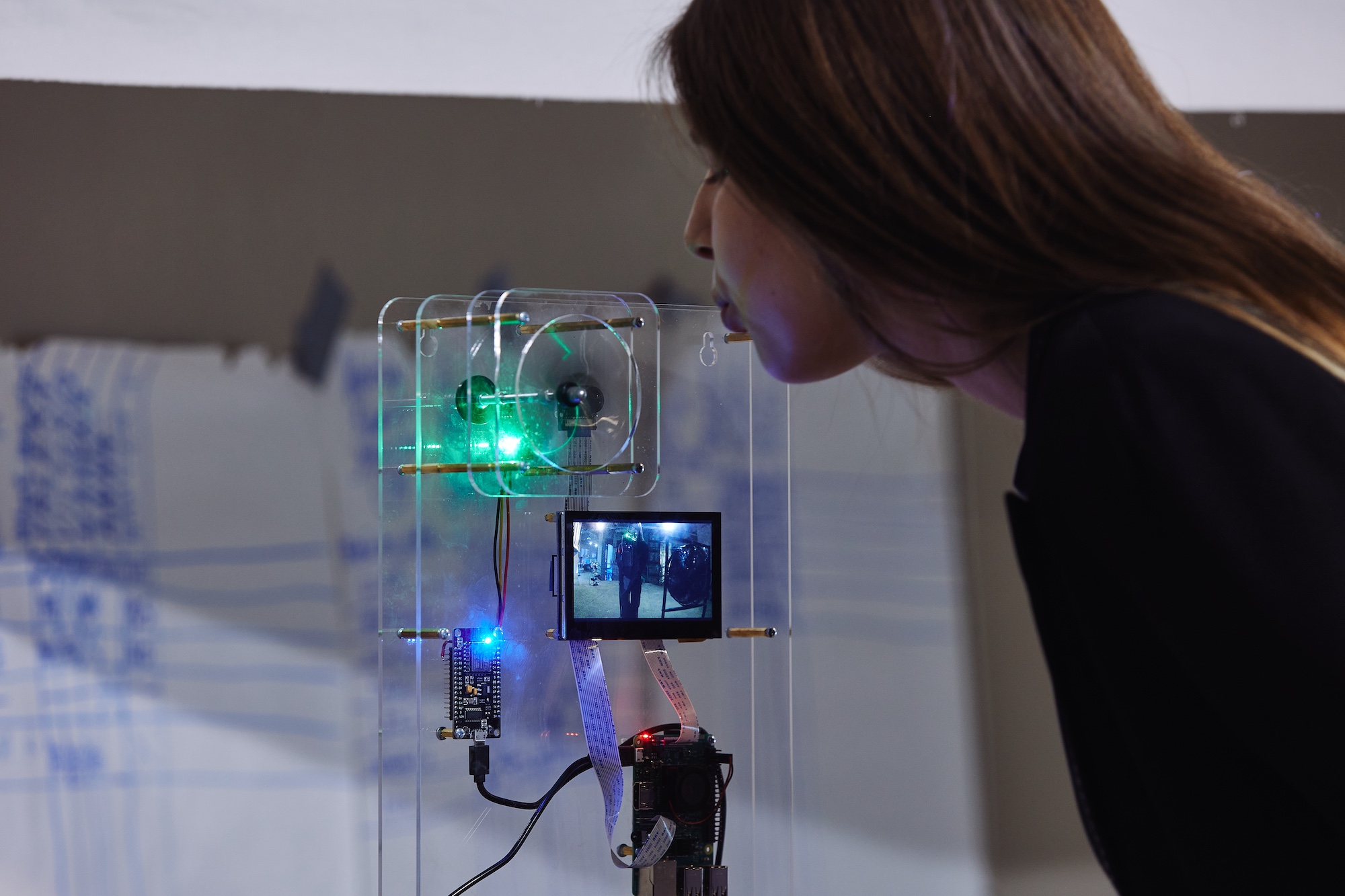 Sense of Safety international art project. view on All That’s Solid Melts into Air by Yulia Kostereva & Yuriy Kruchak. 2024, Kharkiv, Ukraine © YermilovCentre, photo: Viktoriia Yakymenko.
Call for Curators: What advice would you give to someone who wants to pursue a curatorial career?
Antonina Stebur: Curatorial work is very precarious, like most cultural work. There is a big difference between expectations created by curatorial education and reality. Curators are often presented as people who only create concepts, but in reality, the work involves physical labor, budgeting, logistics, and multitasking.
It’s important to love what you do, but also to be aware of the dark sides. This is hard work, and finding a balance between duty and joy is important. I don’t believe in the curator as a hero. A curator is more of a connector or mediator, connecting people, spaces, artworks, audiences, and budgets.
Early in a career, exploitation is very common, and we need to talk about it openly. It’s important not only to understand this exploitation but also to resist it collectively, to collaborate with others, and to make it visible.
Call for Curators: If logistics, budgets, and laws of physics weren’t a constraint, what is the dream or delightfully impossible exhibition you’d love to stage?
Antonina Stebur: I don’t believe in blockbuster projects. I’m more interested in how projects can influence communities and institutions. If there were no limits, I would focus on connecting different grassroots artistic and activist initiatives and building infrastructure between them.
Many people working in oppressed regions spend all their energy caring for their communities and don’t have the resources to build connections with others. If I had no limits, I would invest in projects that connect grassroots initiatives across regions, allowing them to share practices, resources, and voices. This would still be a curatorial project, but with a very different understanding of what curating means: building supportive infrastructure.
Antonina Stebur is a curator and researcher working at the intersection of contemporary art, infrastructures, and political imagination. She is Editor-in-Chief of AWC Journal and founder of Mycelium [Грыбнiца], a decolonial research lab. Stebur has curated and co-curated research-based exhibitions and projects, including What Are Our Collective Dreams? (2025, Warsaw), If Disrupted, It Becomes Tangible (2023, Vilnius), and Sense of Safety (2024, Kharkiv). She co-organised the interdisciplinary conference Feeling Machines: Gender, Technologies, and Capitals and has contributed to international platforms such as documenta 15, Manifesta 14, ZKM, and Theatertreffen Berlin. She is the curator of the transmediale 2027 exhibition, marking the festival’s 40th anniversary.