







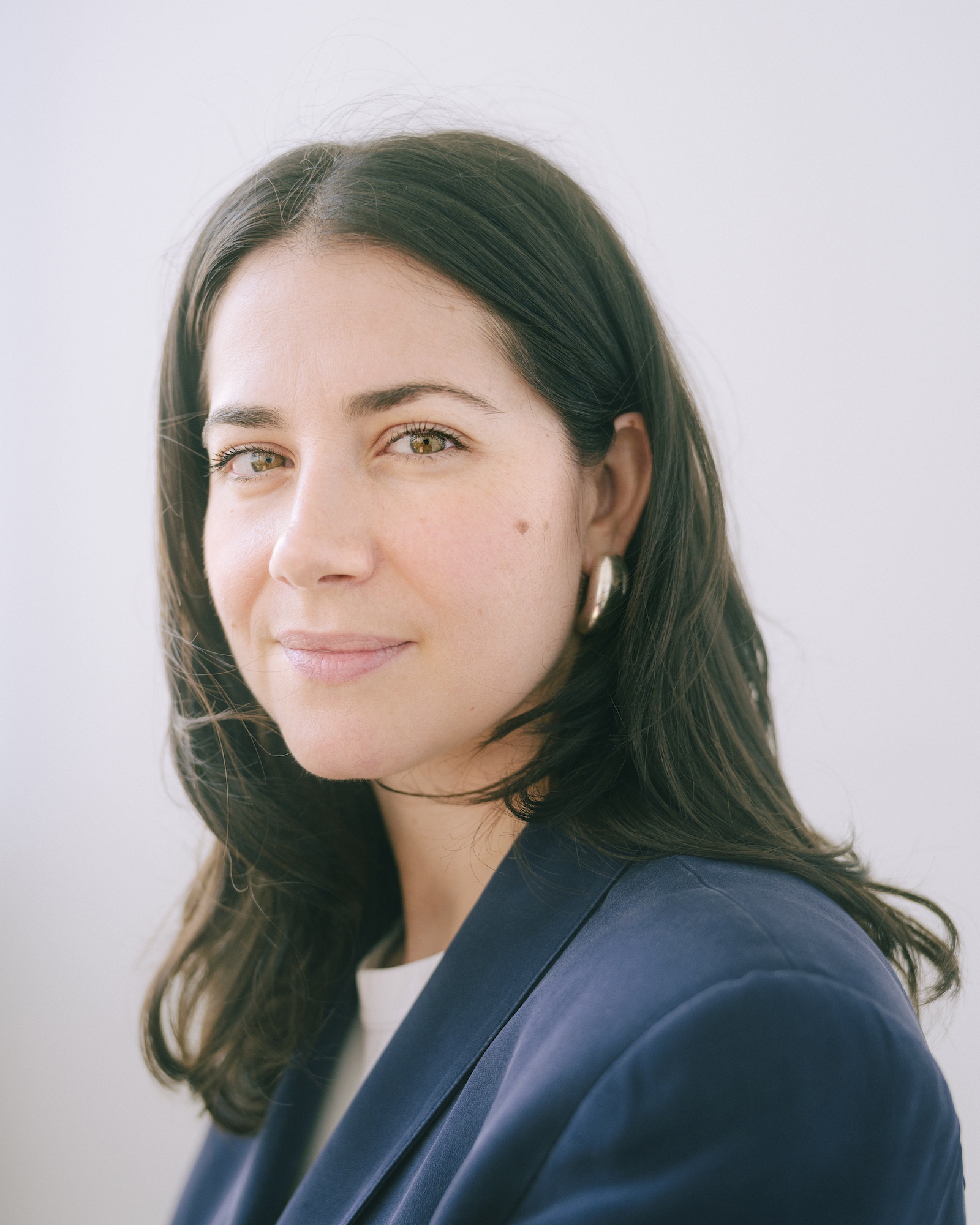
Meet Anaïs Castro: On Audiences, Collaboration and Living Exhibitions
#CFC Members Program #Contemporary Art #curatorCFC Members Spotlight is a monthly interview series showcasing the work of our members on our blog and social media. Through this series, we highlight the diverse curatorial practices in our community and encourage new connections and exchanges.
Meet CFC Member Anaïs Castro
Anaïs Castro is a curator and writer based in New York and Montreal. She holds a Masters in Modern and Contemporary Art: History, Curating and Criticism from the University of Edinburgh and a Bachelor of Fine Arts in Art History from Concordia University. She has held positions at various institutions, including the National Gallery of Canada, Arsenal Contemporary Art, Art Mûr, the Peggy Guggenheim Collection and Stills – Scotland’s Centre for Photography. She worked alongside Gaëtane Verna as an Assistant Curator on Kapwani Kiwanga’s project for the Canada Pavilion at the 60th Venice Biennale.
Castro has independently curated exhibitions and projects in Canada, the United States, the United Kingdom, Germany, Switzerland, and China, including Cruel to be Kind (Montreal, 2023), Material Knowledge (New York, 2022), Mystic Toolkit (San Antonio, 2022 and Montreal, 2020), Ground Control (Berlin, 2019) and Over My Black Body (Montreal, 2019 and Berlin, 2018). She is one of the founding members of the curatorial collective The Department of Love, which presented projects in Shanghai, London and online.
Castro was part of the inaugural Shanghai Curators Lab (2018), was a Curator in Residence at AiR351 x CAC (Lisbon / Torres Vedras, 2025), the International Studios & Curatorial Practice (Brooklyn, 2021), Artpace (San Antonio, 2019), Art in General (Brooklyn, 2019), Titanik (Turku, 2017) and a Visiting Critic at BCA (Burlington, 2016). She has been invited to speak at various institutions, including Parsons School of Art and Design (New York), Triangle Arts Association (New York), Centre Clark (Montreal), The School of Visual Arts (New York), la Galerie de l’UQAM (Montreal) and others. She is an editorial member of Daily Lazy and publishes regularly with various publications.
In our latest Members Spotlight, curator Anaïs Castro reflects on the formative experiences, transnational influences, and research-led inquiries that shape her evolving curatorial practice today.
CFC: What inspired you to pursue a career as a curator? Was there a particular moment or experience that sparked your interest?
I was drawn to curating as a way to work at the intersection of ideas, artists, and audiences. My path began with a deep love for art history, but I quickly realised I was more interested in facilitating encounters—creating contexts in which artworks could resonate, spark conversation, or shift perspectives—than in purely academic analysis. Early on, I organized a small, self-initiated exhibition with artist friends. Seeing how a thoughtfully curated space could transform their work, and how it could open new conversations with visitors, was a turning point. I understood then that curating could be both a creative and critical practice, a way of shaping discourse as much as experiences.
CFC: What thread or idea ties your work together?
Across very different projects, I return to questions of how art operates within broader social, political, and cultural systems. I’m interested in works that complicate official narratives, that reveal what’s been erased or overlooked, and that invite viewers into a layered reading of history and place. Whether I’m working on an exhibition about collective memory, colonial legacies, or the ways urban space shapes identity, my curatorial approach privileges dialogue, multiplicity, and the idea that artworks can hold contradictory truths.
CFC: Name a project or exhibition that holds special significance for you. What made it stand out?
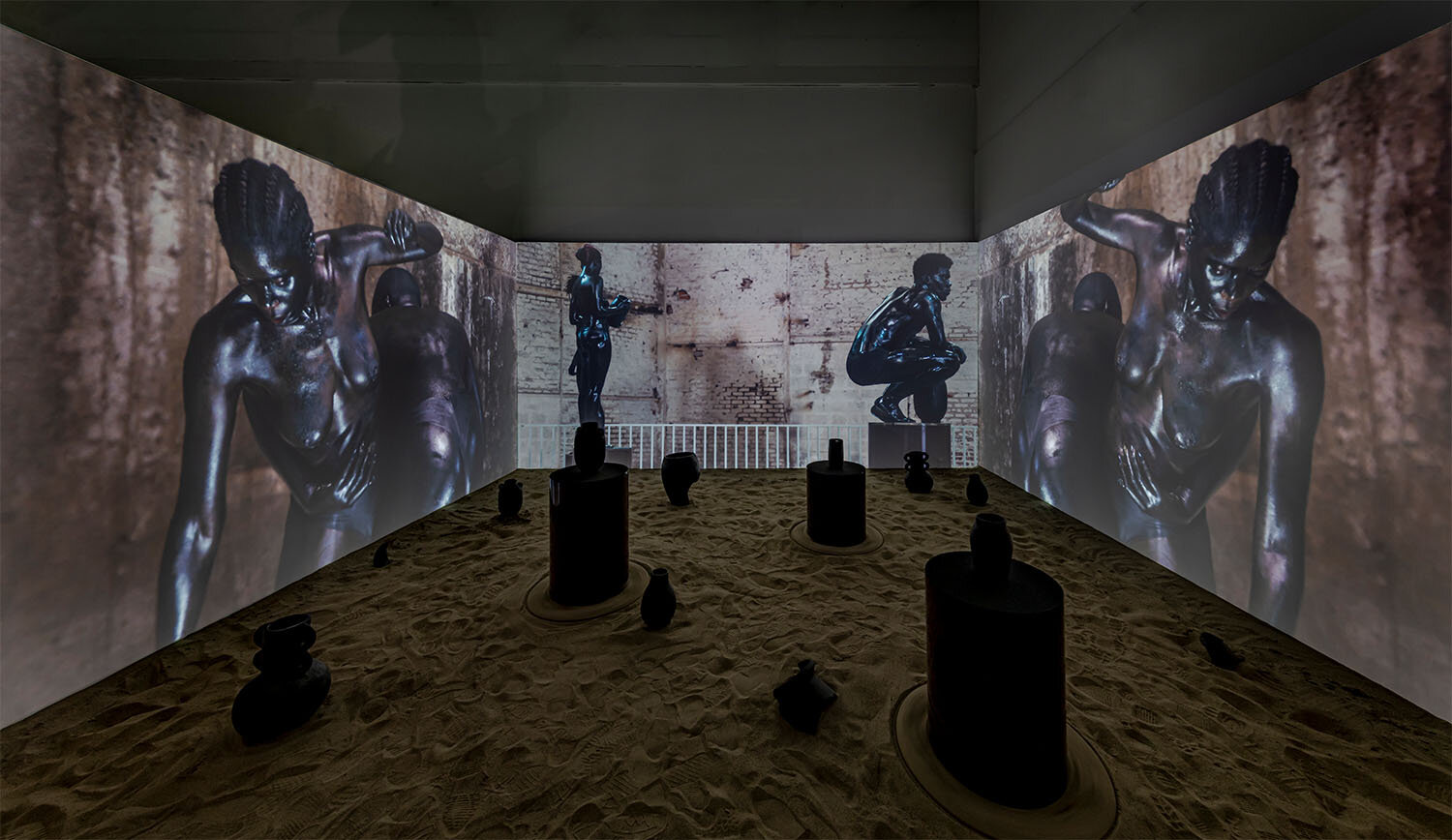
Trinket by Kapwani Kiwanga at the 2024 Venice Biennial holds special significance for me. The project stood out for its conceptual rigour and technical prowess, but also for the generosity and care embedded in its making. It restored my faith that large-scale projects, involving a wide network of collaborators, can be realised in a spirit of benevolence, mutual respect, and shared purpose. The experience reaffirmed that the process behind an exhibition can be as meaningful and transformative as the final work itself.
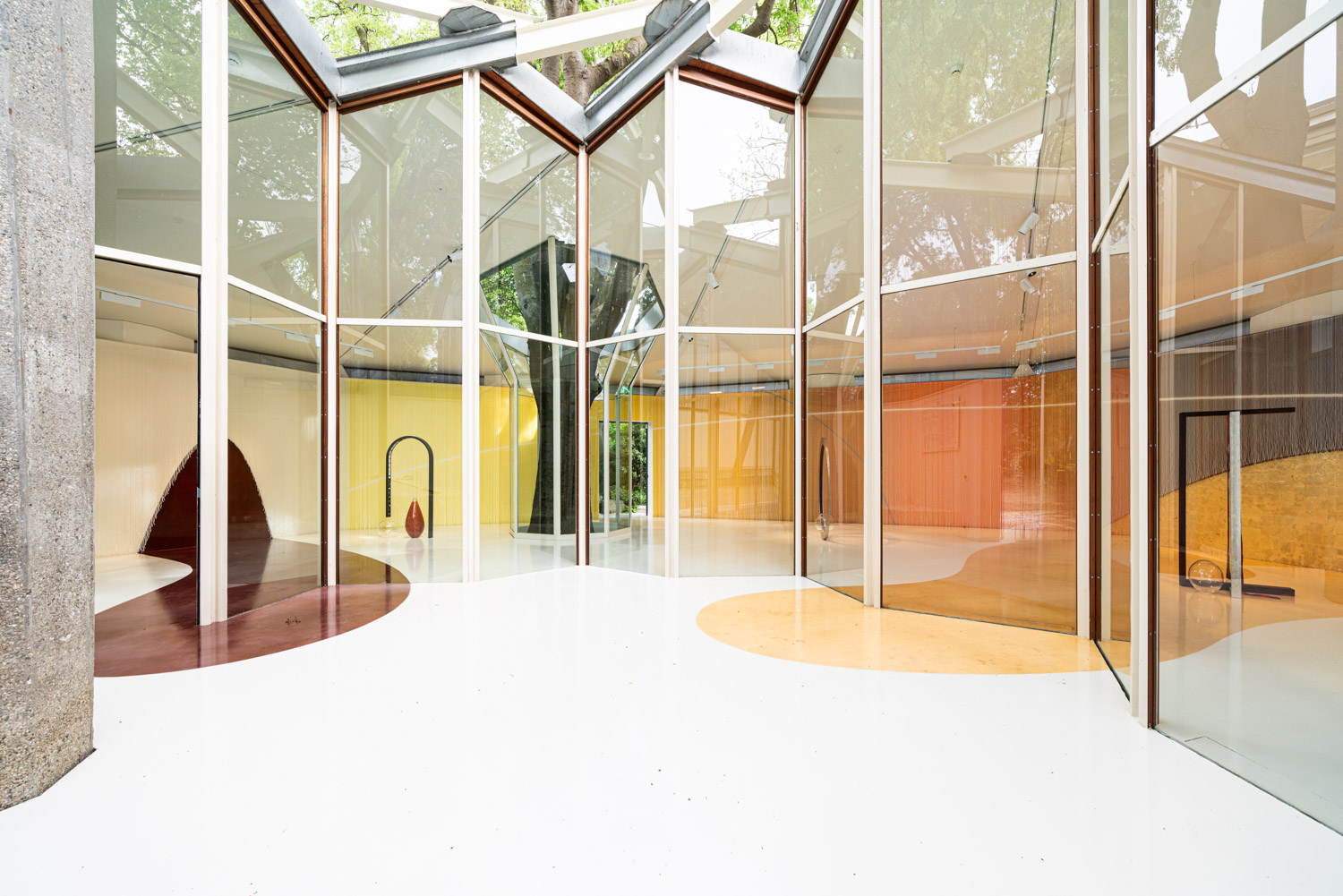 View of Kapwani Kiwanga: Trinket, Canada Pavillon at the 60th Venice Biennale, 2024. Photo credit: Valentina Mori.
CFC: What’s your favourite part about being a curator? And, if you don’t mind sharing, what’s the most challenging?
The most rewarding part is the privilege of being in conversation—sometimes literally, sometimes through the work itself—with artists whose thinking challenges my own. Each project expands my vocabulary for understanding the world. I love the alchemy that happens when works are placed together in a space: unexpected dialogues emerge, and viewers bring their own interpretations into the mix. The pace and precarity of the art world can make it difficult to sustain thoughtful, research-driven projects. Institutions and funders sometimes favour fast results, spectacle, or easily quantifiable outcomes, which can conflict with the slower, more nuanced work that many artists and curators want to pursue. Balancing ambition with available resources—and protecting time for deep thinking—is a constant negotiation.
CFC: What advice would you give to aspiring curators just starting their careers?
Build relationships with artists and peers before worrying about institutional recognition. Your network of collaborators is your greatest resource. Be curious about disciplines outside of art—history, politics, science, literature—because they will deepen your curatorial vocabulary. And don’t wait for permission to start: small, independent projects can be just as transformative as large institutional ones.
CFC: What does ‘success’ look like to you in curatorial work, and has that definition changed over time?
Early in my career, I thought success meant working at a major institution or delivering high-profile exhibitions. Now, I measure success by the quality of the conversations and collaborations a project fosters, the space it opens for artists’ ideas, and whether it leaves a lasting imprint—however subtle—on the communities it touches.
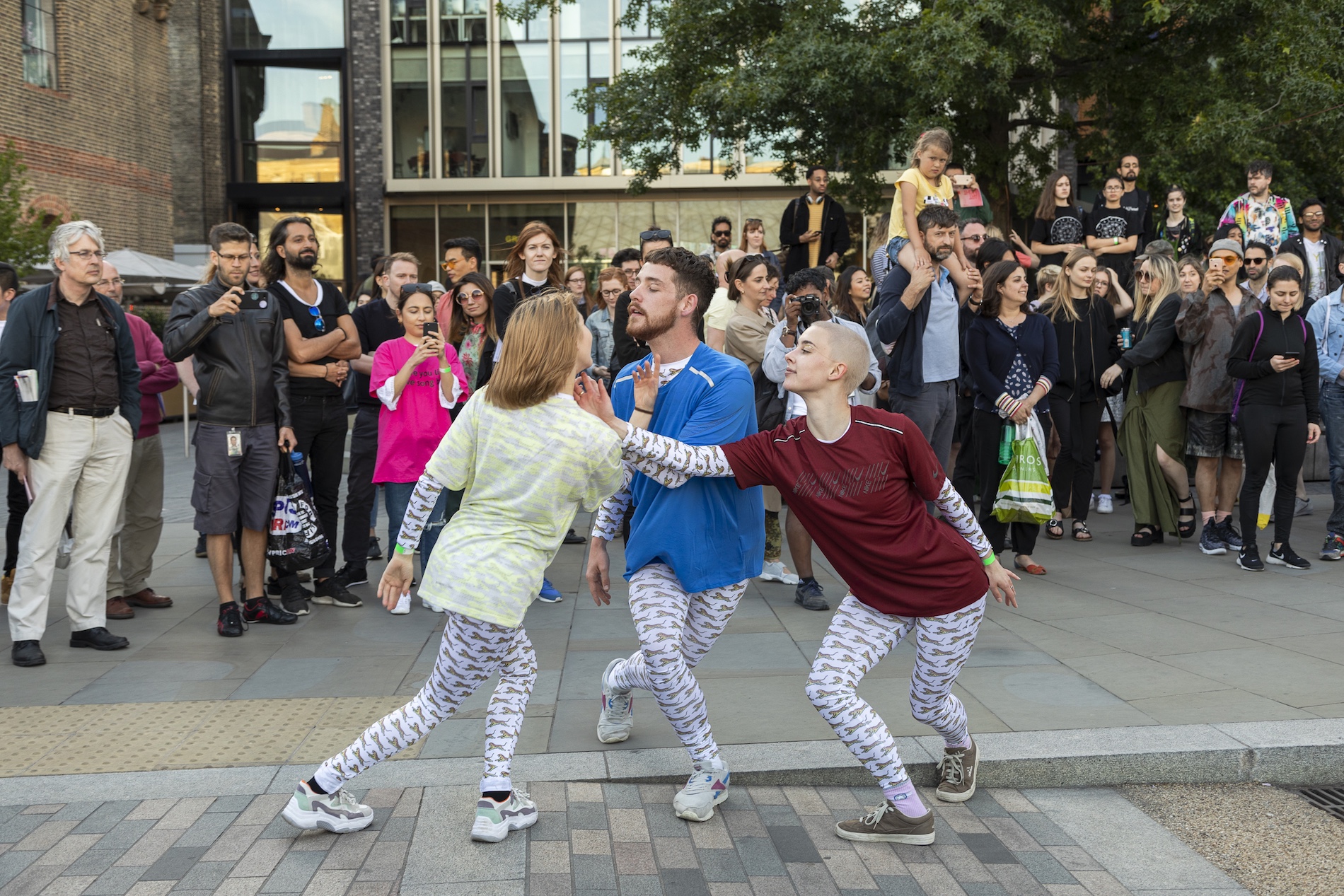 View of the performance Kudiman by Alvin Tran, The Department of Love, for London Art Night 2019. Photo credit: Justina Fedec.
CFC: What’s something unexpected or surprising you’ve learned through your curatorial work? This could be about art, people, institutions—or even yourself.
I’ve learned that audiences often find connections in artworks that I never anticipated—and that those connections can be just as valid and important as the intended ones. It’s a humbling reminder that exhibitions are living entities shaped as much by their viewers as by the curator’s framework.
CFC: Any hot takes on the current state of the curatorial field or the art world in general? What do we need more or less of?
We need more structural support for long-term research, especially the kind that engages with communities and histories beyond the market’s reach. We need less emphasis on novelty for novelty’s sake and more on sustained engagement. I’d also like to see less reliance on overextended, underpaid freelance labour, which is unsustainable and inequitable.
Explore more of Anaïs Castro’s work on her website and Instagram.
Profile photo: Clara Lacasse
Are you interested in learning more about our CFC membership? Dive into how to become a CFC member here.