








Meet Chisom Peter Job: Charting New Archives for Marginalised Voices
#CFC Members Program #Chisom Peter JobCFC Members Spotlight is a bi-monthly interview series showcasing the work of our members on our blog and social media. Through this series, we highlight the diverse curatorial practices in our community and encourage new connections and exchanges.
Meet CFC Member Chisom Peter Job
Chisom Peter Job’s work examines the various intersections of art and identity, particularly how members of marginalised communities engage with and use art to explore specific issues in their societies and the constraints often imposed on them. He also focuses on archiving and documentation to create a repository for future generations.
In our latest Members Spotlight, curator Chisom Peter Job traces his path from journalism to championing queer and marginalised narratives, sharing how archiving, research and a commitment to accessible exhibitions shape his curatorial vision.
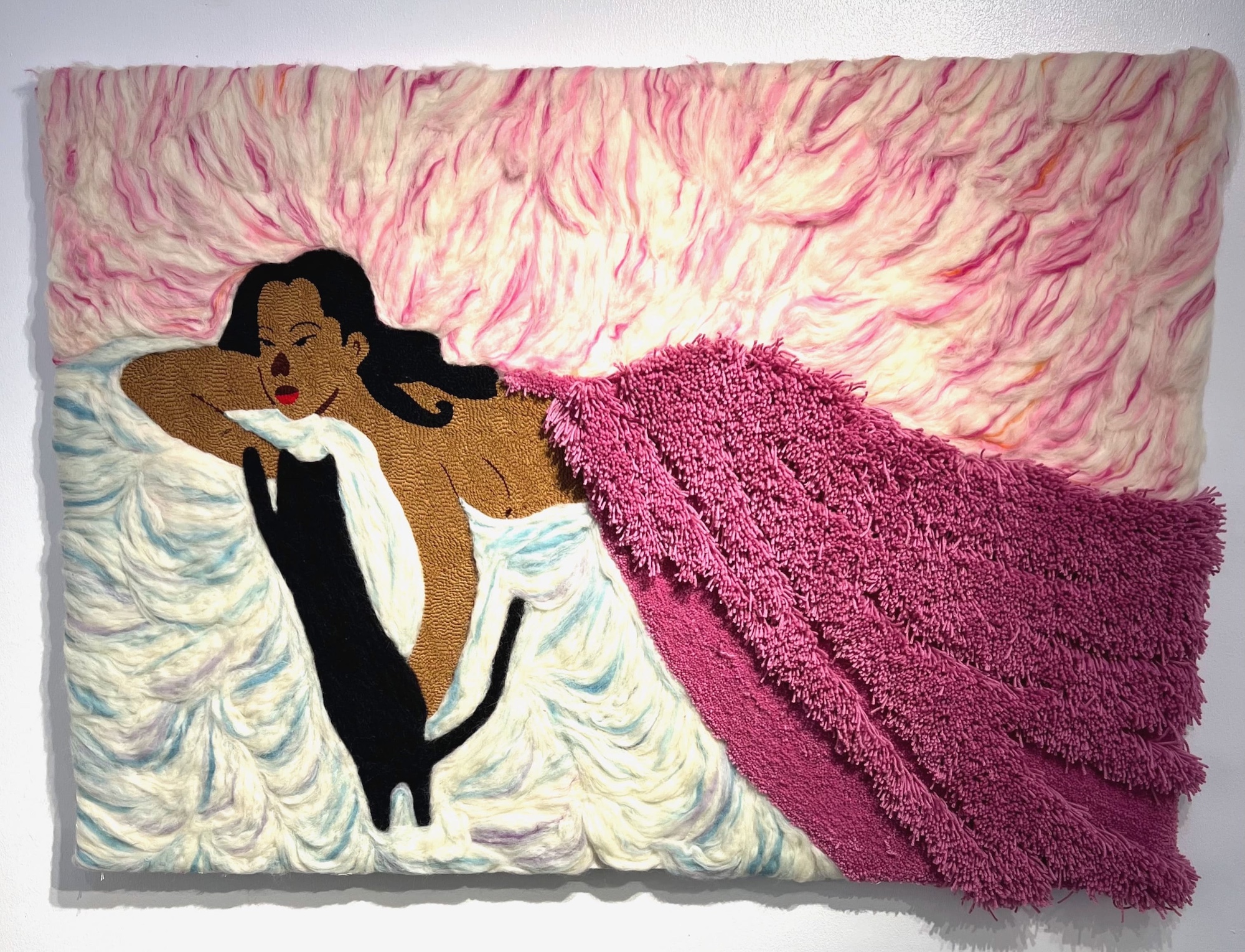
Image credit: Cynthia Ugwudike, In The Eyes of My Lover at The Ark by Anny Robert. Photo by The Ark by Anny Robert.
CFC: What inspired you to pursue a career as a curator? Was there a particular moment or experience that sparked your interest?
CPJ: I used to work full-time as a journalist and researcher. I spent five years of my life doing that until I joined a cultural organisation where I got to curate, direct residency programs, and work directly with artists whose work spotlighted the Nigerian queer experience.
As a queer Nigerian myself, working in that capacity and seeing how a lot of these artists were constantly on the lookout for opportunities made me want to pursue a full career as a curator. I often have people mention how the curatorial landscape is no different than the media, and while I do not entirely disagree, I haven’t felt this fulfilled in a while because I get to sit down with artists, listen to their ideas, and work with them.
Maybe it’s because of the kind of projects I often work on, but that was when I knew I wanted to do this and in a way, my curatorial practice was born from that too.
CFC: What thread or idea ties your work together?
CPJ: The thread that ties my work together is examining how art intersects with identity and how artists working at this intersection provide different understandings/a multifaceted view of what we understand by identity.
If we say the contemporary is connected with our daily lives, how then can we show that while spotlighting the lived experiences of people who exist within that? People often say they come to art for an escape, which is valid in itself, but even in that escape, there are communities, and people, whose identities are not spotlighted in the same ways cis white heterosexuals are. It’s this thread of identifying these stories no matter how insignificant they might feel and working with artists in creating a narrative to spotlight them.
CFC: Name a project or exhibition that holds special significance for you. What made it stand out?
CPJ: I seize every opportunity to discuss the art of creating and uniting worlds from the ground up, regardless of the medium. The dedication to one’s craft is incredibly important to me, and Beyoncé’s Homecoming definitely stands out. It is one of the most artistic works I have had the privilege to experience because it reminds me of doing the work, of the idea of perfecting everything. Additionally, it embodies one of my favourite things: drawing from the past. I find that the use of memory has been quite pronounced in my practice thus far. It’s in collaborating with artists to either draw from their past work or employ references from history to inform an idea, which I particularly enjoy.
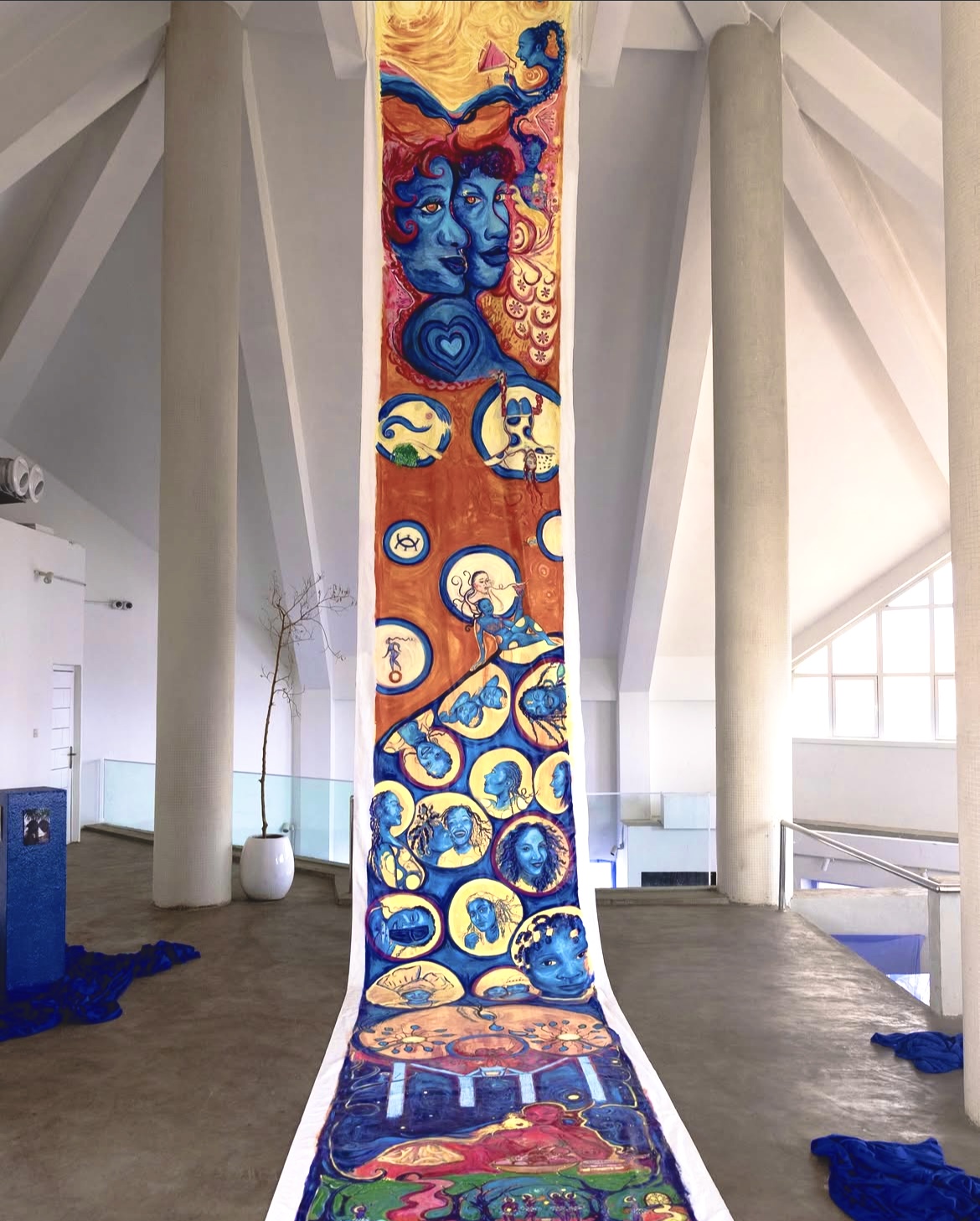
Image credit: Fiyin Koko, Somewhere in Between at Amah Studios.
CFC: What’s your favorite part about being a curator? And, if you don’t mind sharing, what’s the most challenging?
CPJ: My favourite part about being a curator has to be working with the artists and carrying out the research required for an exhibition. Curating merges all my interests and experiences—writing and research— and provides the opportunity to do them too, and that’s one of the reasons I love it. Writing catalogues, curatorial statements and essays, all make me smile, to be honest.
However, the most challenging part for me has to be the lack of opportunities and funding required to execute a project or exhibition. We all have lots of ideas, things we’d want to bring to life, but then when you aren’t affiliated with a gallery or institution you begin to do the work of fundraising. I have been blessed so far with having resources and people willing to work and collaborate with me on certain projects, but then there are still others I have had to abandon because of what is required.
CFC: What’s something unexpected or surprising you’ve learned through your curatorial work? This could be about art, people, institutions—or even yourself.
CPJ: People often debate what constitutes art and what should be considered as such. Personally, I have learnt that art is found in everything and everywhere for those with eyes to see. It doesn’t have to be grandiose or overt. You attribute the meaning you wish it to hold.
CFC: Any hot takes on the current state of the curatorial field or the art world in general? What do we need more or less of?
CPJ: Haha, I don’t know if I’d consider this a hot take, however, I think we need to create more accessible exhibitions, programming, etc. Yes, we live in a capitalistic society that doesn’t leave space for those who can’t afford to exist in it, but we need to ensure people from low-income backgrounds and minority groups, cannot only engage with our work but are provided with the opportunities to be a part of it.
This way, we have a society where people aren’t priced out from enjoying and being in conversation with art.
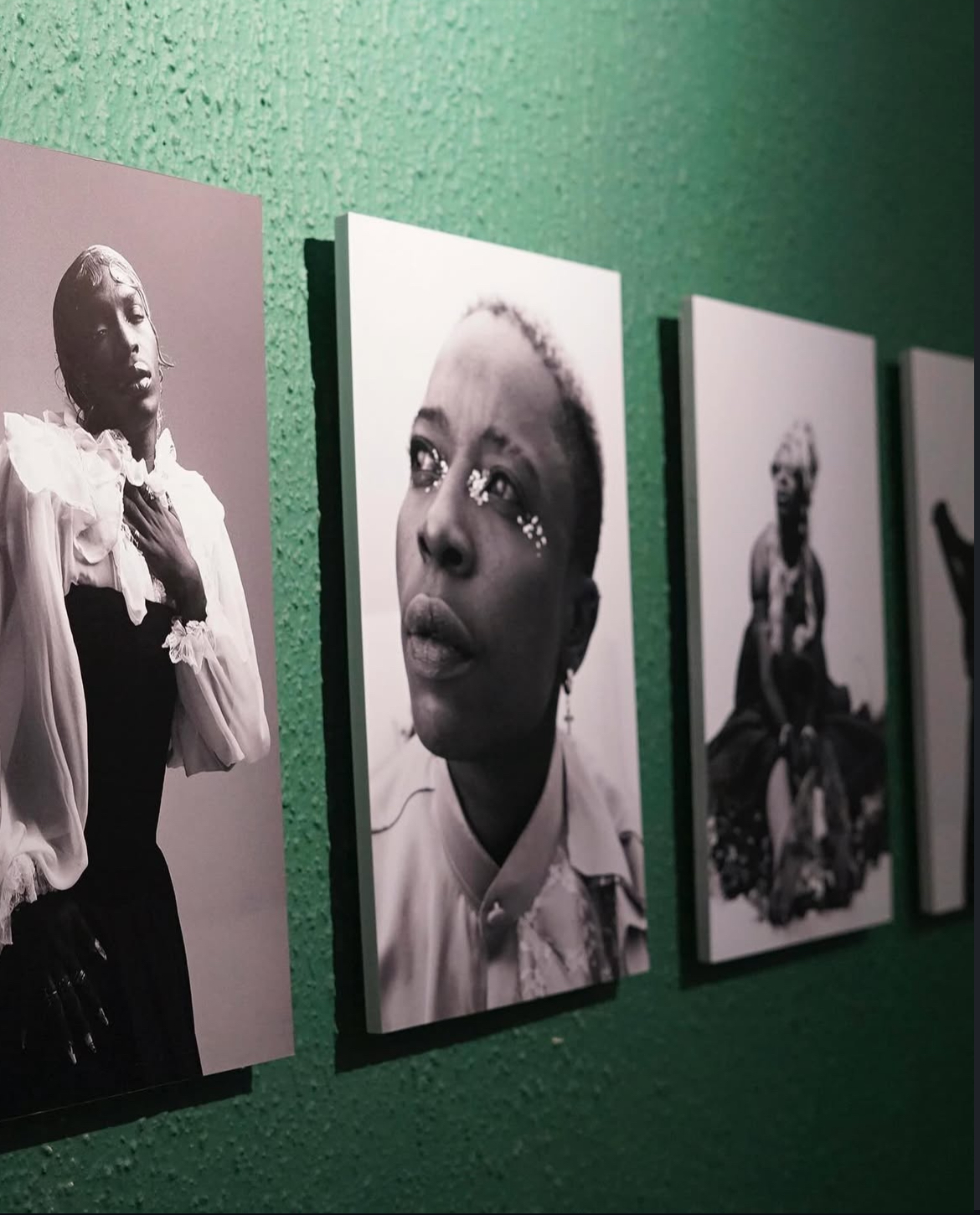
Image credit: Rachel Seidu, The Politics of Queerness at Obodo Nigeria.
CFC: What would your ideal curatorial workspace or support system look like?
CPJ: My ideal curatorial workspace would be a closed environment with ample windows for sunlight, easy access to archives, music playing loudly enough to feel (that’s the only way I can fully focus on work), a desktop for all the designs I typically need to go through, and a whiteboard to map out everything. I believe I currently have my ideal support system, as the people in my life are among my greatest supporters, which makes everything easier.
CFC: What does ‘success’ look like to you in curatorial work, and has that definition changed over time?
CPJ: For now, success to me is having people deeply engage with not just the art but the texts included and seeing it have a sort of effect on them. I recently had someone tell me at a recent exhibition that the curatorial statement provided a deeper meaning to the exhibition and also helped them understand the art better, and that was nice in a way.
So yes, I love watching people move through the space and place the connecting themes. Although I do think it might change over time, right now, that is it.
CFC: How do you maintain your curatorial integrity within institutional frameworks or funding pressures?
CPJ: I strongly believe in communicating what I do and stand for, and in cases where it shows I have to bend or do something that compromises that, I stand my ground and if that doesn’t work out, I leave. While I believe in meeting in the middle, I have my hard NOs and I always stand by them.
CFC: What advice would you give to aspiring curators just starting their careers?
CPJ: I would say, “You don’t have to wait for the white gallery walls before doing it.”
Explore more of Chisom Peter Job’s work on his website.
Profile photo credit: Tomiwa Arije.
Are you interested in learning more about our CFC membership? Dive into how to become a CFC member here.