







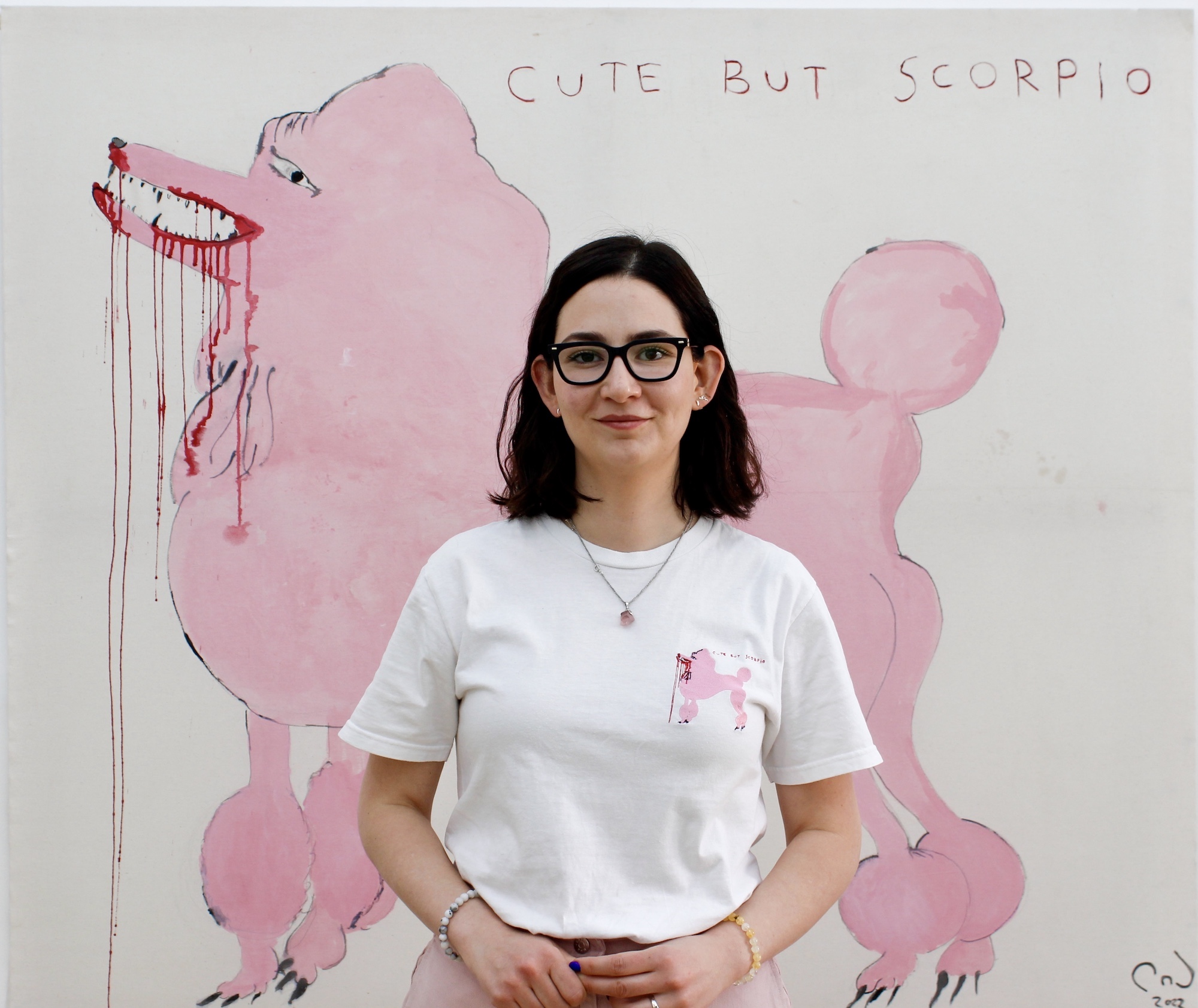
Meet Sopio Kolkhidashvili: On Exhibitions as Tools for Dialogue and Discovery
#CFC Members ProgramCFC Members Spotlight is a bi-monthly interview series showcasing the work of our members on our blog and social media. Through this series, we highlight the diverse curatorial practices in our community and encourage new connections and exchanges.
Meet CFC Member
Sopio Kolkhidashvili is a curator, art advisor at the Bank of Georgia’s Wealth Management Department, and co-founder and Art Director of Corridor, an art exhibition and education space in Tbilisi. She curated the VIP and media programs at TAF and lectures at Free University Tbilisi. Recently, she began creating digital content to connect Georgian contemporary art with global audiences through exhibitions, education, and institutional highlights and critique.
In our latest Members Spotlight, curator Sopio Kolkhidashvili reflects on her curatorial path, the power of exhibitions as tools for dialogue, and her mission to make Georgian contemporary art more visible on the global stage.
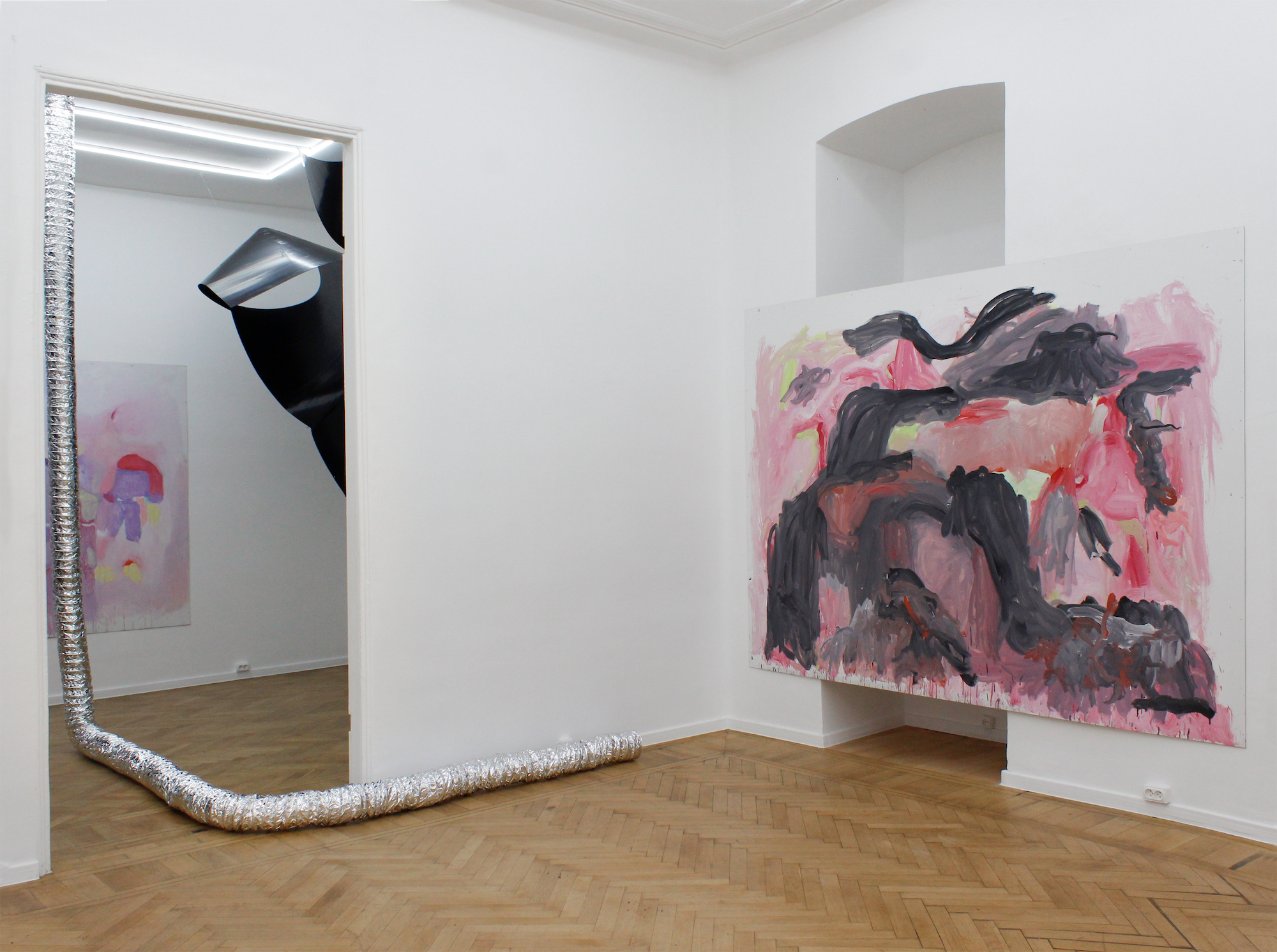
Installation view from Teo Maspindzelashvili’s solo exhibition Alive and Unknown. Photo credit: Ana Prangishvili
CFC: What inspired you to pursue a career as a curator? Was there a particular moment or experience that sparked your interest?
SK: I’ve been drawn to art history since I was six, attending private Sunday classes that sparked my fascination with visual culture. I pursued this passion at the Tbilisi State Academy of Arts, where I studied to become an art historian. But I wanted to learn more and broaden my perception to go beyond academic frameworks and understand how fine art lives in culture, media, and everyday life. That search led me to another BA at the University of Zurich, where I studied Popular Cultures, Photography, and East Asian Art History. While writing my thesis on exhibition-making, I discovered Harald Szeemann and everything clicked. In his radical curatorial vision, I found the space I had been searching for. That was the moment I realized I wasn’t just studying art I was meant to be a curator. And for the first time, I knew exactly what kind of curator and art professional I wanted to be.
CFC: What thread or idea ties your work together?
SK: The thread that ties my work together is the drive to bring art to people and people to art. I see art not as something removed from everyday life, but as a force that questions how we see, what we value, and who we are. My aim is to build bridges between audiences and artistic practices bridges that challenge or collapse established norms, but always provoke with the aim to educate and broaden perception. I believe exhibitions should be active, not passive experiences. I’m not interested in pleasing everyone, but in creating shifts intellectually, emotionally, socially. My exhibitions don’t simply display—they tell a story, question, and teach.
A clear example is InkFusion, a group exhibition I curated in Tbilisi in 2023 at the Georgian Museum of Fine Arts. It explored the past, present, and future of Georgian printmaking from woodblock and mezzotint to paper-making and engraving. The show brought together artists who are reclaiming lost printmaking techniques and reshaping them through a contemporary lens. It sparked conversations around cultural memory, materiality, and creative survival exactly the kind of dialogue I strive to ignite through my work.
That same year, I co-founded Corridor, an exhibition and education space in Tbilisi that brings this curatorial philosophy into a more permanent, public-facing platform. It functions as both a curatorial space and an educational tool grounded in the belief that art should be accessible, critical, and rooted in dialogue. Through exhibitions, mentorship, and public programming, Corridor creates space for emerging voices and new ways of seeing.
For me, staging an exhibition is a tool to spark conversations and ask the questions we too often avoid. Art is a universal language a way to connect across disciplines, cultures, and perspectives, and to make people feel, reflect, or react. My goal is to create spaces where dialogue begins, perspectives shift, and meaning unfolds beyond the surface.
CFC: Name a project or exhibition that holds special significance for you. What made it stand out?
SK: One of the most significant projects I’ve curated was a large-scale group exhibition of contemporary Georgian art in Switzerland in 2019 one of the most comprehensive Georgian shows there since the 1990s. Held near Basel, it featured works by nine artists, including the renowned Irakli Parjiani. We brought Parjiani’s previously unseen works from a private collection in Finland, alongside artworks sourced from Tbilisi, Berlin, Munich, and France. The exhibition reunited Georgian artists and artworks scattered across Europe, showcasing the versatility and distinctiveness of their practices within a shared cultural narrative.
What made it stand out was its scope and cultural resonance. It introduced Georgian contemporary art to a new international audience while bridging generations and geographies. The opening featured a performance inspired by Georgian culture and the alphabet, and I curated a three-day Basel program for the visiting artists. This project affirmed my curatorial path creating spaces where art builds dialogue, preserves memory, and crosses borders.
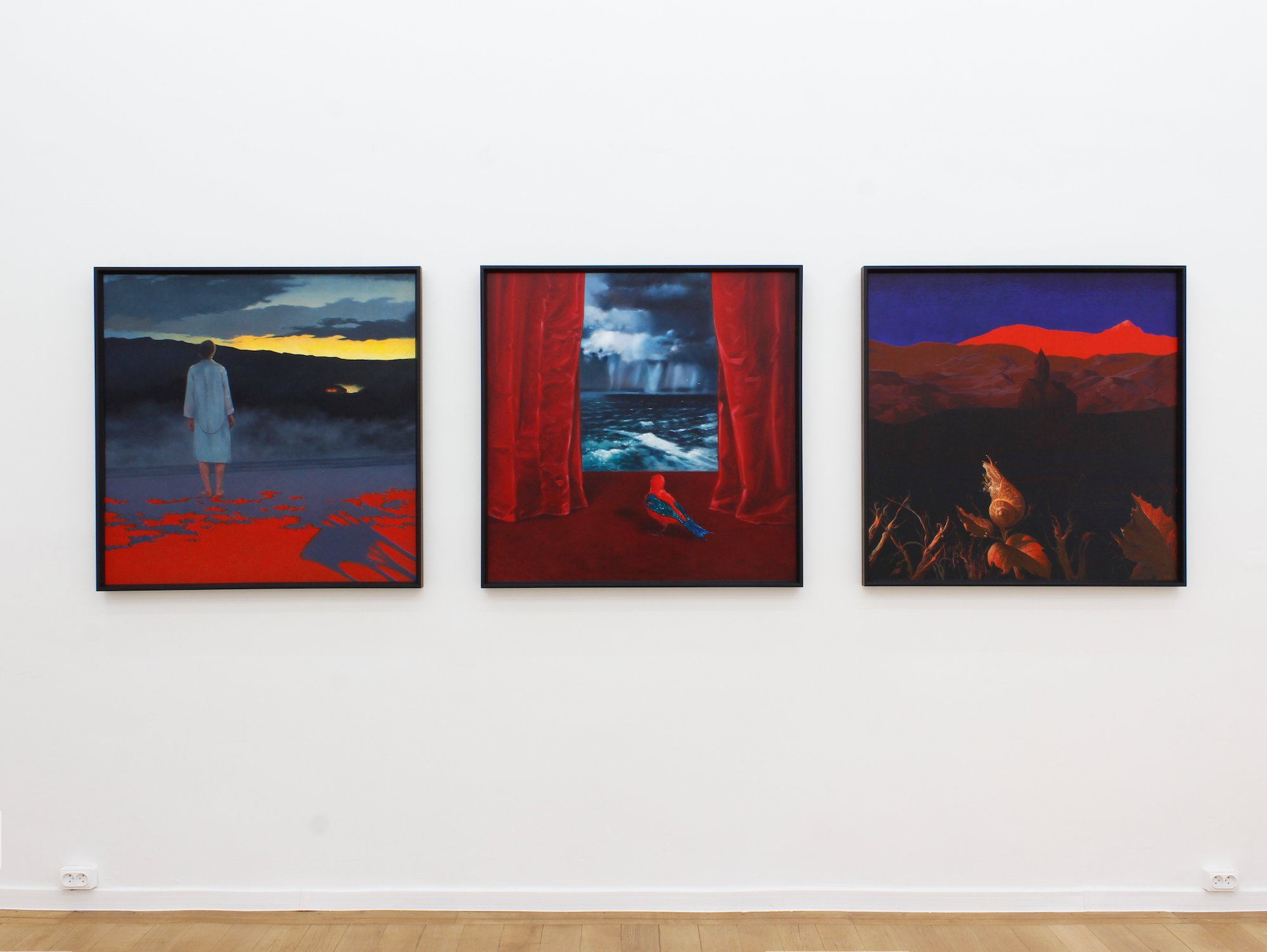
Installation view from group exhibition Three Faces of a Single Translation – Triptych. Artists: Irakli Toklikishvili, Tato Akhalkatsishvili, Tedo Rekhviashvili. Photo credit: Ana Prangishvili
CFC: What’s your favorite part about being a curator? And, if you don’t mind sharing, what’s the most challenging?
SK: My favorite part of being a curator is the opportunity to collaborate with people from vastly different backgrounds. Beyond artists and fellow curators, I work with logistics teams, designers, builders, marketers, educators, and shippers each bringing essential skills that shape both the exhibition and its wider context. I also love working with education teams and structuring public programs that deepen the audience’s engagement and open space for critical dialogue.
What excites me most is the versatility of the role: transforming individual art objects into a cohesive narrative, creating storylines that highlight each piece while composing a larger visual and conceptual melody.
The most challenging part? Definitely logistics especially international shipping and the costs that come with it. In 2023, I collaborated with EA Shared Space in Tbilisi, and we were selected as LISTE’s Friends to participate in LISTE Art Fair in Basel. We had to ship over 250 kilos of iron components parts of an installation by Sophie Jung from Georgia to Switzerland. These massive doors and iron frames formed a conceptual entryway, reframing the fair’s booth and creating a space where perception shifted. Let’s just say: getting the peaces there was an experience.
CFC: Any hot takes on the current state of the curatorial field or the art world in general? What do we need more or less of?
SK: The current state of the curatorial field is difficult to generalize so much depends on where you’re speaking from. In countries like Georgia, and across many developing contexts, art tends to receive less financial support, which can make long-term curatorial work more complex. In more developed settings, the infrastructure exists, and creating large-scale, research-based exhibitions is certainly more attainable but it still demands enormous effort and persistence.
Curating today involves far more than public facing events; behind each exhibition and opening night are countless invisible hours of research, coordination, and problem solving. What we urgently need is more funding not just for high-profile or commercial projects, but for curatorial research, experimentation, and risk taking. Supporting thoughtful, process driven work is essential if we want to move the field forward and make space for new voices and perspectives.
CFC: What advice would you give to aspiring curators just starting their careers?
SK: Experiment boldly, question what’s given, and stay endlessly curious. Collaborate across fields, never stop learning and never give up. You’ll hear many no’s, but one yes makes it all worthwhile and shifts whole journey.
Explore more of Sopio Kolkhidashvili on her Instagram.
Profile photo credit: Ana Prangishvili
Are you interested in learning more about our CFC membership? Dive into how to become a CFC member here.