







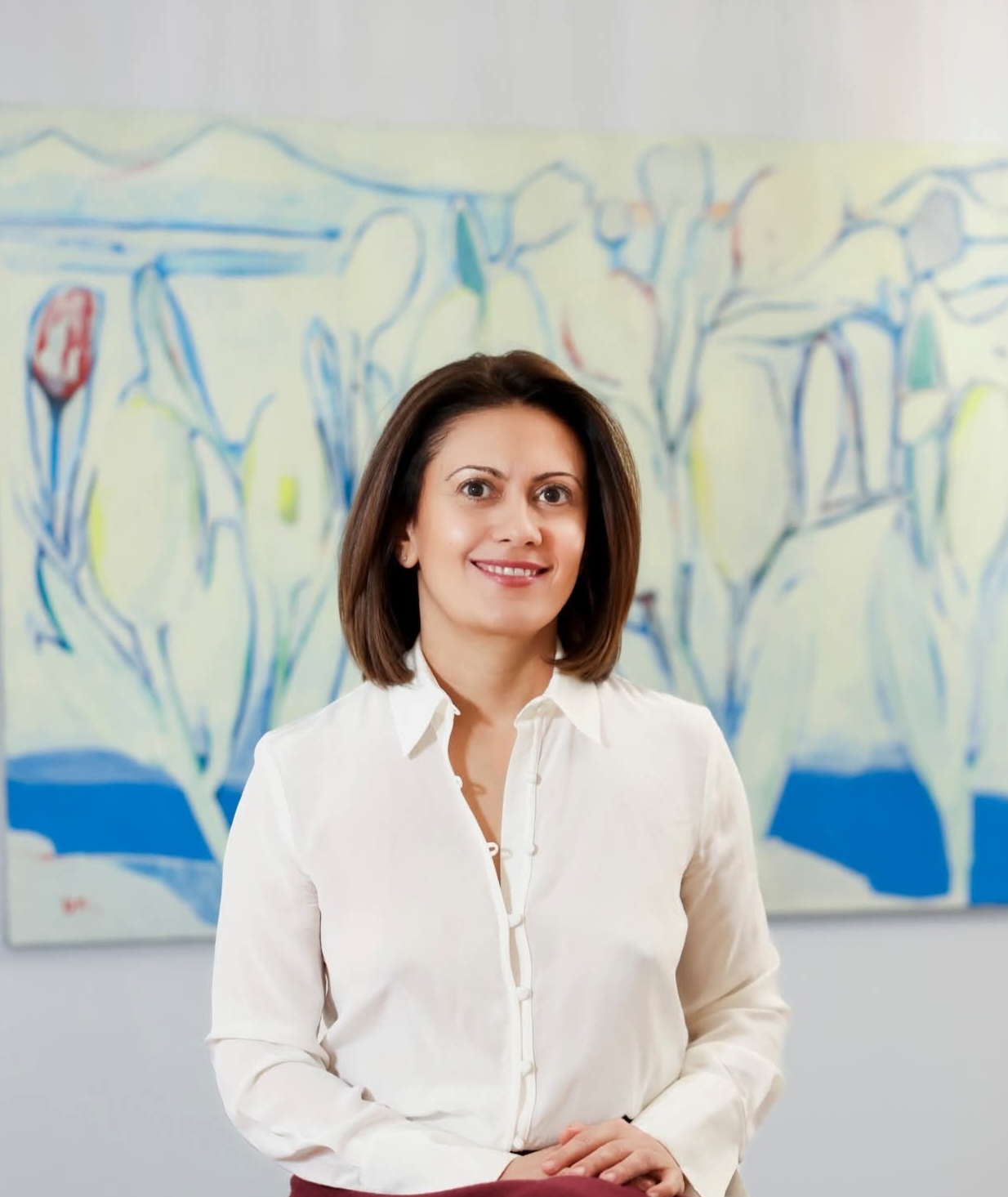
Meet Tamar Hovsepian: On Curating Armenian Contemporary Art and Diasporic Voices
#CFC Members Program #interview #Members’ ProgramCFC Members Spotlight is a monthly interview series showcasing the work of our members on our blog and social media. Through this series, we highlight the diverse curatorial practices in our community and encourage new connections and exchanges.
Meet CFC Member Tamar Hovsepian
Tamar Hovsepian is a curator and writer focused on Armenian and contemporary art. In 2022, she co-founded Atamian Hovsepian Curatorial Practice in NYC, presenting exhibitions by underrepresented artists. With degrees in art history and urban affairs, she also advises Armenia’s State Academy of Fine Arts and directs AHCP’s international artist residency program. She splits her time between New York and Yerevan.
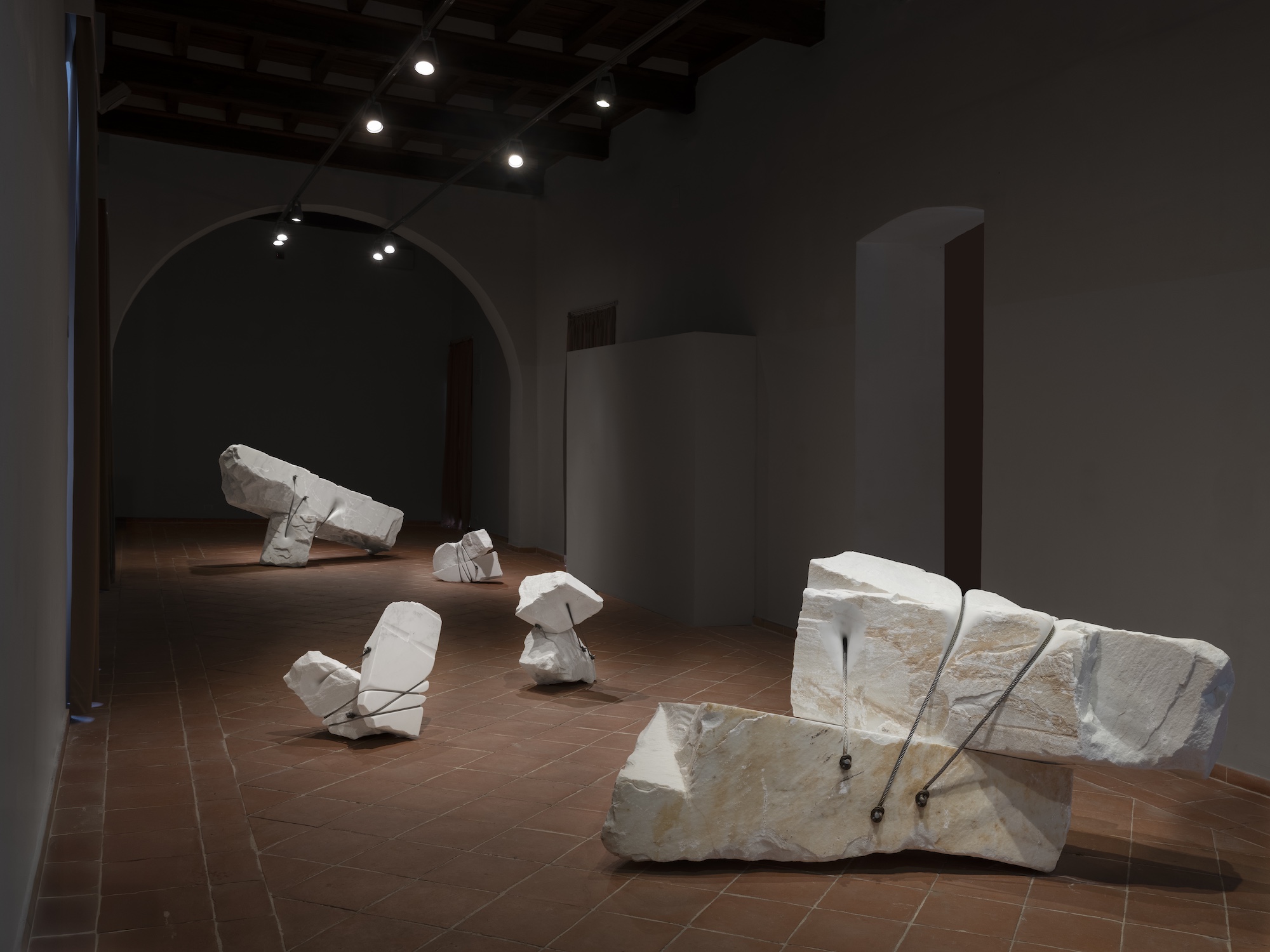 Installation view of Mikayel Ohanjanyan: Legami: Ties that Bind, February 14 – August 30, 2026, mudaC | museo delle arti di Carrara, Carrara. Courtesy of Atamian Hovsepian Curatorial Practice. Photo: Nicola Gnesi.
CFC: What inspired you to pursue a career as a curator? Was there a particular moment or experience that sparked your interest?
My path to becoming a curator was shaped by both personal conviction and a pivotal moment of realization. After earning my MA from the State Academy of Fine Arts in Armenia in 2006, I moved to New York and began applying for jobs and internships at various museums and galleries. While interning at the Queens Museum of Art, I also started working independently, curating exhibitions that focused on contemporary Armenian artists—especially female voices that were often overlooked. A turning point came during a conversation I had with a curator of Asian art who, at the time, worked at the Guggenheim in NYC. I asked whether they had any plans to research or exhibit Armenian art. The answer was disheartening—they explained that they had so much work to do with Chinese and other Asian art that it would be a long time before they reached Armenia. I was stunned. That moment made something very clear to me: if I wanted to see Armenian contemporary art represented seriously and thoughtfully in New York, I would have to take the initiative myself. I was fortunate to find support in mentors and peers like Sonia Balassanian, Neery Melkonian, Kathryn Manuelian, Hitomi Iwasaki, Adelina von Fürstenberg, Tom Finkelpearl, Stephen Haller, and Alex Gray. But the two people who have been central to my journey are my husband, Rafi Hovsepian, and my close friend and collaborator Christopher Atamian. Together, Christopher and I co-founded Atamian Hovsepian Curatorial Practice (AHCP), driven by the belief that Armenian artists deserve a visible and active platform in the global art conversation. So if I had to point to one spark, it was that moment of institutional dismissal that fueled my determination. But it’s the support of my community and collaborators that has sustained the fire.
CFC: What thread or idea ties your work together?
The central thread that ties my curatorial work together is the commitment to visibility, voice, and context—especially for artists from underrepresented or misunderstood geographies, like Armenia. I’m particularly drawn to work that engages with memory, identity, and the complex realities of post-Soviet and diasporic existence. My projects often focus on contemporary Armenian artists, who are navigating their own artistic language within layered cultural, political, and historical frameworks. What also unites my work is a deep belief in collaboration—among artists, curators, institutions, and audiences. Whether I’m organizing an exhibition in New York, supporting emerging artists, or presenting work abroad, I’m always thinking about how to create space for nuanced, multi-voiced conversations. It’s not just about displaying art, but also asking who gets seen, who gets heard, and what gets remembered. That sense of responsibility—to tell stories that institutions often overlook—is what anchors everything I do.
CFC: Name a project or exhibition that holds special significance for you. What made it stand out?
Three exhibitions that stand out as especially meaningful in my curatorial work so far are James Gortner: Terra Incognita, Karen Ohanyan: Icons of the Future, and Carol Peligian: Shift and Lift. While each is distinct in form and tone, all three explore transformation—of material, memory, and identity—and reflect my deep commitment to artists whose practices defy conventional boundaries. James Gortner’s Terra Incognita was a deeply introspective and visually ambitious exhibition and the first one held at AHCP’s temporary exhibition space in Manhattan. Gortner’s use of reclaimed paint and layered materials—literally embedding the memory of his old studio into the surface of his works—became a meditation on artistic survival, environmental responsibility, and personal upheaval. His paintings were like maps of the subconscious, filled with mythic references and intuitive symbolism. What moved me was how James turned rupture into renewal—his practice reminded me that even in displacement, there is room to imagine new ground. Karen Ohanyan’s Icons of the Future felt like a visual articulation of hope born from chaos. Ohanyan’s work doesn’t offer easy answers; it offers light. The circular paintings, rendered on translucent parchment, seem to float between worlds—echoing Armenia’s past while daring to imagine a luminous future. This exhibition was about giving space to a kind of visionary truth-telling, where utopia is a necessity. Curating it during a moment of political uncertainty both in Armenia and globally gave me a renewed sense of why art matters—as a space for survival, memory, and radical imagination. Carol Peligian’s Shift and Lift was a masterclass in turning vulnerability into power. Her use of sculpture, video, and installation was monumental and deeply personal, touching on themes of climate grief, genocide, and bodily memory. Her installation (What a Little Doll, 2024) of pink mourners standing on glass suspended from the ceiling was unforgettable—fierce, delicate, and poetic all at once. Carol’s collaboration with her daughter, glaciologist Alexandra Boghosian, added a powerful intergenerational and ecological dimension to the work. These three exhibitions continue to shape the way I think about curating—as a practice grounded in empathy, transformation, and radical acceptance.
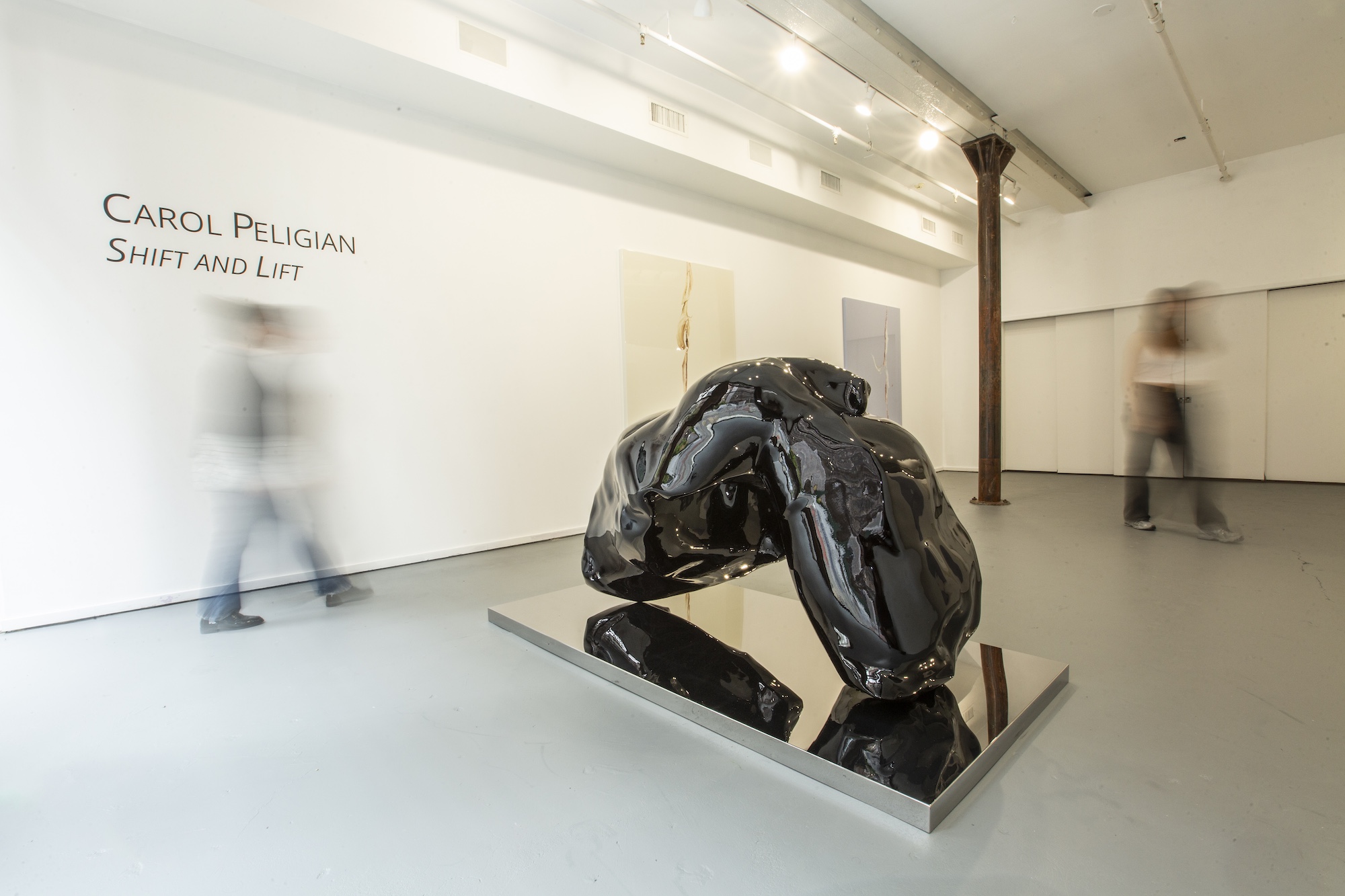 Installation view of Carol Peligian: Shift and Lift, May 2 – June 22, 2024, New York. Courtesy of Atamian Hovsepian Curatorial Practice.
CFC: What’s your favourite part about being a curator? And, if you don’t mind sharing, what’s the most challenging?
One of the most rewarding aspects of being a curator is the deep, often transformative engagement with artists and their work. I find immense joy in studio visits and conversations with artists—those intimate moments of exchange where ideas are shared, challenged, and expanded. The privilege of witnessing the evolution of a work, or an entire practice, is both humbling and exhilarating. I’m equally drawn to the research and writing process, both of which allow me to place individual works into broader historical, cultural, and conceptual frameworks. And, of course, the installation process—the physical shaping of space, the choreography of objects and ideas—is where everything comes together, often in ways that even surprise me. As for challenges, working as an independent curator can mean wearing many hats—from researcher and writer to fundraiser, project manager, and even technician. Securing funding is an ongoing challenge, particularly for projects that push boundaries or operate outside of institutional frameworks. Restrictive budgets can sometimes force difficult compromises, but they also demand creativity and resilience. Despite these hurdles, the autonomy and agility of working independently allow for a kind of curatorial freedom that continues to energize my practice.
CFC: What advice would you give to aspiring curators just starting their careers?
I would reiterate the advice that was once given to me: focus on your strengths, challenge your weaknesses and appreciate your mistakes. The art world can be overwhelming, but if your work is rooted in genuine passion, it will carry you through the inevitable challenges. Stay close to the questions that truly move you, and don’t be afraid to carve out your own path. Most importantly, don’t give up. This field requires patience, resilience, and a deep sense of purpose. Keep showing up—for the artists, for the work, and for yourself.
CFC: What does ‘success’ look like to you in curatorial work, and has that definition changed over time?
For me, success in curatorial work has become less about recognition and more about resonance. Earlier in my career, success was tied to institutional validation. Over time, that definition has shifted. Now, I see success in the quieter, more lasting impact of a project: when an exhibition creates space for dialogue; when an artist feels truly seen and supported; when someone walks away carrying a new perspective or a deeper question. Success also means working in alignment with my values—centering empathy, integrity, and care in both process and outcome. It means building long-term relationships rather than momentary visibility, and curating in a way that contributes, however modestly, to a more just and inclusive cultural landscape. In many ways, I think success in this field is not a fixed point but a practice—something you return to and redefine, again and again.
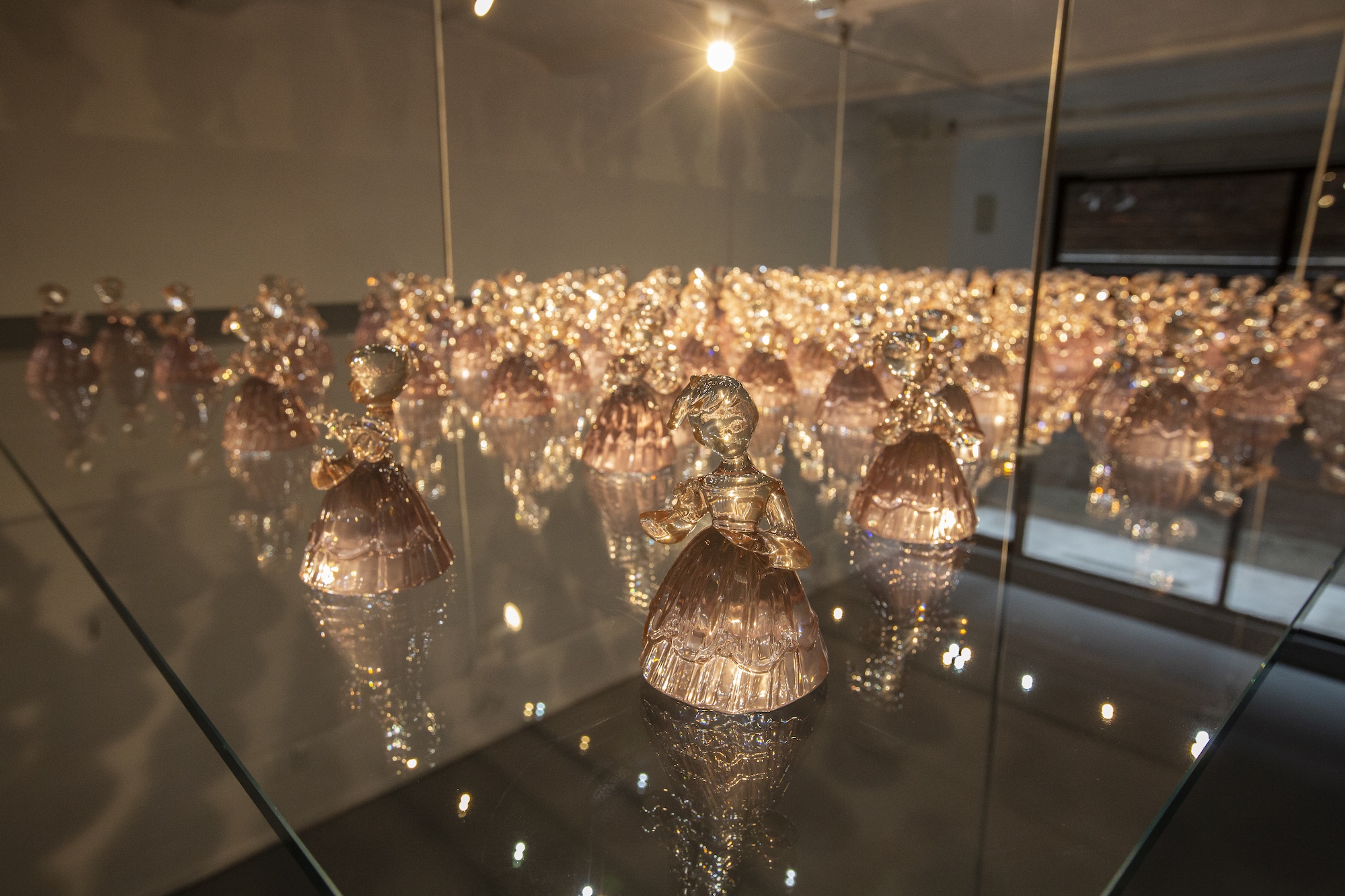 Installation view of Carol Peligian: Shift and Lift, May 2 – June 22, 2024, New York. Courtesy of Atamian Hovsepian Curatorial Practice.
CFC: What’s something unexpected or surprising you’ve learned through your curatorial work? This could be about art, people, institutions—or even yourself.
Curating has taught me more about myself than I ever anticipated. I’ve come to understand the shape and limits of my own boundaries—and how far I can push them when a project truly matters. I’ve learned that what initially feels impossible often becomes possible through sheer will, deep conviction, and collective effort. Perhaps most surprisingly, I’ve come to see that each exhibition is a kind of birth—an intense process of bringing something into the world that didn’t exist before. And like birth, it often carries un unspoken aftermath. There is, in many cases, a kind of postpartum—an emotional reckoning with what has been poured out, and what remains. And just as with children, I’ve learned that exhibitions and projects develop lives of their own. You may nurture them with the best of intentions, but you can never fully predict what they will become once they leave your hands—how they will grow, whom they will speak to, or what meanings they will take on.
CFC: Any hot takes on the current state of the curatorial field or the art world in general? What do we need more or less of?
Curating—at its most meaningful—is a deeply relational practice. It thrives on observing, listening, and the willingness to be curious about others and about ourselves. We need spaces that allow us to ask not just what art is, but what moves us, what connects us, and what sustains our sense of humanity in an increasingly fragmented world. We need more true diversity and inclusion—beyond representation as a checkbox or trend. That means centering voices, histories, and perspectives that have long been marginalized or excluded, not just inviting them in, but reshaping the structures that kept them out in the first place. What we need less of is the obsession with spectacle, speed, and market validation. Those forces are real, but they shouldn’t be guiding our work. Curating is about organizing meaning, asking difficult questions, and creating encounters that stay with people long after they’ve left the gallery. In a time when it’s easy to feel disconnected, I believe art still has the capacity to reconnect us—to ourselves, to each other, and to the stories that need to be told.
Explore more of Tamar Hovsepian’s work on her website and hers and the practice’s Instagram.
All photos courtesy of Atamian Hovsepian Curatorial Practice.
Are you interested in learning more about our CFC membership? Dive into how to become a CFC member here.