







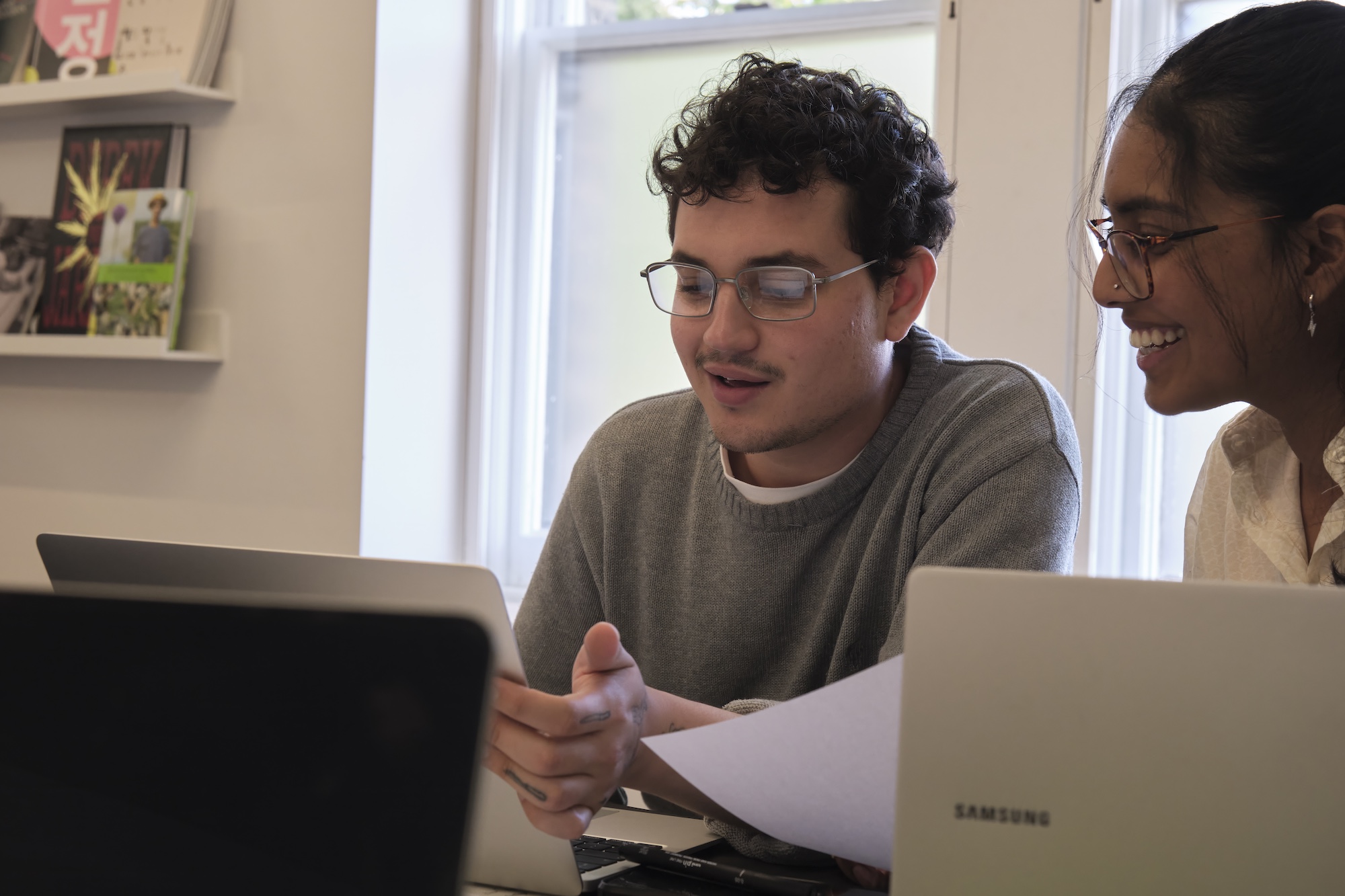
Rethinking Access to Curatorial Careers: A Conversation with New Curators
#curator #Curatorial Practices #educationWho gets to become a curator, and under what conditions, remains one of the defining questions shaping the contemporary art sector today. While the field has expanded significantly over the past decades, access to curatorial careers often depends on forms of access, support and opportunity that are not universally accessible.
Founded by Kerryn Greenberg and Mark Godfrey, New Curators was developed as a direct response to these structural inequalities. This fully-funded year-long programme combines curatorial theory, practical training, mentorship, research and collaborative exhibition-making to support emerging curators from structurally disadvantaged socio-economic backgrounds.
Call For Curators invited Greenberg and Godfrey to reflect on the limitations of traditional curatorial pathways, the role institutions play in widening access and how a new generation of curators is reshaping the field.
Applications for the next cohort at New Curators are open until 29 May 2026. Read more about it here.
CFC: New Curators emerged in response to structural inequalities within the art world. What gaps or failures in curatorial education and professional pathways originally motivated you to create the programme?
Mark Godfrey: We were both curators at Tate Modern for 14 years and during that time became increasingly aware of the gap between how curators are trained and what the profession demands in practice. Formal education often assumes equal access to unpaid or low-paid work experience, informal networks, and institutional familiarity – none of which are evenly distributed. As a result, many aspiring curators are filtered or opt out long before they reach meaningful opportunities. The events of 2020 also made clear how unprepared institutions were to address structural inequality. We created New Curators to make the path into our profession more transparent, better supported, and materially accessible to a wider range of people.
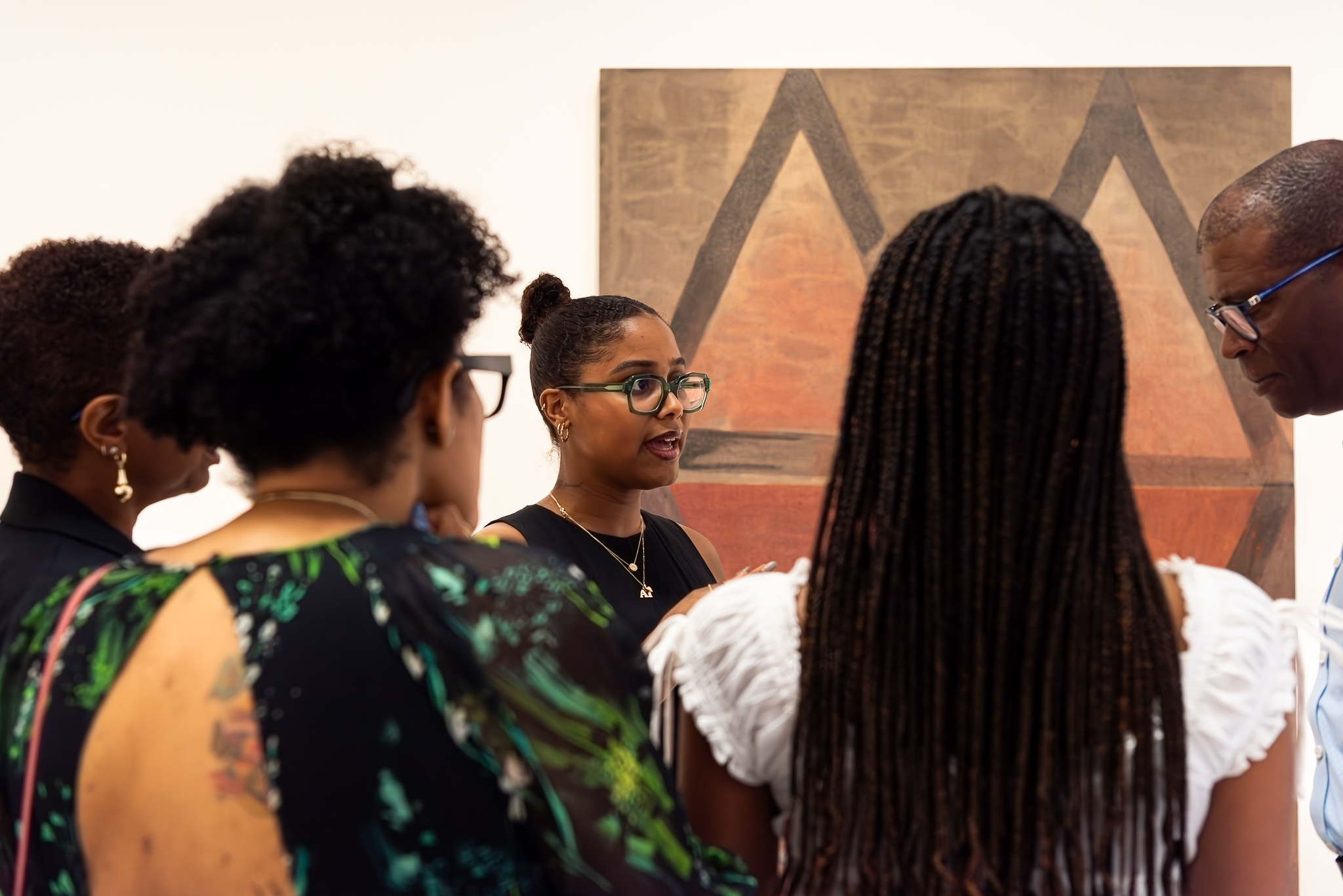
2024–5 New Curators Fellows giving a tour of akâmi- Duane Linklater with Ethel (Trapper) Linklater, Tobias Linklater and Grey Plumes, Camden Art Centre, 2025. Photo: Rob Harris
CFC: How do you approach curatorial pedagogy differently from a university MA programme?
Kerryn Greenberg: We place equal emphasis on acquiring knowledge, developing practical skills, and building community through academic seminars, skills training sessions, visits and guest talks, mentorship and coaching. The programme culminates in a co-curated exhibition at a London institution, alongside a catalogue and public programme devised and delivered by the fellows, ensuring that learning is embedded in curatorial work shaped by real-world constraints and opportunities. While research and writing are central to the programme, we prioritise the forms of writing curators use in practice — from catalogue essays and artist interviews to exhibition proposals, press releases, interpretation texts, and loan requests — rather than a dissertation. The programme also includes opportunities for independent research and regular presentations that build confidence in public speaking. Each year, the curriculum evolves in response to current art world events and debates, the concerns of collaborating artists, and fellows’ own research interests, forming a distinct, responsive curatorial pedagogy further shaped by the international and interdisciplinary nature of each cohort.
CFC: The programme places strong emphasis on confidence-building and mentorship alongside technical skills. Why are emotional and social support so important within curatorial education?
Mark Godfrey: Curating is a deeply relational and confidence-driven practice. Barriers to entry can be knowledge or skill-based, but they’re as likely to be social: having the confidence to walk through the door, knowing how to speak in institutional spaces, and how to position ideas so they are heard. The art world relies heavily on informal networks and unwritten rules, which can make it tough to access. Without support, people often self-select out of the field even when they are fully capable. Regular exposure, mentorship and peer solidarity help build confidence and resilience, counteracting the implicit messaging that only people from certain backgrounds “belong” in museums or galleries.
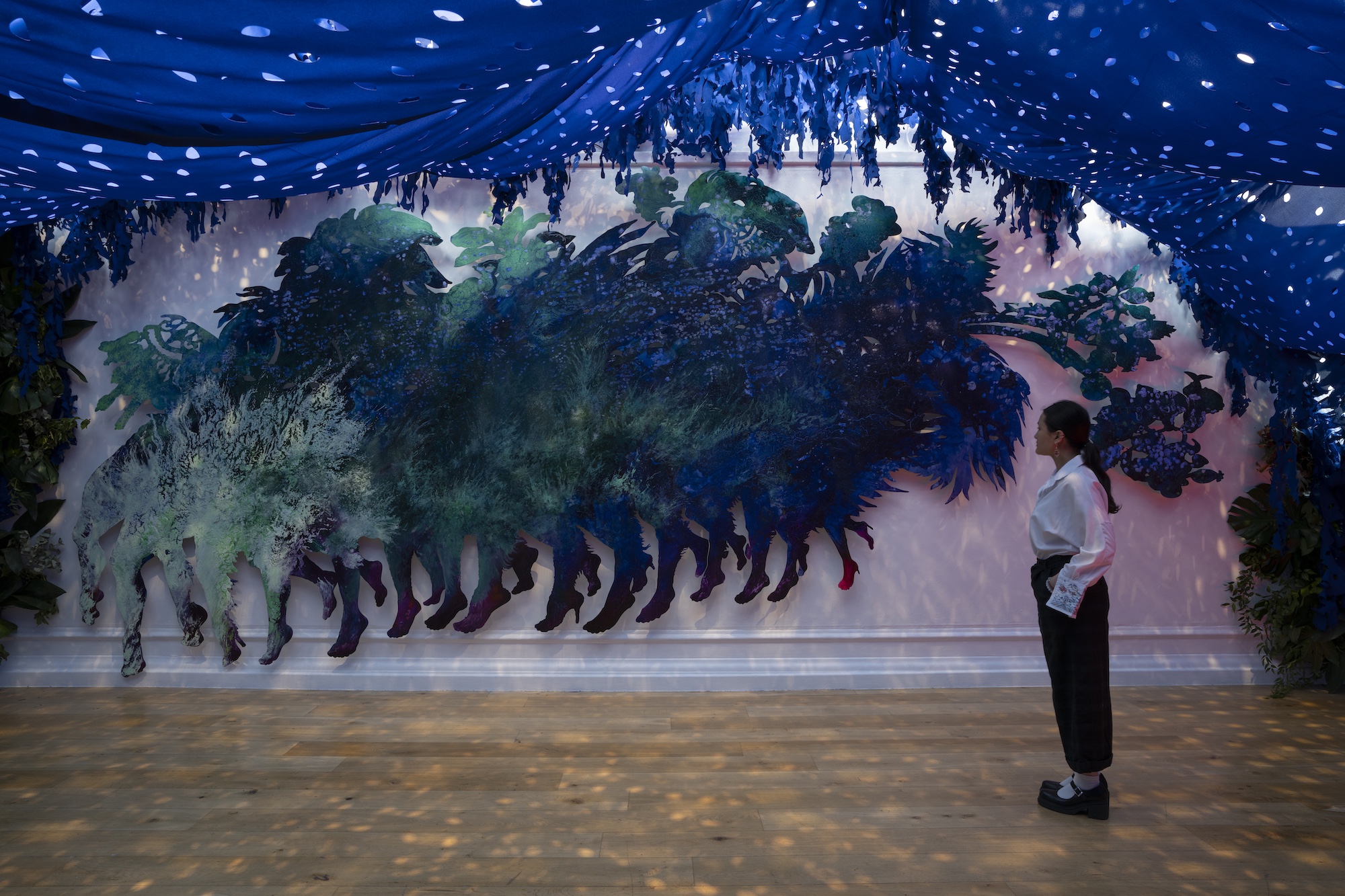 Installation View, Firelei Báez: Sueño de la Madrugada (A Midnight’s Dream), South London Gallery, 2024. Photo: Above Gallery, 2024.
CFC: Before founding New Curators, you both worked within major institutions, including Tate. At what point did you begin to feel that existing routes into curating were not accessible enough?
Kerryn Greenberg: I think I’ve felt this from the very beginning of my career. Coming from the Global South, I learned about Western art through small black-and-white reproductions and didn’t imagine it would be possible for me to have a career as an international curator. Many people helped me along the way, and I have always tried to pay that generosity forward. However, as I progressed in my career, I began to see more clearly both how inaccessible the field remained and how precarious it was even once you had entered it. At a certain point, it no longer felt enough simply to mentor individuals; I wanted to help build a structure that could have a bigger impact.
CFC: What responsibilities do major institutions have in widening access to curatorial careers?
Mark Godfrey: Institutions have made important changes, including abolishing unpaid internships and introducing paid fellowships, but these shifts have also reduced some entry-level opportunities. During Covid, it became clear to us that many institutions were struggling to move beyond symbolic inclusion toward deeper structural change around recruitment, progression, and retention. Rather than wait for institutions to find solutions, we wanted to help accelerate the process by building a pipeline of emerging talent that could gradually enter the system and help transform it from within.
CFC: How do socio-economic barriers affect not only who becomes a curator but also what kinds of exhibitions and institutions exist?
Kerryn Greenberg: Curators decide what art we see and how we see it. Restricted access to the profession means the field inevitably reproduces a narrow set of perspectives. Socio-economic background shapes what kinds of risks people are able to take, what narratives they feel authorised to present, and what artists and audiences they can meaningfully engage with. This directly affects programming: which artists are prioritised, what themes are explored, and how institutions define “relevance.” A more diverse curatorial field produces broader, more responsive cultural institutions that better serve a wider range of artists and audiences.
CFC: What excites you most about the next generation of curators?
Mark Godfrey: There is a noticeable shift with the next generation of curators being more focused on collaboration and community accountability. Many of our fellows bring interdisciplinary thinking from outside conventional art history and studio arts pathways, which enriches conversations in unexpected ways. What is particularly strong is a willingness to question assumptions and point out oversights and to challenge inherited institutional norms rather than simply operate within them. This creates the conditions for more flexible and responsive curatorial models.
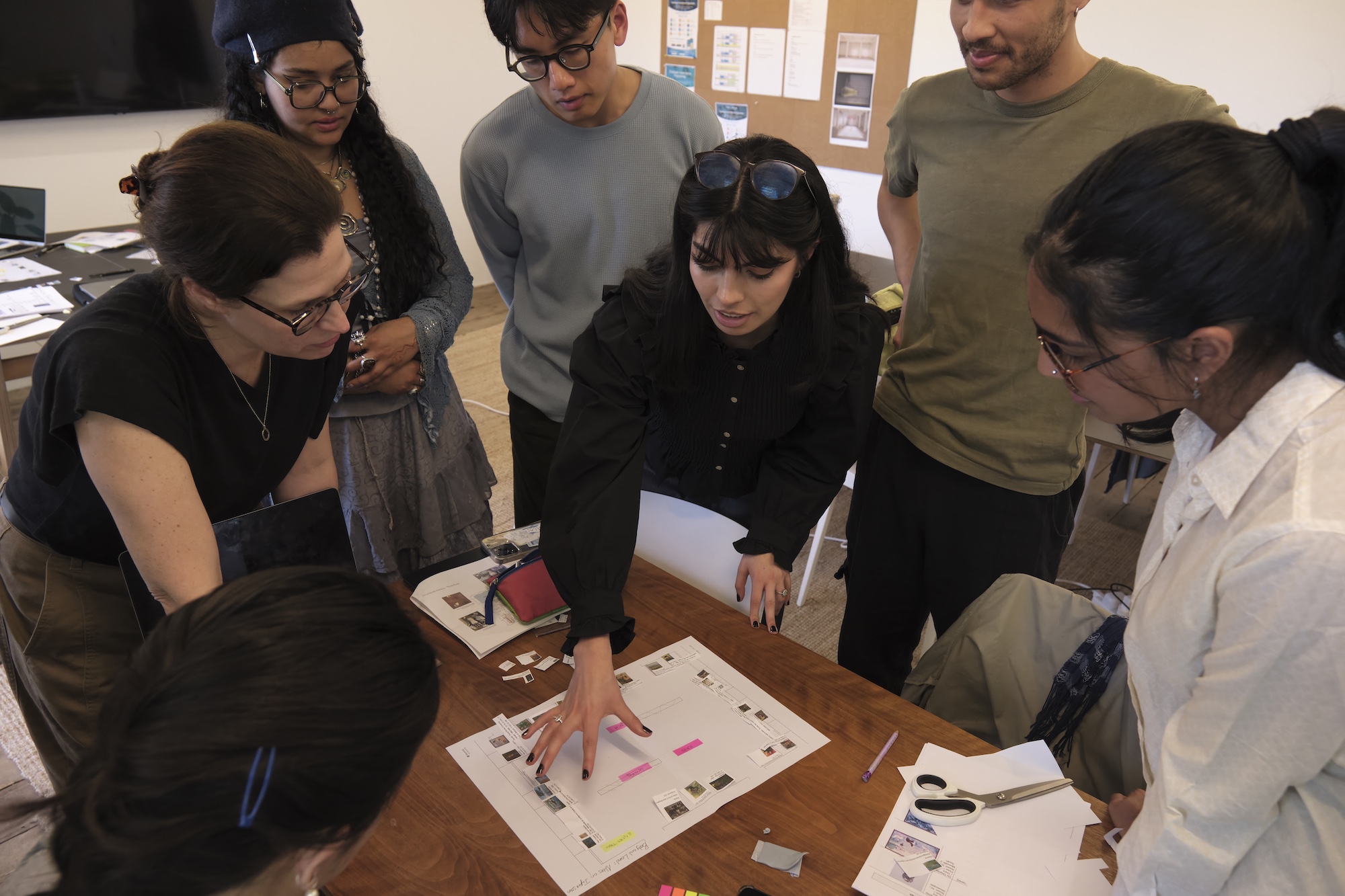
2026 New Curators Fellows with Kerryn Greenberg. Photo: Ruth Samuels
CFC: Looking back on your early careers, what do you wish someone had told you when you were starting out?
Kerryn Greenberg: To simply begin: start writing, meeting people, and self-organising. There is no single route into curating, and institutional recognition is not the only measure of capability or potential. Good work can happen outside of established institutions and without large budgets.
Mark Godfrey: To try to get opportunities to travel more widely in Latin America, Asia, and Africa. I have gained some expertise in art from North America and Europe, but I’m only recently getting opportunities to see artists and institutions in other geographies.
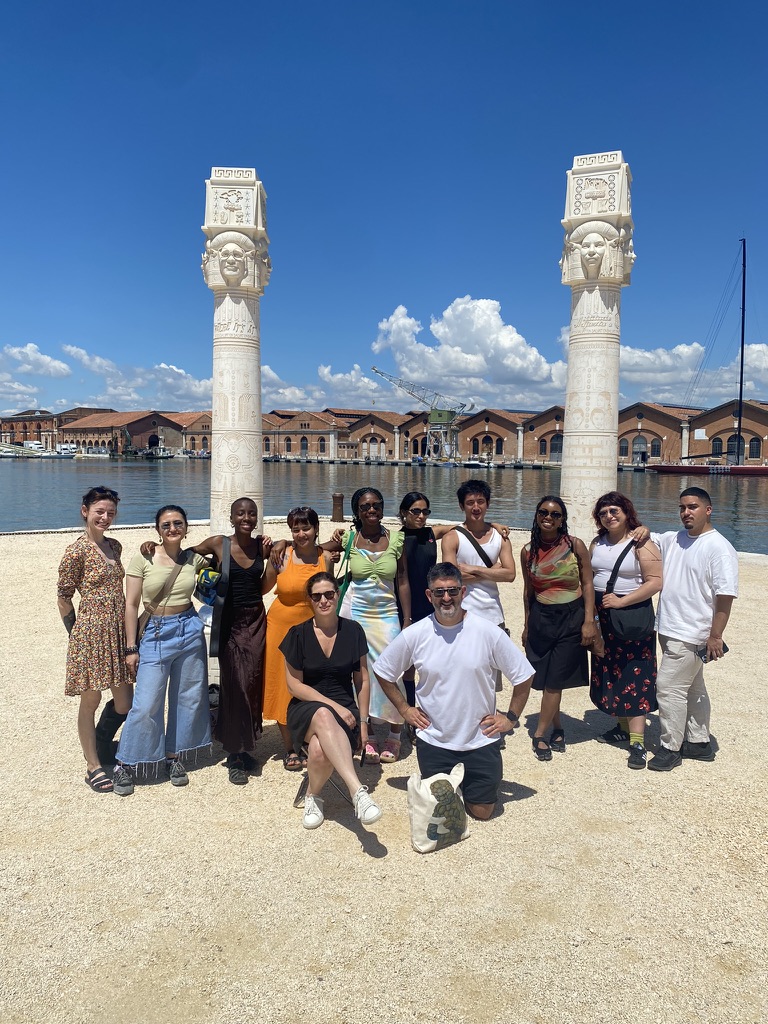
2023–4 New Curators Fellows, 60th Venice Biennale.
CFC: What advice would you give to someone interested in curating who feels the art world is “not for people like them”?
Kerryn Greenberg: Focus on what you can do from where you are. Read widely, spend time looking at art, keep abreast of what is going on locally and internationally and develop relationships with artists. Try to build practical entry points rather than trying to access the system all at once. That might mean small projects in alternative spaces, developing a peer network, or writing for online publications. Most of all, find like-minded people to do all this with. The art world becomes a lot easier to navigate when you are doing it with other people.
About
New Curators is a paid year-long curatorial training programme based in London for aspiring curators of contemporary art from structurally disadvantaged socio-economic backgrounds.
Kerryn Greenberg, New Curators Co-Director, is an international curator with 20 years’ experience. In 2023, she was Associate Curator of the 14th Gwangju Biennale and curated the two-part exhibition The Struggle of Memory at PalaisPopulaire, Berlin. As Head of International Collection Exhibitions at Tate from 2019–21 she oversaw the successful delivery of 15 exhibitions at partner venues as far afield as Quebec and Hong Kong and curated Light, the inaugural exhibition for the Museum of Art Pudong, Shanghai in 2021. In her previous role as Curator (International Art) at Tate Modern, she was responsible for establishing Tate’s Africa Acquisitions Committee in 2011. Curated and co-curated exhibitions at Tate include Nicholas Hlobo: Uhambo, 2008; Francis Alÿs: A Story of Deception, 2010; Contested Terrains, 2011; Joan Miró: The Ladder of Escape, 2011; Meschac Gaba, 2013; Marlene Dumas: The Image as Burden, 2015; Fahrelnissa Zeid, 2017, The Head & the Load, 2018 and Zanele Muholi, 2020.
Mark Godfrey, New Curators Co-Director, is a curator and art historian based in London. He was Lecturer in History and Theory of Art at the Slade School of Fine Art from 2002–7. From 2007–21, Mark was Senior Curator at Tate Modern where he worked on several major exhibitions and acquisitions. Curated and co-curated projects include Roni Horn AKA Roni Horn, 2009; Gerhard Richter: Panorama, 2011–12; Soul of a Nation, 2017 and Olafur Eliasson: In real life, 2019–20. He served on the jury for the Venice Biennale in 2017. He has published widely on contemporary art in journals and catalogues, and co-edited ‘The Soul of a Nation’ Reader. Outside Tate, he has curated exhibitions by Nicole Eisenman, David Hammons, R.H. Quaytman, Christopher Williams, Laura Owens and Jacqueline Humphries. Alongside his work with New Curators, Mark curated the first major UK survey exhibition of Kerry James Marshall at the Royal Academy in 2025–6.
Cover: 2026 New Curators Fellows. Photo: Ruth Samuels