




Fogo Island Arts (FIA) is a residency-based contemporary art and ideas organization that supports research, production and exchange for artists, filmmakers, writers, musicians, curators, designers and thinkers from around the world.
Since 2008, FIA has brought exciting emerging and renowned artists of today to Fogo Island, Newfoundland, Canada to take part in residencies and to present solo exhibitions at the Fogo Island Gallery. FIA also produces publications and presents programs on the island and in cities across Canada and abroad, including the Fogo Island Dialogues interdisciplinary conversation series, as part of its international outreach. Combining contemporary art, iconic architecture and social innovation in a singular setting, FIA is a world-class organization that is uniquely rooted in community.
FIA builds on the resourcefulness and creativity of Fogo Islanders, whose lived experiences provide a vital framework for the organization’s activities. By facilitating collaborations and connections between a local and international network of practitioners and thinkers, FIA aims to provide relevant insights on questions of human relationships with place, nature, financial capital, and one another.
Crucial to FIA’s mission is the conviction that art and artists have the capacity to instigate social change and offer new perspectives on issues of contemporary concern. Fogo Island itself is society on a small scale, where all the challenges of our digitally mediated connections, our fraught relationships to the natural world, our integration within global economic, social and political currents are present in condensed form. Equally at play are the shared culture and profound connections of a close-knit community, a thread of relationships developed in tandem with a specific place. As such, Fogo Island is a significant location to test ideas and practices through FIA’s creative opportunities and research inquiries.
With an international outlook and motivation to tackle global and local concerns, FIA is a unique organization that champions the work of artists and the development of contemporary ideas that engage with diverse social and political concerns of our time.
FIA is a charitable program of Shorefast, a registered Canadian charity with the mission to build economic and cultural resilience on Fogo Island and to serve community well-being by building and sharing new models of economic development that are based upon the inherent cultural and physical assets of a place.
History
Fogo Island Arts was conceived as a continuation of Fogo Island’s deep-rooted relationship with art that emerged through the National Film Board of Canada’s (NFB) Challenge for Change program of the 1960s and 70s. A participatory project that used film as an instigator of social change, Challenge for Change led to the hugely influential Fogo Process films, which documented Fogo Islanders’ way of life and shared concerns, empowering communities to act together to determine their future.
Building on this legacy, FIA was established in 2008 as one of Shorefast’s founding projects. It forms part of a holistic set of charitable programs and social businesses that aim to build economic and cultural resilience on Fogo Island.
Fogo Island
Fogo Island is an outport community: a small, remote coastal settlement unique to the province of Newfoundland and Labrador. Fogo Islanders are people of the sea who have made their living by fishing the frigid and often unforgiving waters of the North Atlantic.
A non-capital-accumulating society until the latter decades of the 20th century, Fogo Islanders sustained themselves for generations by fishing as families and relying on an unrelenting sense of resourcefulness fed by a profound love of place. This history of relative isolation and self-sufficiency has shaped Fogo Islanders and the Fogo Island of today, and continues to inform the island’s economy and culture.
While Fogo Island is a settler community, its territory is part of the ancestral homelands of the Beothuk, and the island of Newfoundland is the ancestral homeland of the Mi’kmaq and Beothuk. FIA also recognizes the Inuit of Nunatsiavut and NunatuKavut and the Innu of Nitassinan, and their ancestors, as the original people of Labrador.
FIA pledges to reflect a diversity of identities and perspectives in our programming, including international residencies, exhibitions, public programs and other initiatives. We commit to continually examine structures of power and decision-making within and beyond our organization with an aim to actively embody the values of inclusivity, equity and accessibility in everything we do.
We welcome conversations regarding how FIA can champion a wide range of practices, ideas and identities.
Fogo Island Arts is delighted to announce an open call for a new residency exploring the interconnectedness of food with our histories, ecologies, economies, politics, and social worlds. Fogo Island is geographically located within the Labrador Current, a section of the Atlantic being monitored closely by scientists as an indicator of climate change, but also, one which has considerable consequences for the whole of the Atlantic region.
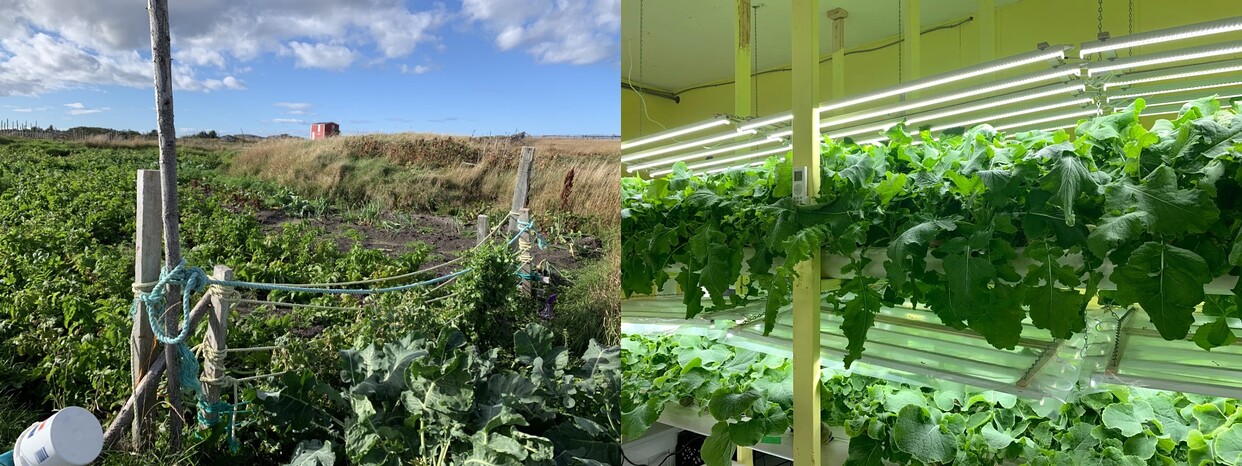
The sub-arctic maritime climate and socio-political history of Fogo Island provide fertile grounds for extensive research and practice related to its foodways. From the early history of the Beothuk people for whom Fogo Island was a key summer fishing and hunting station, to the arrival of settler-colonial populations for the island’s maritime connections, to its development as an outport community of fishermen, to the Canadian government’s 1992 moratorium on cod fishing, the relationship with the plant and animal world has always been at the heart of the island’s identity. Today, with the introduction of moose and caribou from the mainland, farming practices spanning from aquaculture to agriculture, the foraging of local berries reliant on the local bee population—one that is currently free of the mite affecting larger bee populations around the world, and the ongoing importance of fermentation and preservation in the North Atlantic climate, the opportunities for research abound. The relationship with the plant and animal world has always been at the heart of the island’s identity, and the selected residents will be interested in exploring these past and future connections further.
The residency is intended to provide a unique set of experiences that the resident will be able to incorporate meaningfully into a new or existing project or body of research. Residents will be invited to work closely with Chef Timothy Charles, a founding member of the Kitchen team at Fogo Island Inn who believes in tapping into our heritage to create a better future, and who loves working with the vast natural larder at the Inn’s doorstep.
Residencies
- This residency will provide an opportunity for an artist, curator, writer, farmer, chef, food historian, forager, eater, or researcher to live and work on Fogo Island, Newfoundland, Canada for a period of up to three months. A research stipend of 2,000 CAD per month will be provided to support a new or existing project for the selected resident(s).
- Alongside the research grant, the resident will be provided with accommodation, including a domestic kitchen and limited commercial kitchen supplies, as well as a vehicle on Fogo Island. All travel expenses will be covered.
- Residents will have access to: scheduled use of Fogo Island Inn’s kitchens; assistance in sourcing and purchasing product; orienting to local producers, harvesters; and the possibility of sub-contracting the kitchen team.
- Residents will be encouraged to give one public presentation, performance, workshop, or similar event during their residency in Fogo Island.
Application criteria
Applications are welcome from practitioners working in a wide range of disciplines including visual art, film, writing, farming, cooking, curating, design, and theory.
- Due to the limited size of FIA studios and houses, applications are accepted from individual practitioners [or duos/groups who are comfortable sharing accommodation only]. In the case of a duo or groups, individual travel will be covered and all other residency costs (travel budget, stipend, etc.) will be shared between members.
- Applicants should consider the unique circumstances under which Fogo Island Arts carries out its programs, on a remote island with limited amenities.
- Successful candidates will be responsible for acquiring the necessary visas and driver’s license permissions, Fogo Island Arts will help facilitate this process.
Applicants should provide
–Portfolio/link to a website
–A short letter of motivation addressing how a residency would provide a meaningful experience for the applicant’s practise/research and how they would contribute to research into foodways of the Labrador Current through their proposed project (500 words max).
–CV
–Name and contact info of one referee (no letter required)
Sent to: info [at] fogoislandarts.ca
The application deadline is January 31, 2022 at 12pm EST.
Residency period
Ongoing throughout the year, residents will be invited to stay on Fogo Island for a period of six weeks, up to three months.
Selection process
One candidate will be selected by a jury which includes founding member of the Kitchen team at Fogo Island Inn, Chef Timothy Charles; Innkeeper and Founder of Shorefast, Zita Cobb; FIA Adjunct Researcher, Claire Shea; as well as FIA Strategic Director Nicolaus Schafhausen as jury chair.