




Archive, Non-Archive, Counter-Archive
Participants: Knut Ebeling, Melanie Franke, Gil Hochberg, Eva Kernbauer, Armin Linke, Paul Mellenthin, Doreen Mende, Rasha Salti, Melanie Sehgal, Vera Tollmann, Oraib Toukan
As part of the Images of History in Contemporary Art research project funded by the Swiss National Science Foundation (SNSF) in Bern, the workshop Archive, Non-Archive, Counter-Archive will take place on:
October 6, 2022, 2:00–9:00pm
October 7, 2022, 10:00am–2:00pm
LOCATION
ZeM – Brandenburg Centre for Media Studies
Hermann-Elflein-Str. 18
14467 Potsdam
Germany
What do archives show? The two-day workshop Archive, Non-Archive, Counter-Archive investigates the shift towards archival critique in contemporary art. On the basis of a close reading of works by artists Oraib Toukan and Armin Linke, the workshop aims to explore the interrelationship between epistemic and archival practices. In particular, it will inquire into artistic practices that restore visibility to lost or suppressed forms of knowledge.
Is the medium of the archive the condition of history? No characterization could be as fitting––or as wrong. Certainly, the archive stands at the beginning of memory and history, of facts and knowledge. But on the other hand, archives also hinder the production of knowledge about the past, privileging specific forms while suppressing others. Thus, the workshop aims to reflect on artistic practices that deal with archives as epistemic zones of conflict and battlegrounds of historical semantics, rather than as neutral access points to history.
Thursday, October 6, 2022
Workshop Program
2:00–2:30pm Arrival
Welcome: Melanie Franke (project lead, Images of History in Contemporary Art funded by the Swiss National Science Foundation (SNSF)) & Paul Mellenthin (Post-doc)
Workshop Panel I: Zooming Out: Archive vs. Non-Archive
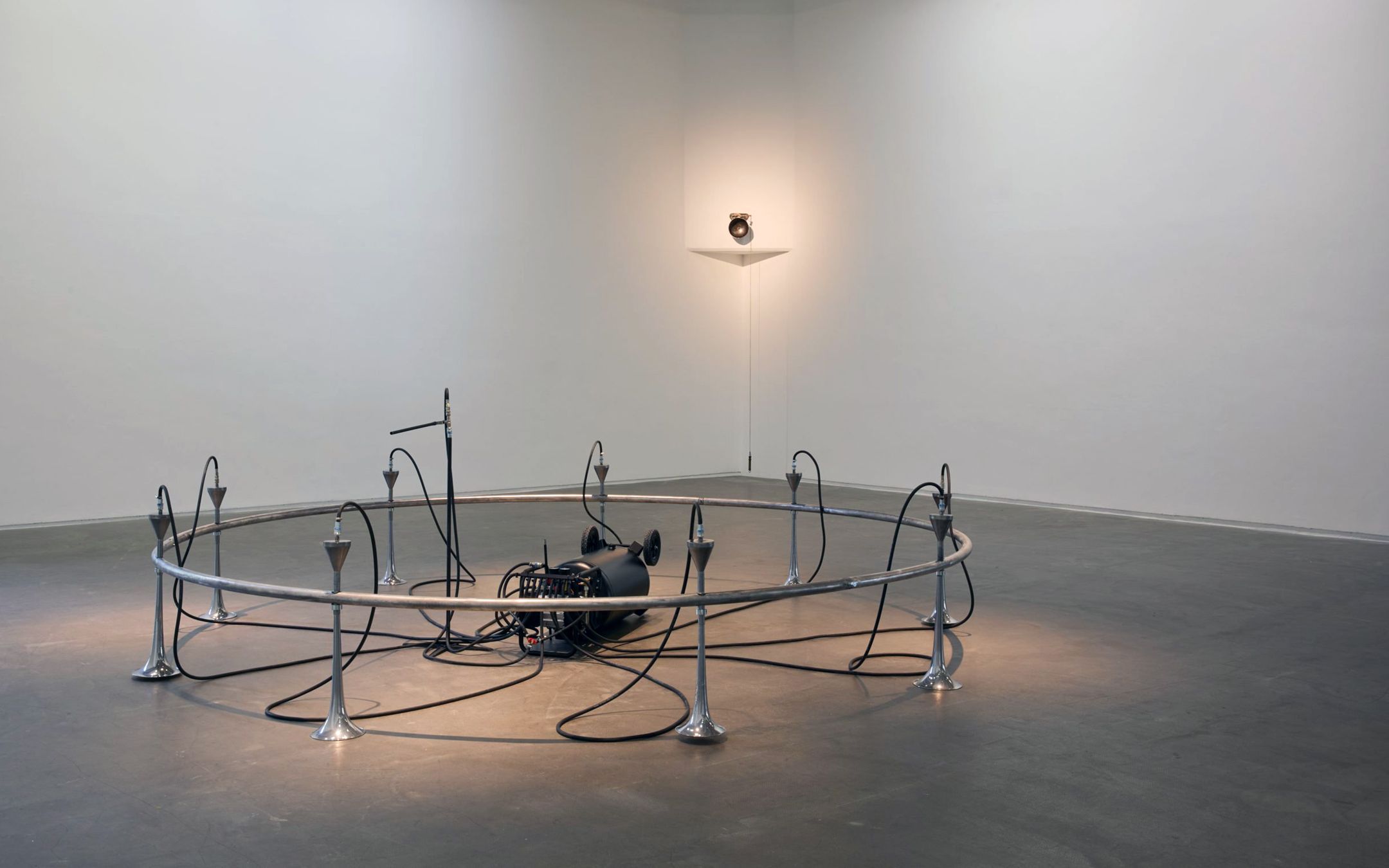
Over the past decades, Armin Linke has visited countless archives, documenting from a meta-perspective what generally constitutes these places: physical and digital economies, architectures, human labour, systems of order and disorder, machine work, and so on. By zooming out on infrastructures, his photographic practice itself has given form to a vast archive that seems to revision poststructuralist thinking: How does the archive work? What is its role? Who is in charge? And what is its potential visual imaginary? Aesthetically, the complexity of grasping the archive with visual registers relates to Linke’s activities in the discussion of the New Climatic Regime (Bruno Latour). Based on Prospecting Ocean (2018), a three-year research project that resulted in an exhibition at the Istituto di Scienze Marine, Venice, the workshop panel––with art historian EVA KERNBAUER, artist and scholar ARMIN LINKE, philosopher MELANIE SEHGAL, and media theorist VERA TOLLMANN––will reflect on techniques and conventions of representation that hinge on visibility, invisibility, and scalability as key characteristics of archival art.
2:30–3:10pm
Armin Linke (artist, Berlin)
3:15–3:55pm
Eva Kernbauer (University of Applied Arts Vienna)
4:00–4:40pm
Melanie Sehgal (University of Wuppertal)
4:45–5:25pm
Vera Tollmann (Leuphana University of Lüneburg)
5:30–6:15pm
Panel Discussion
7:00–8:15pm Public Lecture
THE ARCHIVAL (RE-)TURN: ON THE RETURN OF ARCHIVAL ART AS ARCHIVAL CRITIQUE
by Knut Ebeling (Weißensee Academy of Art Berlin)
Introduction: Melanie Franke (project lead, Images of History in Contemporary Art; University of Potsdam)
This lecture by KNUT EBELING inquires into the situation of archival practices in the field of contemporary art. Since media-based techniques such as filing, storing, and transmitting data first appeared in artistic practices, a shift generally referred to and discussed under the term »archival turn«, the reflection on power-related theoretical implications and political effects has gained importance. Particularly against the backdrop of postcolonial theory and its medial a priori, the study of postcolonial archives, the question of counter- or even non-archives has become central. From the aesthetic point of view, a shift can be observed from the austere, data-focused and anti-narrative aesthetic of the »archival turn« towards narratological as well as poetic, speculative, and fabulatory strategies of »performing the archive«.
8:15–8:45pm Film screening: Oraib Toukan, WHEN THINGS OCCUR, 2017, single-channel video, color, sound, Arabic with English subtitles, 28’.
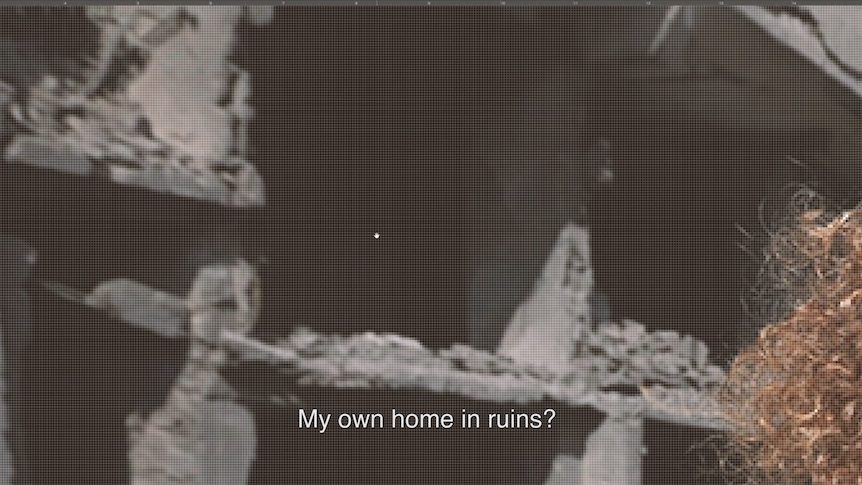
ORAIB TOUKAN’S video installation entitled When Things Occur (2017) is based upon a series of Skype conversations between the artist and Gaza-based photographers, fixers, and drivers who were behind specific images that circulated in the summer of 2014. The video dwells on the space between flat-screen monitors and their affect, exploring what lays behind the pixels that come to embody violence and destruction. It examines how documentary footage operates in the face of cruelty, and what »viewing suffering at a distance« could possibly mean.
9:00pm Apéro
Friday, October 7, 2022
Workshop Panel II: Zooming In: Counter-Archives and the Politics of History
Oraib Toukan is concerned with the inadequacy of images in contemporary history. Her inquiry takes her deep into the materiality of images, exploring pixel as a form of knowledge. By slowing down, zooming into, and reassembling material from online image banks and historical film archives, she seeks out intimate, tactile moments in the archive as a site for decolonial struggle. Thus, her work reminds us that archival art is always inevitably related to questions of power: Who defines visual culture? How is history mediated? What constitutes the present? And how can we multiply it? In this workshop panel, Middle East scholar GIL HOCHBERG, art historian DOREEN MENDE, visual arts curator RASHA SALTI, and artist and scholar ORAIB TOUKAN will reflect on counter-archival practices that represent an established form of artistic resistance to hegemonic images of history and structures of discursive oppression.
10:00–10:40am
Oraib Toukan (artist, Berlin)
10:45–11:25am
Doreen Mende (Dresden State Art Collections/HEAD Genève)
11:30–12:10am
Rasha Salti (independent scholar, author and curator)
12:15–12:55am
Gil Hochberg (Columbia University, New York)
1:00–1:45pm
Panel Discussion
1:45–2:00pm
Final Discussion & Workshop Conclusion
The workshop is organized by Paul Mellenthin and the Images of History in Contemporary Art art historical research group at the University of Potsdam. Led by Melanie Franke and funded by the Swiss National Science Foundation.
The team members are: Christoph Balzar, Alex Bykov, Melanie Franke, Ulrike Gerhardt, Sophie-Marie Gruber, Verena Kittel, Oliver Krätschmer, Luisa Mann and Paul Mellenthin.
REGISTRATION
If you are interested in participating in the workshop, please register before October 5, 2022: luisa.renee.mann@uni-potsdam.de. The number of participants is limited.